Research Point

Do you think images of war are necessary to provoke change? Do you agree with Sontag’s earlier view that horrific images of war numb viewers’ responses?

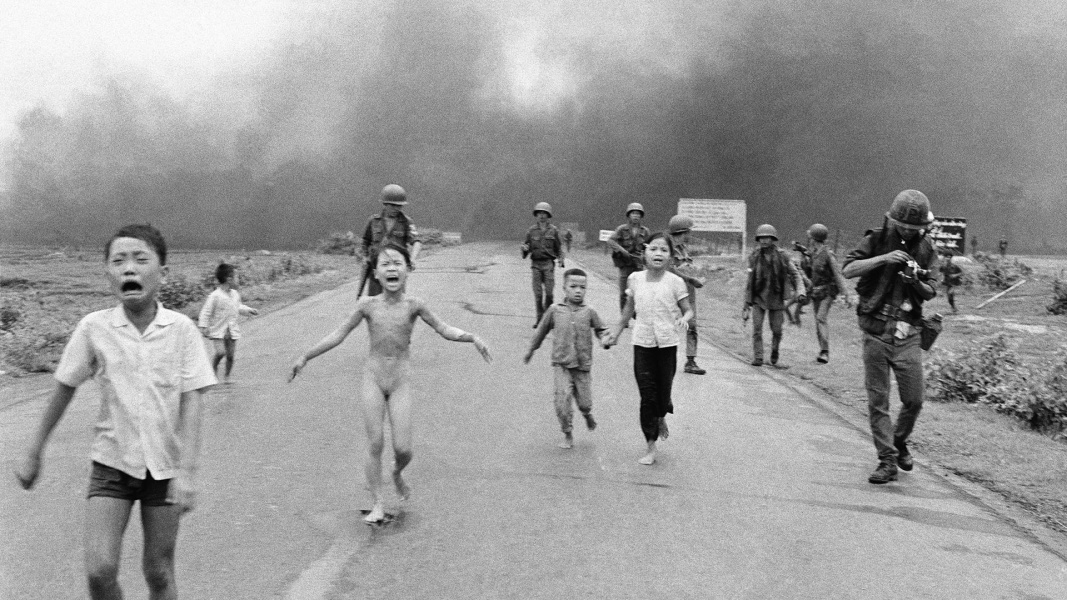
You would think that a black and white photo of a screaming child arms open running from a flaming village, skin melting from the effects of Napalm would be enough to stop any war, or at the very least provoke change, or does the bombardment of horrific images just make us numb to the atrocities that the world keeps turning up generation after generation?

In 1972 when Nick Ut first shared his image of Napalm Girl, originally named The Terror of War (1972)— it was a reminder that a still image has the potential to tell a story, make a statement in a universal language and evoke emotion in a single captured moment. It soon became one of the most iconic images of the most contentious war America has ever fought, the Vietnam war. Napalm Girl, subsequently went on to win the Pulitzer prize in 1973. All though much weight is given to the media for turning public opinion against the war in Vietnam and this image was seen the world over on the front cover of magazines and new papers alike. How much can A still image actually change the course of a war?
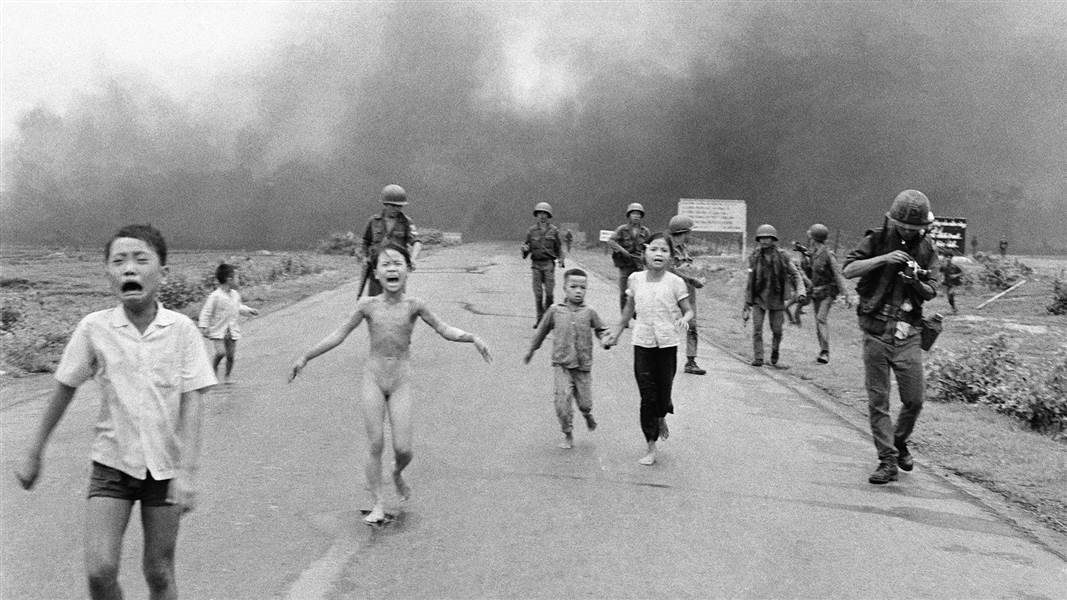
Napalm Girl, Nick Ut, 1972

Scholars maintained the emotional attachment the public had with the image significantly changed their stance on the war and therefore the conclusion of the war. The opposing argument is, support for the war was already dwindling and the ongoing media coverage was just representing the public opinion on it. Some will also point to the lack of evidence used to support these reports.

The Associated Press (AP) was founded in 1886 to supply speedier battle reports from the war in Mexico. It became the eminent force in photo journalism during the Vietnam war, where they won 6 Pulitzer prizes 4 of them going on to become images that still represent that war and the devastating effect it had on civilians to this day. (Pyle, 2017) In this article Pyle is quoted “Nick Ut’s unforgettable image of 9-year-old Kim Phuc running down a road, her clothes burned off and her skin peeling, as she and others fled a napalm bombing attack by South Vietnamese planes on an enemy position — widely regarded as the other picture of the war”

Even though The Vietnam war was coined the ‘living room war’ originally by Michael Arlen whilst reporting for the New Yorker due to the extensive coverage given by news agencies and for the first time and the freedom given to the press during this conflict, it was the still 35mm images that were telling the story. According to Pyle “Even television, making its own battlefield debut in Vietnam, lacked the impact of the small 35-millimeter camera, the tool of choice for photojournalists.” The critic Susan Sontag goes on to say in her 1977 book ON Photography that “a naked South Vietnamese child just sprayed by American napalm, running down a highway toward the camera, her arms open, screaming with pain—probably did more to increase the public revulsion against the war than a hundred hours of televised barbarities.”5 The unparalleled power of photographs wasn’t simply because the camera had become “the tool of choice for photojournalists,” as Pyle attests, but because photographs, as Sontag described, “are a neat slice of time, not a flow. Television is a stream of underselected images, each of which cancels its predecessor. Each still photograph is a privileged moment, turned into a slim object that one can keep and look at again.”6,7 Together with Nick Ut’s picture, Eddie Adams’s of General Nguen Ngoc Loan executing a Viet Cong Prisoner in Saigon is probably the other most unforgettable image of the Vietnam War. There is actual video footage of both these same events which rarely gets a look in compared to the visceral snap shots of the still photographs. Some of this is to do with the timing of the news footage going out, some scenes to disturbing for prime time television meant the real gore was saved print media.
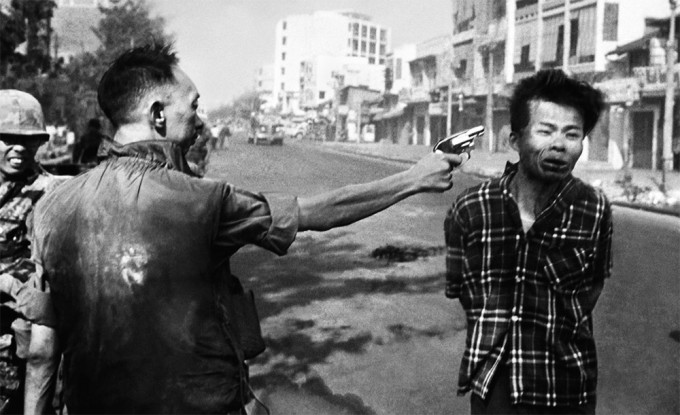
General Nguen Ngoc Loan executing a Viet Cong Prisoner in Saigon

With images as strong as these, it is no wonder people claim they effect public opinion. Some would argue that the media was and always is just a reflection of an already waning public support for the war. According to W.Joseph Campbells fact checking blog, “By June 1972, American public opinion had long since turned against the war in Vietnam. Nearly 60 percent of respondents to a Gallup poll conducted early in 1971 had said that the United States had made a mistake by sending troops to fight in Vietnam. (Gallup periodically has asked the question since 1965, when just 24 percent of respondents said it was a mistake to have sent troops to Vietnam. By August 1968, a majority of respondents said it had been a mistake.) Ut’s photo can hardly be said to have galvanised opinion against the war: That shift had taken place years before.”

An LA times 2017 report goes on to make the point that the war did in fact end 6 months later. This is, in fact, a myth, the conflict rumbled on with South Vietnam troops fighting on for a full 3 years after the photo was taken. To further the argument Campbell goes on to say “By June 1972, the war was essentially over for American forces in Vietnam. President Richard Nixon had announced in November 1971 that U.S. ground operations had ended in South Vietnam and by June 1972, nearly all U.S. combat units had been removed from the country.”

As much as the media would like to take credit for the end of the war and over inflate their role in it, the hard truth is, nothing really changes as Sontag put it ““photographs cannot create a moral position but they can reinforce one—and help build a nascent one.”21

Much credit should be given to Ut’s and any war photographer that place themselves in danger to share these amazing images that stir emotion and create debate. Sontag continues that we require ““existence of relevant political consciousness” in order to be “morally affected by photographs. Ultimately, It is the consensus of the public that ends conflicts not the images that represent them.”
Exercise 1.1

Find some examples of news stories where ‘citizen journalism’ has exposed or highlighted abuses of power. How do these pictures affect the story, if at all? Are these pictures objective? Can pictures ever be objective? Write a list of the arguments for and against. For example, you might argue that these pictures do have a degree of objectivity because the photographer (presumably) didn’t have time to ‘pose’ the subjects, or perhaps even to think about which viewpoint to adopt. On the other hand, the images we see in newspapers may be selected from a series of images and how can we know the factors that determined the choice of final image? Think about objectivity in documentary photography and make some notes in your learning log before reading further. 

Citizen Journalism is defined, according to wikipedia as; “Citizen journalism (also known as public journalismparticipatory journalismdemocratic journalism,[1] guerrilla journalism[2] or street journalism[3]) is based upon public citizens “playing an active role in the process of collecting, reporting, analysing, and disseminating news and information.”

It is considered a modern phenomenon with the rise of smart phones and smaller recording devices, it has actually been around for much longer. Who could forget the shaky cam footage of President JFK’s assassination. I think with today’s use of the internet as a conduit it appears much more prevalent in society today.

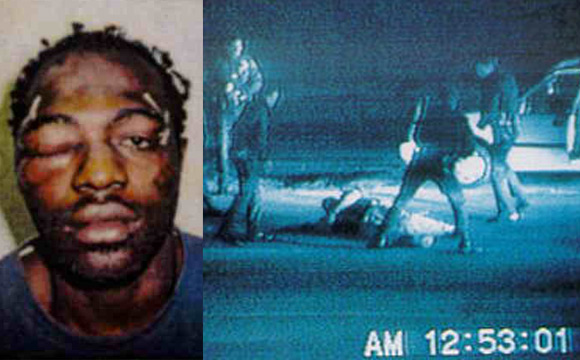
There are many examples of Citizen Journalism uncovering abuses of power. The first one that comes to mind, is the Rodney King case, on March, 03, 1991 A plumber named George Holliday heard a disturbance outside his apartment grabbed his camcorder and recorded four LAPD police officers savagely beating an unresisting motorist during a routine traffic stop. This footage would be broadcast internationally, sparked the infamous L.A. Riots and is widely regarded as the first viral video in the pre internet age. These videos and images now seem common place, with numerous examples seeming to fill our news feeds and tv screens on an almost daily basis.

Advantage’s of Citizen Journalism:

1. Citizen Journalism can be seen to give a voice to the community, it gets them involved in issues that have a direct effect on their lives.

2. It is normally taken in the moment and from multiple viewpoints not really gained by traditional journalists.

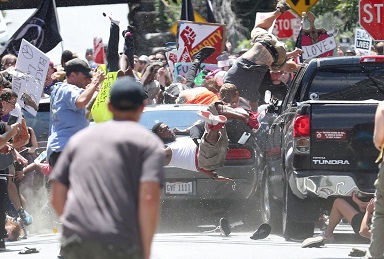
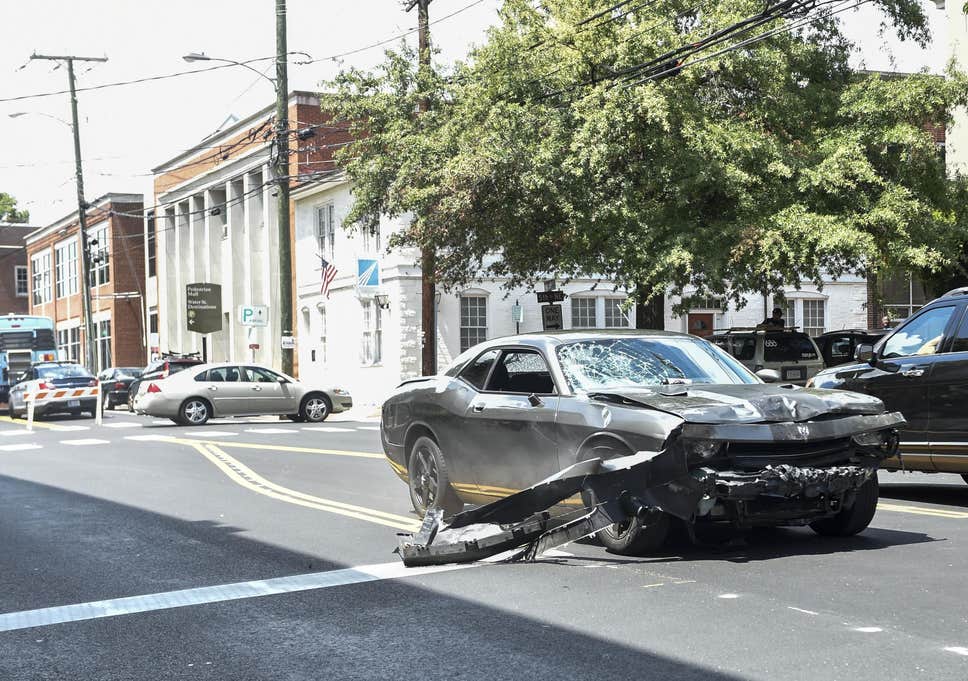
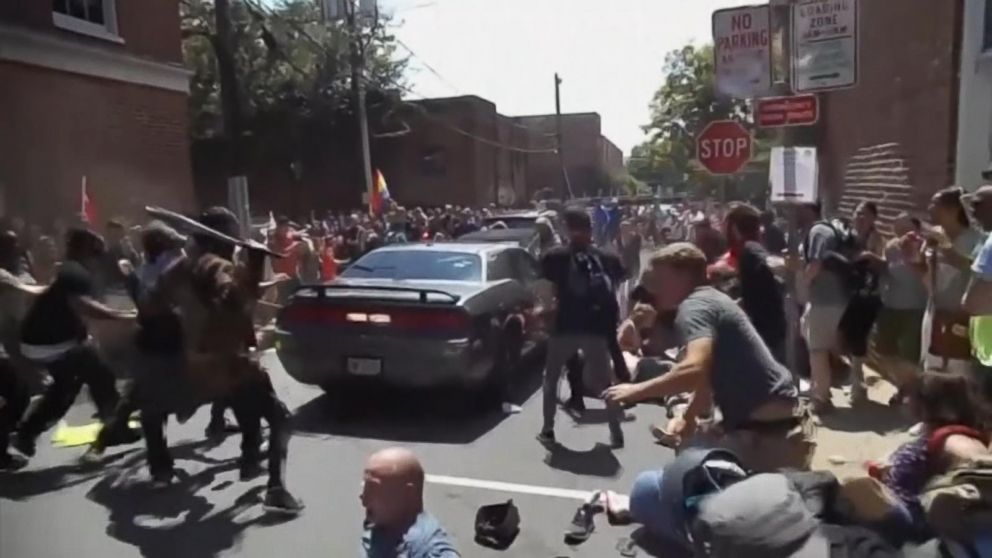
3. Most Citizen journalism is taken in the moment an event actually happens for example when a car drove into protesters during the Charlottesville Riots, it was filmed by the protesters while it actually happened, it was filmed from multiple angles by multiple witnesses and could be instantly shared.

Whereas traditional journalism is reported on in the aftermath of such events.

4. The footage is not subjected to a picture editor or publishers/board of directors even advertisers who’s views could be projected on the images.

5. The footage is raw and can be shared publicly very quickly via the internet, it can be widely available almost instantly.

6. It can be taken by anyone, anywhere with little or no photographic experience.

Disadvantages of Citizen Journalism:

1. Even though citizen journalism isn’t affected by advertisers or editors, it is effected by the people that capture the footage and that is where the first disadvantage of citizen journalism appears. With no editorial input the footage could be biased towards the person who filmed it. Which can lead to inaccuracies and factual errors.

2. The instantaneous nature of citizen journalism listed as an advantage can also be seen as a disadvantage, as in the case of Hurricane Sandy, where a prominent Twitter user with 6000 followers posted inaccurate news on the ferocity and timings of the hurricane which lead to unnecessary panic.

3. During the recent error attacks in Africa, people were live streaming the ongoing attacks revealing the location of survivors of the attacks to the terrorist. These situations may seem extreme but they do happen. There is no stopping citizen journalism, I feel it is a now as commonplace as traditional journalism.

To end this discussion here’s a quote by Paul Lewis on citizen journalism.

“Citizen Journalism for the journalist means accepting that you can’t know everything and allowing other people through technology to be your eyes and ears and for the public it means being co-producers of the news.”

In the words of A Tribe Called Quest “This is Just a funky introduction to how nice I am”

I have started this course because i hope it will further my already extensive interest in photography. I am looking forward to this course expanding my artistic appreciation of photography and compliment my technical abilities. Hopefully the BA Hons course will assist me in my long term career goals of gaining a recognised qualification to add to my 8 years of experience as a professional photographer.

I have been a professional photographer for 8 years and a keen amateur for many more. I have been employed in many various media operations roles which has seen me cover such high profile events such as the London Olympics, The Edinburgh Tattoo and the launch of HMS Queen Elizabeth.

My most recent deployment saw me travel to Antarctica for the 17/18 Ice Patrol Season where I worked extensively with the World Wildlife Fund recording them as they help police the Antarctic Treaty. I am currently lucky enough to be seconded to Number 10 Downing Street, where I carry out the duties of Official Photographer of the Prime Minister, which is a great honour.

As well as my photography interests I am a keen cameraman and enjoy making short videos for social media. I recently took part in filming a documentary (Extreme Christmas Dinners) which appeared on Channel 4. I also enjoy giving organised talks about photography to anyone who will listen including, camera clubs, local schools and charities. My latest project outside of work has seen me teaching photography to vulnerable adults at the Glasgow City Mission charity in Glasgow.

In 2017 I was awarded the distinguished Peregrine Trophy award for images I submitted as part of a portfolio of photographs submitted by my department. I also won individual awards in the Maritime Air and Engineering Excellence awards and was highly commended in the media ops video award and highly commended for the Photographer of the Year award.

The awards primary puropose, is to produce eye catching powerful imagery, to be used in the media to demonstrate the Royal Navy and Royal Marines. It is a coveted prize, deemed the highest award a photographer can win within the Royal Navy Photographic Branch.

I have worked in the media industry for over 8 years. Working to a consistently high standard, I regularly liaise with multiple media agencies to time critical deadlines for news, print and social media.

I am confident my skill set will marry well with this course and subject matter. I also believe it will help me achieve my long term goals of gaining a formal qualification to compliment my ongoing vocational experience.

Design a site like this with WordPress.com
Get started