Assignment Five
This assignment is the accumulation of the Context and Narrative module, we have covered a varied workload in this module, it has been enjoyable and challenging. I have been lucky in the fact that the work on this module has, completely by fate, coincided with a very significant life experience. It only seems right that my final assignment comes full circle to my first assignment. It continues with the running theme of the images I have taken, as well as, incorporating some of the themes covered in this module. In the words of Sontag “Today everything exists to end in a photograph.” (Sontag, 1977) and so does this module and my time at No 10.
For this assignment, Making it up, we were given free range to construct a stand-alone image of our choice, alternatively, we could have chosen to make a series, elaborating on the same theme. For this I wanted to draw on the skills learnt in parts One to Four. I also wanted to draw on the experiences I have had in my time as the official photographer for the Prime Minister. I started this module with assignment one outside the door of No 10, so it is only fitting I end it in the same place with both the module and my time at No 10 coming to an end.
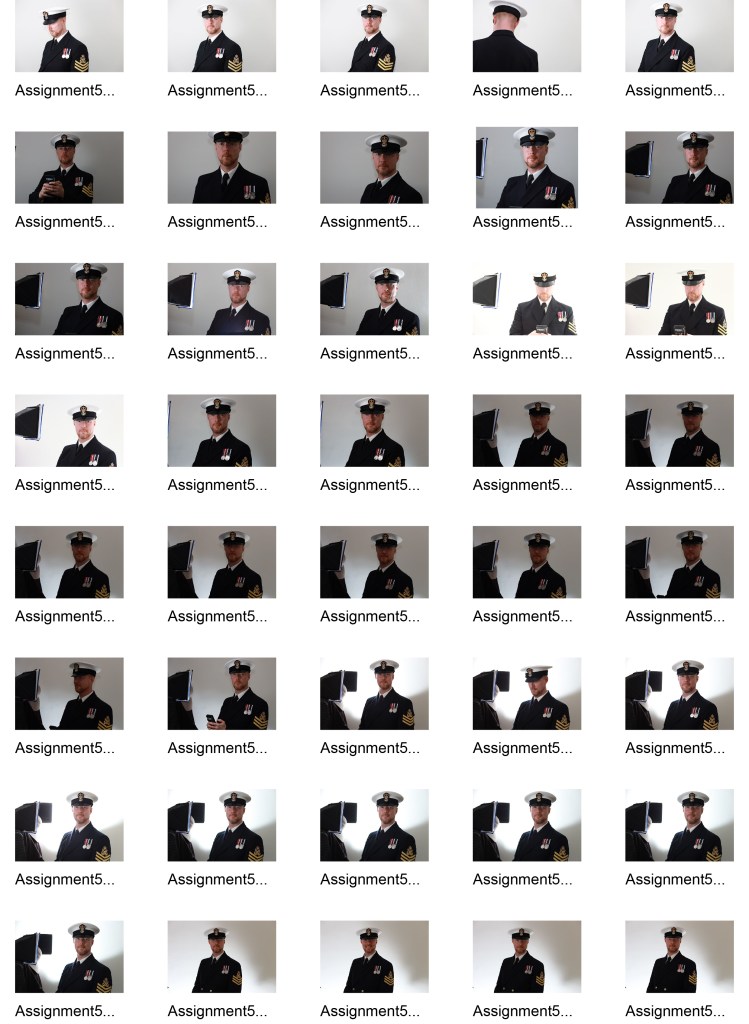
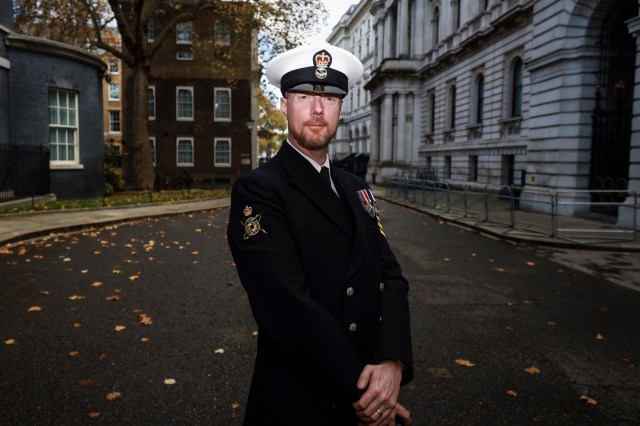
I choose to create an autobiographical self-portrait, similar to the ones we covered in part three. I wanted it to be a portrait of myself in full ceremonial uniform, in Downing Street. I wanted to portray a narrative of a strong sense of pride and achievement, this also ties in with the photographing the unseen which we also covered.
Once I had the idea I started some research, like most photographers, I am not used to or comfortable being in front of the camera. I started to wonder why this is, this self-consciousness, especially with self-portraits. This kind of psychoanalysis leads me to the writings of Barthes, which in turn lead me to the work of Lacan. It is no surprise that Barthes familiarity with psychoanalysis, that he would lean towards Lacan, they are both French theorists, heavily involved with semiotics, with Lacan being only slightly older than Barthes, they are often mentioned in the same breath.
In Bruce Fink’s, 2007, compilation and re-interpretation of Lacan’s original “The Mirror Stage as Formative of the I Function as Revealed in Psychoanalytic Experience” Ecrits, he translates Lacan to say “ the specular image seems to be the threshold of the visible world, if we take into account the mirrored disposition of the imago of one’s own body in hallucinations and dreams, whether it involves one’s individual features, or even one’s infirmities or object projections; or if we take note of the role of the mirror apparatus in the appearance of doubles, in which psychical realities manifest themselves that are, moreover, heterogeneous.” (Fink, 2007)
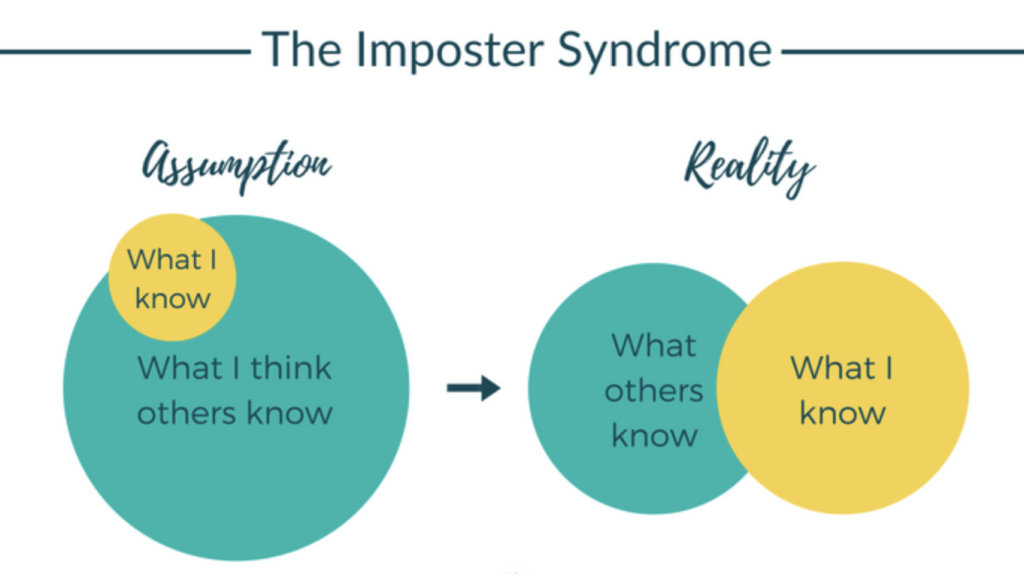
Possibly, the self-portraits we take, are a reminder that, the images of ourselves we have in our heads, do not match the ones we see reflected in the mirror, or the lens. How many times do we look at images and think “do I really look like that?” or hear a recording of our own voices and think “Is this how I sound to other people?” The only one dimensional thing about humanity is the mirror image. Although I wanted the image to show a sense of pride, reading this made me consider how I felt in my time there In the early days, I couldn’t help feeling a sense of imposter syndrome, over a short period of time I realised, everybody feels that way at some point. It is these unseen feelings that give life its depth, Luckily, these were fleeting feelings, my overall feeling were of a sense of achievement and a sense of pride.
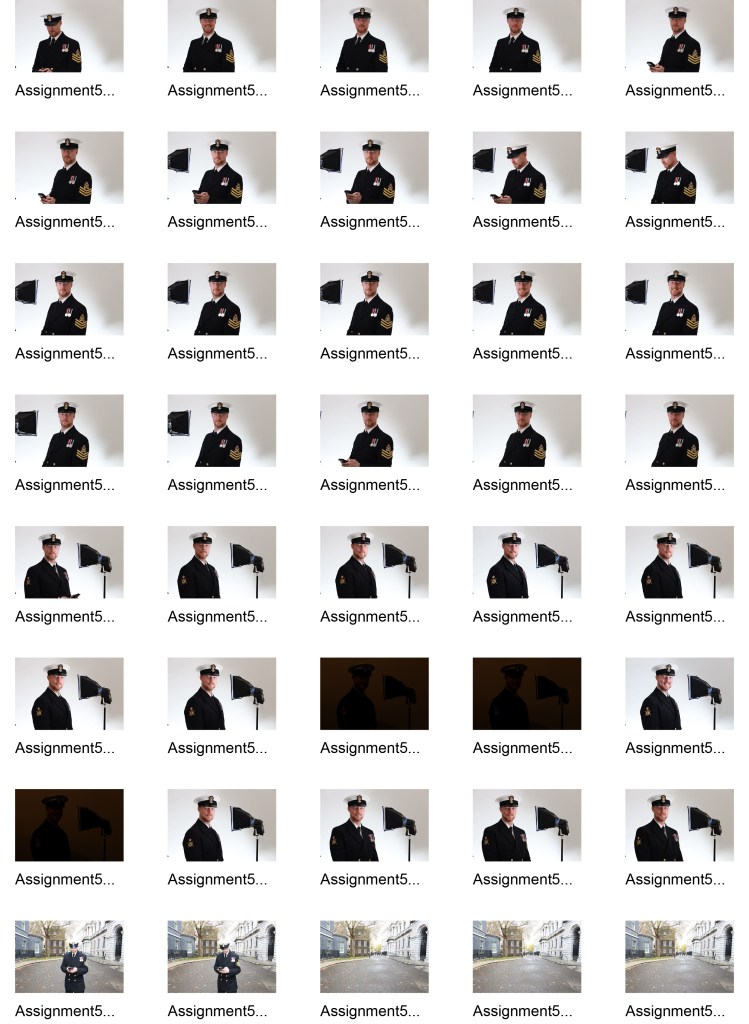
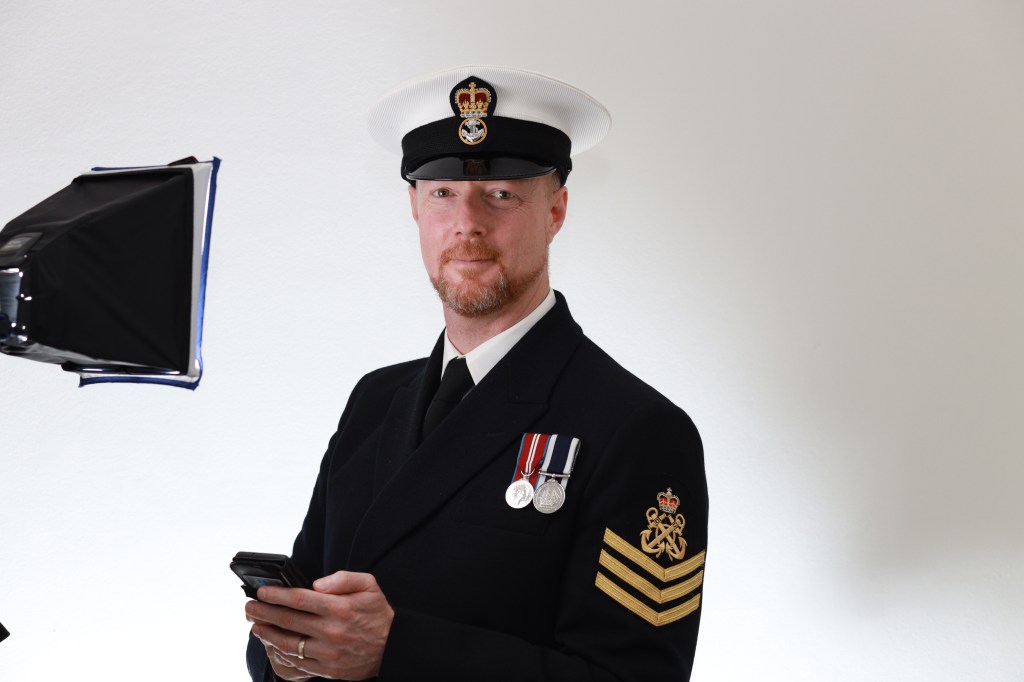
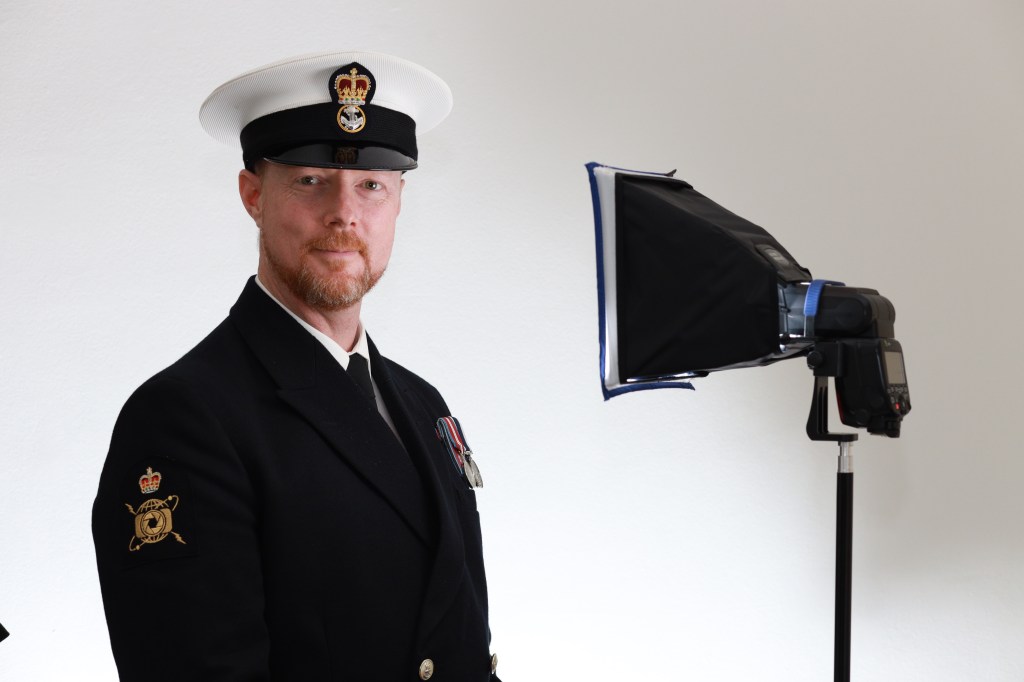
Once I had decided the direction to take there were many technical and logistical aspects to consider. I had to gain permissions from the estate managers, the custodians and the police. Once I had the preparations in place, I choose my kit and practiced the lighting setup. I had to practice with the camera setup and lighting system inside before I moved on to the street, there was little time to test and adjust in the small window of opportunity available.
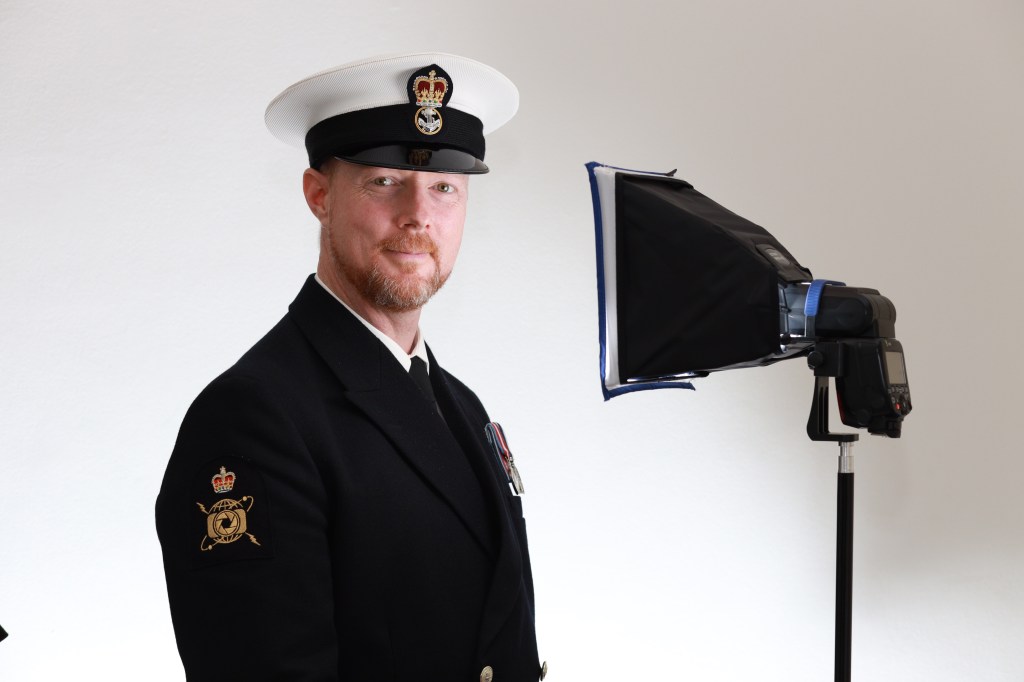
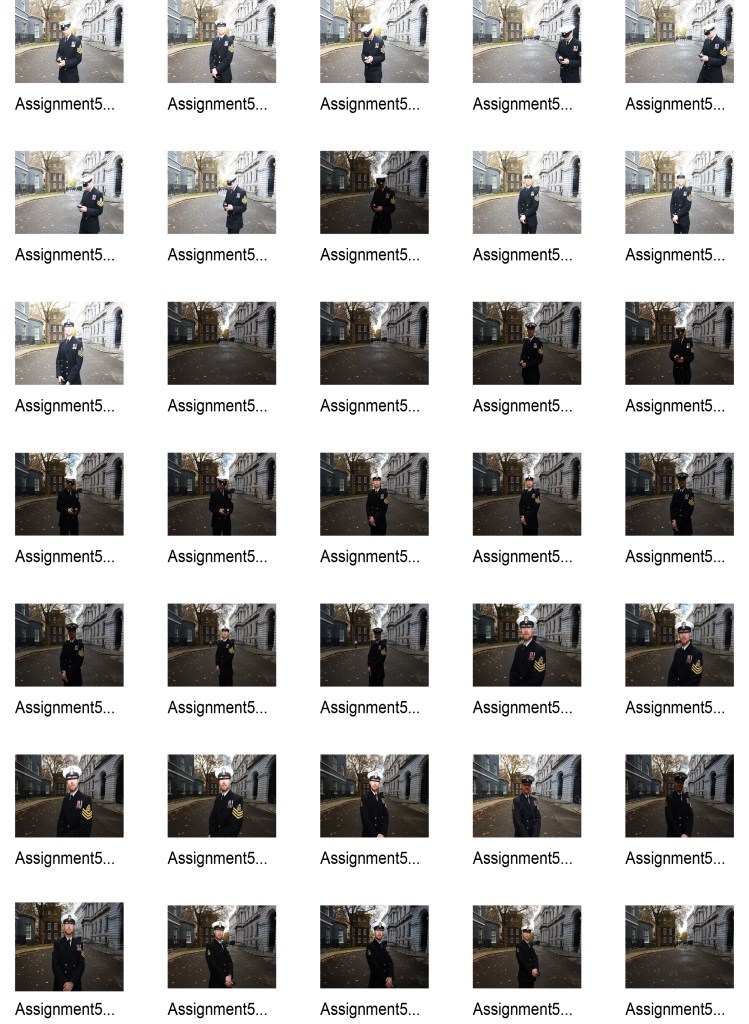
For the composition, I did not want to be right in front of No 10, I thought this would be too direct and literal. I wanted to be in the middle of the street with the Foreign commonwealth office and No 10 on either side, making me the central focus, this being accentuated by the empty street. I composed myself in the centre of the image and shot with a wide angle lens and a looser crop to add more context to the surroundings and to give the image more of a photojournalism feel as we covered in part one.
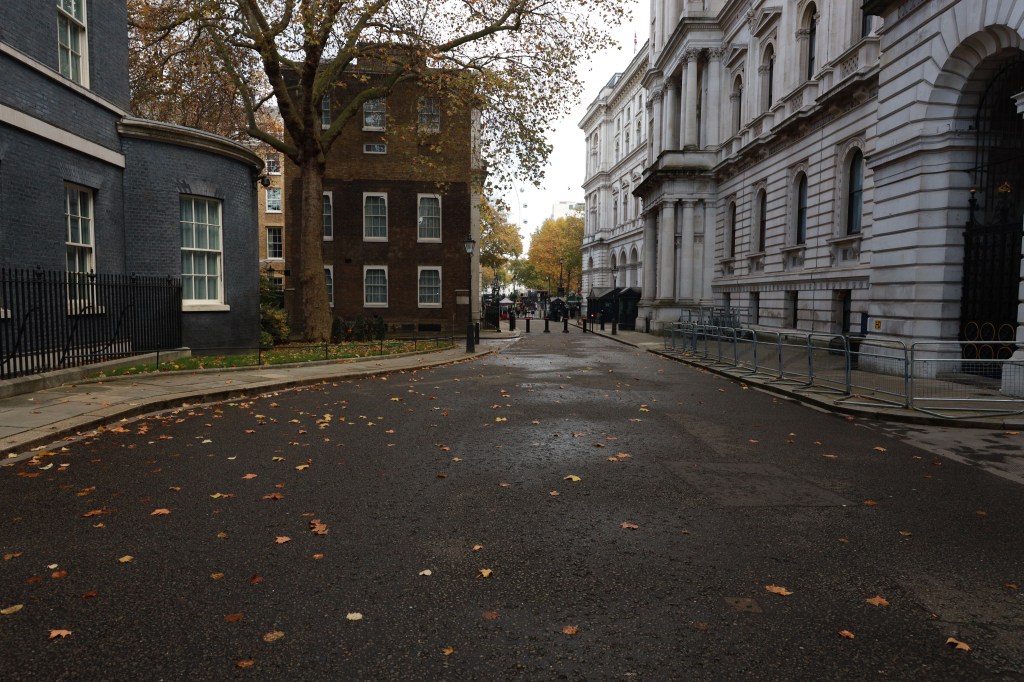
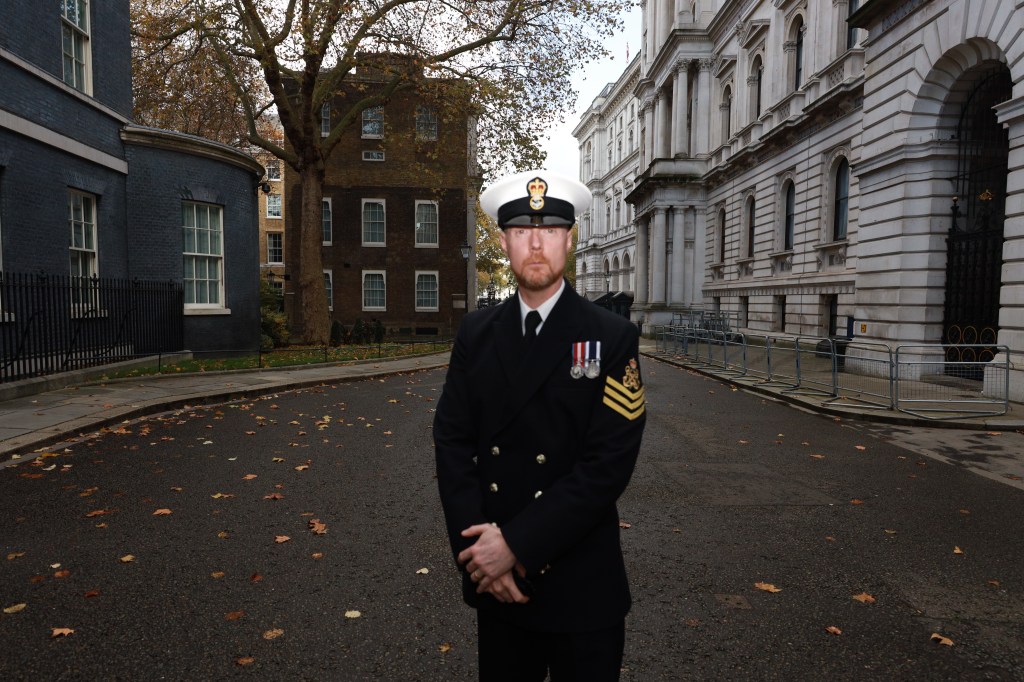
I choose a slightly lower angle on the tripod to give an increased sense of pride and power to the shot. I placed the speedlight to the right and lower than normal to illuminate under the peak of the cap. I took the creative choice of underexposing the background by using shutter speed and a shallower depth of field to further separate me from the background. This had the desired effect of keeping the main focus of the image on myself, I then edited in photoshop with basic darkroom techniques.
I found myself reading the image using the techniques we have learnt in this module, using the signifier and the signified highlighted in Barthes, Elements of Semiology (Barthes, 1967). The image is a self- portrait of myself wearing ceremonial uniform in the street (the signifier) But even with the more obvious signified points like the pride and power I was aiming for, there are other signified points, like the fallen leaves signifying the end of an era and the size of the old buildings adding to the power of the image and the leading lines leading out of Downing Street. The street, which is not instantly recognisable as Downing street, but still has a sense of familiarity as we have all seen it on television so many times.
Overall, I was happy with the image and the research, it was good to think about and put into practice some of the skills I have learnt over this module. Most of these things I have been doing in my work for years subconsciously, it is good to be taking a more measured approach to my process.
Works Cited
Barthes, R. (1967). Elements of Semiology. In R. Barthes, Elements of Semiology (p. 12). new york: hill and wang.
Fink, B. (2007). Ecrits The first complete edition in English. In J. &. Lacan, Ecrits (p. 93). New York: : W.W. Norton & Co.
Sontag, S. (1977). On Photography. New York, New York, usa: farrar, straus and Giroux.
Assignment Four
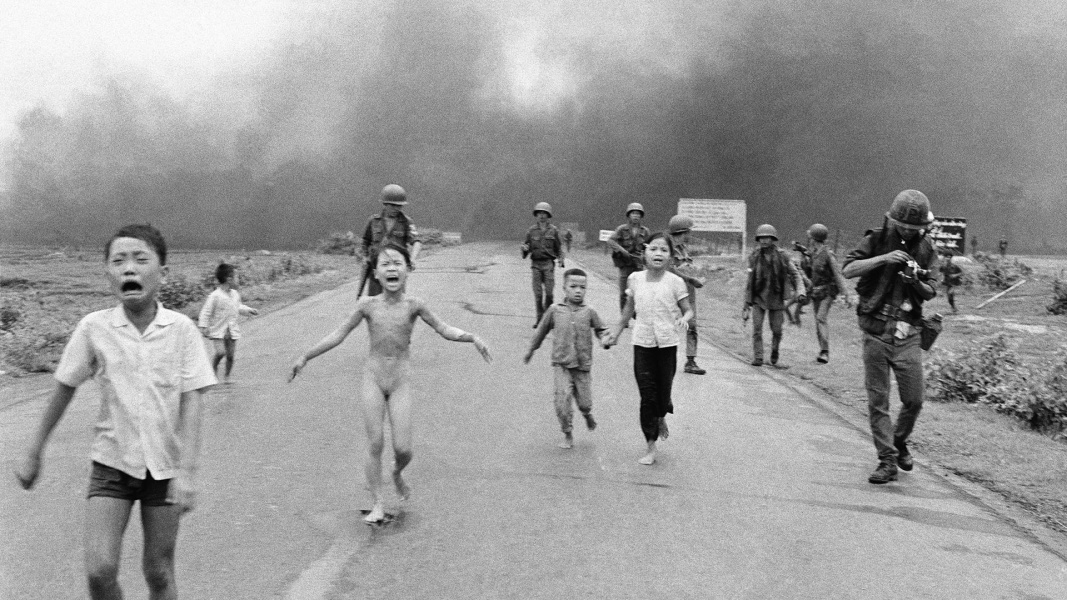
For this assignment I have chosen, Napalm Girl by Nick Ut. This image, as powerful as it is, also has a personal attachment for me on different levels, firstly, I am in the military, this image is a stark reminder of atrocities that can happen in war. Secondly, this image was used in my photography aptitude examination, it was the first time I realised the power of a single image.
When you examine how much difference A single image could make, you would think that a black and white photo of a screaming child arms open running from a flaming village, skin melting from the effects of Napalm would be enough to stop any war, or at the very least provoke change, or does the bombardment of horrific images just make us numb to the atrocities that the world keeps turning up generation after generation?
In 1972 when Nick Ut first shared his image of Napalm Girl, originally named The Terror of War (1972) it was a reminder that a still image has the potential to tell a story, make a statement in a universal language and evoke emotion in a single captured moment. It soon became one of the most iconic images, of the most contentious war, America has ever fought, the Vietnam war. Napalm Girl, subsequently went on to win the Pulitzer prize in 1973. Although much weight is given to the media for turning public opinion against the war in Vietnam. This image was seen the world over on the front cover of magazines and newspapers alike. How much can A still image actually change the course of a war?
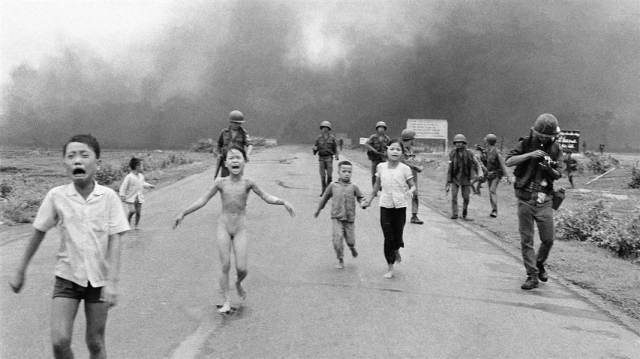
The Associated Press (AP) was founded in 1886 to supply speedier battle reports from the war in Mexico. It became the eminent force in photo journalism during the Vietnam war, where they won 6 Pulitzer prizes 4 of them going on to become images that still represent that war and the devastating effect it had on civilians to this day. In this article Pyle is quoted “Nick Ut’s unforgettable image of 9-year-old Kim Phuc running down a road, her clothes burned off and her skin peeling, as she and others fled a napalm bombing attack by South Vietnamese planes on an enemy position — widely regarded as the other picture of the war” (Pyle, 2017)
It is maintained, the emotional attachment the public had with the image, significantly changed their stance on the war and therefore the conclusion of the war. The opposing argument was, support for the war was already dwindling and that the ongoing media coverage was just representing the publics opinion on it. Some will also point to the lack of evidence used to support these reports.
Even though The Vietnam war was coined the ‘living room war’ originally by Michael Arlen, whilst reporting for the New Yorker in 1960, due to the extensive coverage given by news agencies and for the first time and the freedom given to the press during this conflict. It was the still 35mm images that were telling the story. According to Pyle “Even television, making its own battlefield debut in Vietnam, lacked the impact of the small 35-millimeter camera, the tool of choice for photojournalists.” (Pyle, 2017)
The critic Susan Sontag remarks in her 1977 book On Photography that “a naked South Vietnamese child just sprayed by American napalm, running down a highway toward the camera, her arms open, screaming with pain—probably did more to increase the public revulsion against the war than a hundred hours of televised barbarities.” (Sontag, 1977) The unparalleled power of photographs wasn’t simply because the camera had become “the tool of choice for photojournalists,” (Sontag, 1977) as Pyle attests, but because photography, as Sontag described, “are a neat slice of time, not a flow. Television is a stream of underselected images, each of which cancels its predecessor. Each still photograph is a privileged moment, turned into a slim object that one can keep and look at again.” (Sontag, 1977) Together with Nick Ut’s picture, Eddie Adams image of General Nguen Ngoc Loan executing a Viet Cong Prisoner in Saigon is probably the other most unforgettable image of the Vietnam War. There is actual video footage of both these same events which rarely gets a look in compared to the visceral snap shots of the still photographs. Some of this is to do with the timing of the news footage going out, some scenes to disturbing for prime time television meant the real gore was saved for print media.
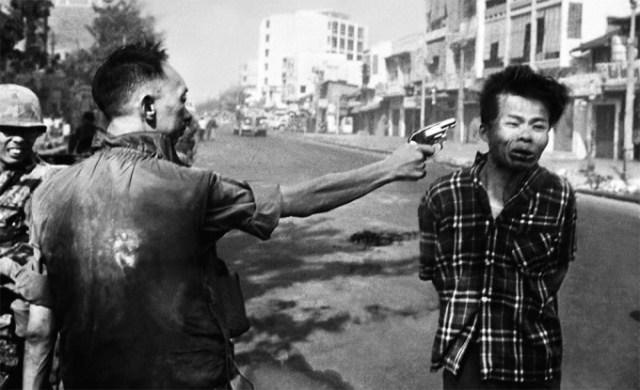
With images as strong as these, it is no wonder people claim they effect public opinion. Some would argue that the media was and always is just a reflection of an already waning public support for the war. According to the myth busting author and Professor W.Joseph Campbell, “By June 1972, American public opinion had long since turned against the war in Vietnam. Nearly 60 percent of respondents to a Gallup poll conducted early in 1971 had said that the United States had made a mistake by sending troops to fight in Vietnam. (Gallup periodically has asked since 1965, when just 24 percent of respondents said it was a mistake to have sent troops to Vietnam. (W. Joseph Campbell, n.d.) By August 1968, a majority of respondents said it had been a mistake.) Ut’s photo can hardly be said to have galvanised opinion against the war: That shift had taken place years before.”
An LA times 2017 report goes on to make the point that the war ended 6 months later. This is, in fact, a myth, the conflict rumbled on with South Vietnam troops fighting on for a full 3 years after the photo was taken. To further the argument Campbell goes on to say “By June 1972, the war was essentially over for American forces in Vietnam. President Richard Nixon had announced in November 1971 that U.S. ground operations had ended in South Vietnam and by June 1972, nearly all U.S. combat units had been removed from the country.” (W. Joseph Campbell, n.d.)
According to the Fred Greene’s, 1970 Journal article, The Case For and Against Withdrawal from Vietnam and Korea “ The case for withdrawal, based on a notion of Hanoi’s actions are, if not justified, understandable, and that Communist governments in Southeast Asia are neither particularly dangerous to us nor anathema to their populaces. Vietnamization has many advantages for us, but, given a weak government, runs the risk of a failure, endangering American troops. Troops should be withdrawn from South Korea, both for its good and our own.” (Greene., 1970) The fact this was published a full two years before Ut’s famous image is further proof of political opinion, it also furthers the discussion of public opinion preceding Ut’s picture, “ A crucial point is that the American public today cannot be convinced of the value of continuing the war given the costs involved, the doubtful nature of the outcome, and the pressing needs that have manifested themselves on the domestic front.” (Greene., 1970) This is further evidence that, in truth, the media were more likely to be using these images to echo the already growing political and public opinions.
As much as the media would like to take credit for the end of the war and over inflate their role in it, the hard truth is, nothing really changes as Sontag put it ““photographs cannot create a moral position but they can reinforce one—and help build a nascent one.” (Sontag, 1977)
Much credit should be given to Ut’s and any war photographer that place themselves in danger to share these amazing images that stir emotion and create debate. Sontag continues that we require “existence of relevant political consciousness” in order to be “morally affected by photographs. Ultimately, It is the consensus of the public that ends conflicts not the images that represent them.” (Sontag, 1977)
Therefore, as powerful an image as this is, I do not believe that it is the images themselves that change the course of public opinion on wars. It seems the most probable outcome is, the images are a solid reflection of public and political opinion. Picture editors, reporters and news crews cannot help but to be swayed by such opinions. Couple that with the statistics from the Gallup poll and the social science journals published years before the images were taken and the irrefutable facts that nearly all US combat troops had already been removed from Vietnam by the time Ut’s image was even taken, it becomes harder to justify the claims that images alone are responsible for ending the conflict.
The fact that a harrowing photograph such as this can have a happier ending than most is heart-warming. Ut an already award winning photographer, went on to have a glittering career with The Associated Press and Phuc, after surviving the Napalm attack, Phuc was used as propaganda for the Vietnam regime. She eventually managed to escape to Canada, where she has since gained citizenship and is the founder of the Kim Phuc Foundation International for children injured in conflict. As recently as, February, 2019, Phuc was awarded the Dresden award for Peace, for her work with UNESCO as an ambassador for peace. Ut and Phuc remain good friends until this day.
Not all images of this type can boast such a happy ending for those concerned but I’m glad in this case it did.
Research Point
Read and reflect upon the chapter on Diane Arbus in Singular Images: Essays on Remarkable Photographs by Sophie Howarth (2005, London: Tate Publishing).
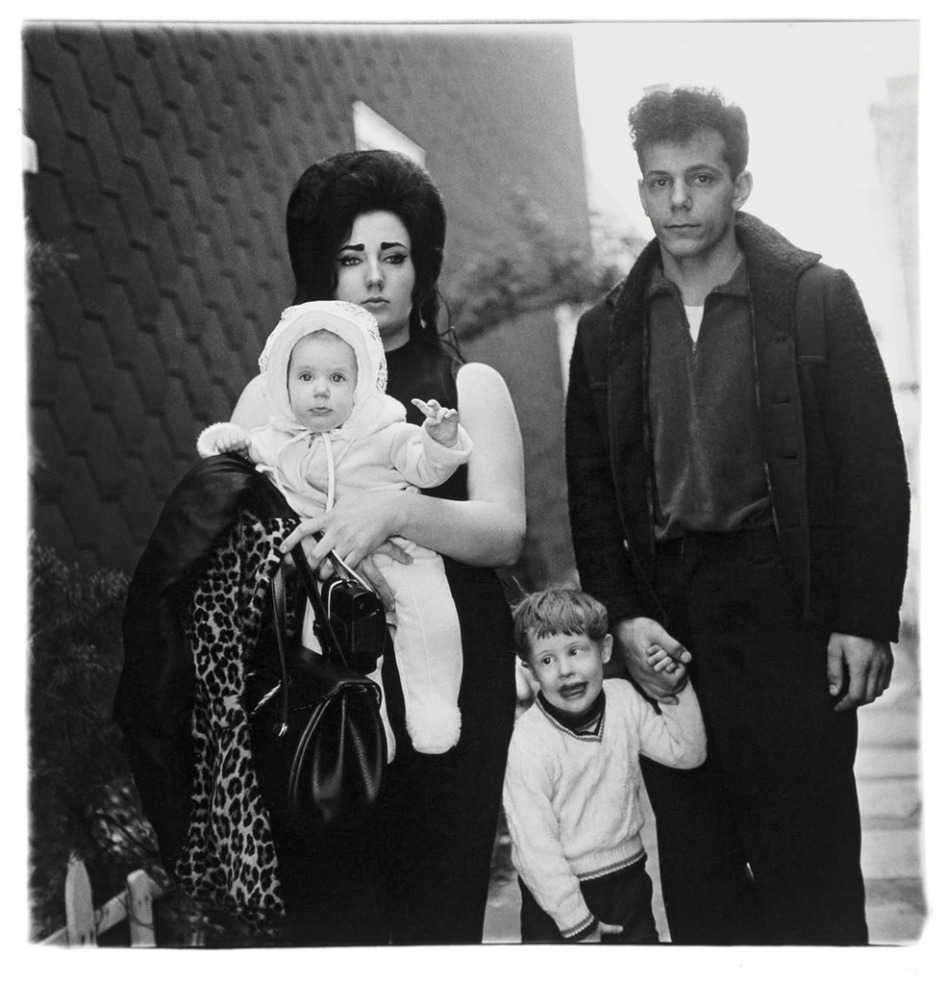
For this research point, we had to read Sophie Howarth’s deconstruction of Diane Arbus’s Brooklyn Family image.
What first struck me was the almost, forensic analysis of the image. Everything is up for debate. From reading the article, Howarth is not really conducting a debate, she is instead confidently stating her truth or the truth, as she sees it.
It is a great example of what we have been studying in part 4, with plenty of connotation, signs and . Delving into the underlying issues of the family without actually knowing them. Deconstructing every detail, down to the looks on the individual faces, to the way they hold themselves in the photograph. Going into the back story of the subjects and photographer in great detail.
I enjoyed the way the author seamlessly transitions artforms, drawing references from photography, literature, pop culture and even music.
Great care is also taken to reference other images, back catalogues and exhibitions to reinforce the opinion that is given. It was good to see the Chinese whisper effect of the editorial given to the images when they were first released in the newspaper in Britain and labelled incorrectly.
This level of deconstruction is something I will have to work on. When you see something critiqued in this fashion, it gives you a great idea of what can be done with the information presented.
Exercise 4.2
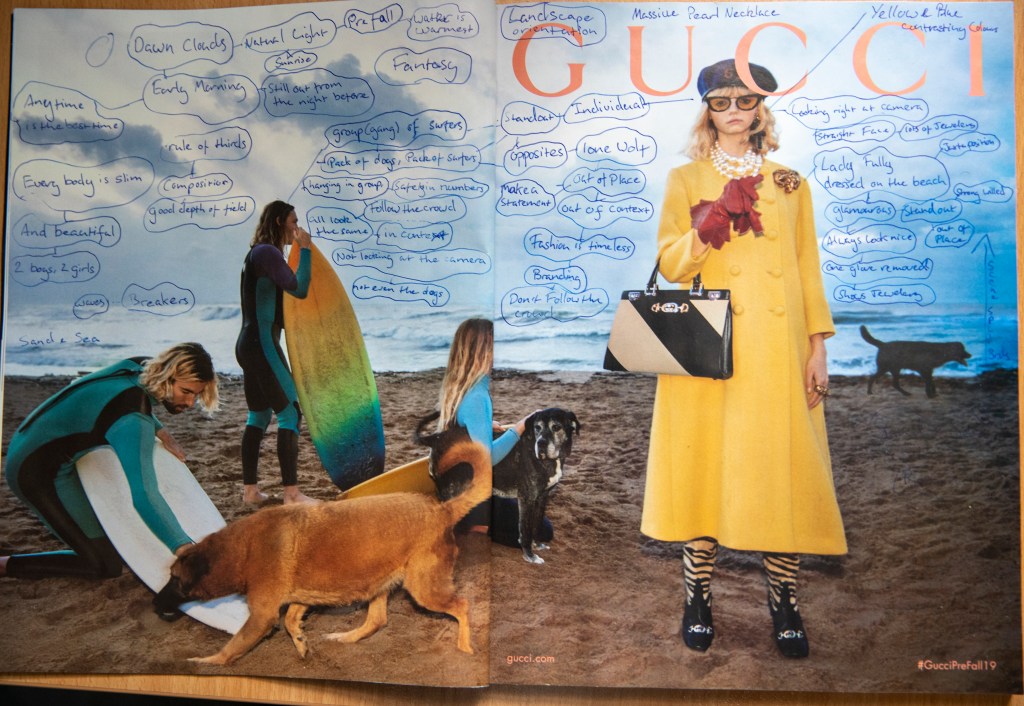
Rip out an advertising image from a newspaper supplement and circle and write on as many parts of the image as you can. Comment on what it is, what it says about the product and why you think it’s there. You could use this as the basis for your assignment if you feel it’s taking you somewhere interesting. Or you could adopt this method for your assignment preparation. Come back to this exercise when you’ve reached the end of Part Four and see if you can add anything to your analysis.
Exercise 4.1
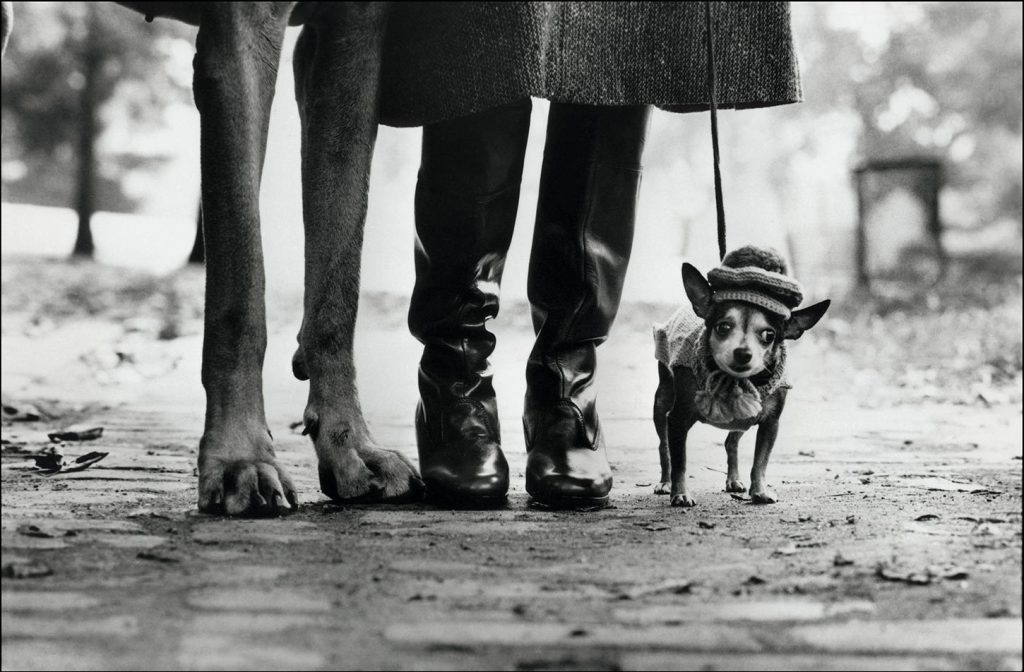
At first glance, this black and white image, Felix, Gladys and Rover, by Elliot Erwitt, looks like two people walking A small dog. On closer inspection, we slowly realise the gentle comedy of the image, a comedy which is characteristic through much of Erwitt’s work.
Erwitt, who was known for his humorous images of dogs, demonstrates here, arguably his most famous photograph of our four legged friends. We see that the first set of legs belongs to a huge dog (Felix), the middle set to a human (Gladys) and then the tiny Chihuahua in a woolly hat and coat (Rover).
Once we delve into the image, we can start to appreciate the subtle genius. Apart from the adorable subject matter, the image is well lit, almost perfectly composed and with just the right amount of depth of field that separates the main elements from the background. The photographer is literally getting down to street level to capture the characteristically expressive, crossed eyed Chihuahua. The skill it takes to capture a fleetingly perfect composition, should not be overlooked.
re-visit
Having read on in the exercise, returning to this image you can easily see how you can read more into it. You can go into minute details, you can look at the metaphorical, Big Dogs being in charge of Big Business, assuming this is Central Park only people of a certain social standing would be walking their dogs during the day in New York. Even down to the quality of the boots of the dog walker gives off an air of the upper classes, it is widely assumed that the small dogs are a status symbol of the rich, especially ones in wooly hats!
Assignment Three contact sheets
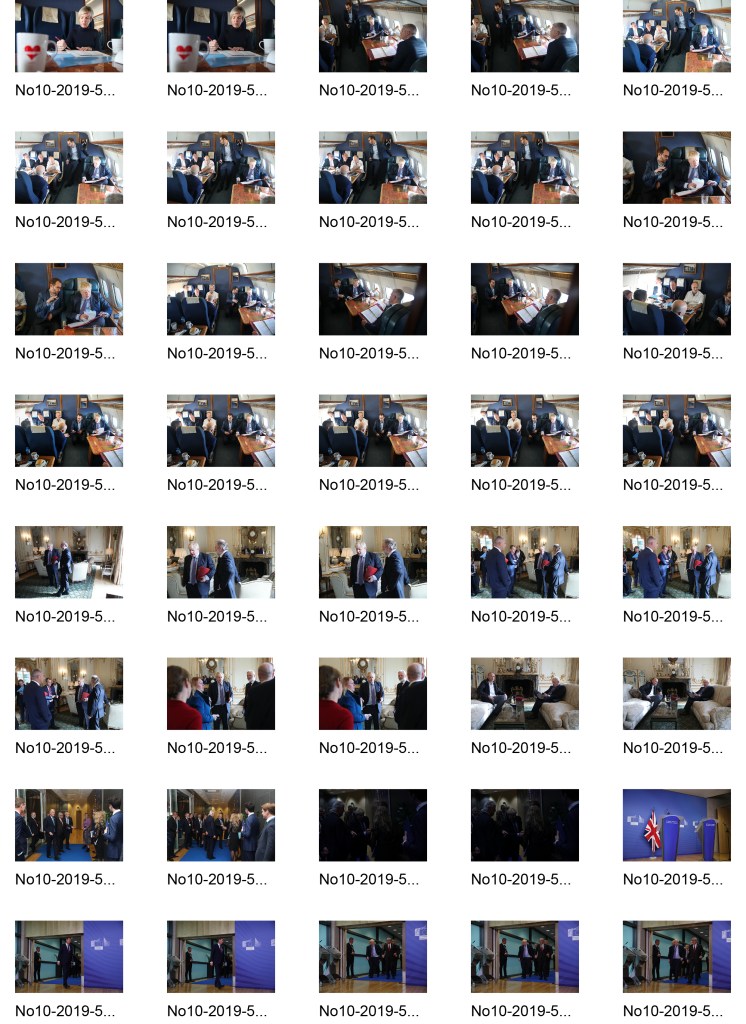
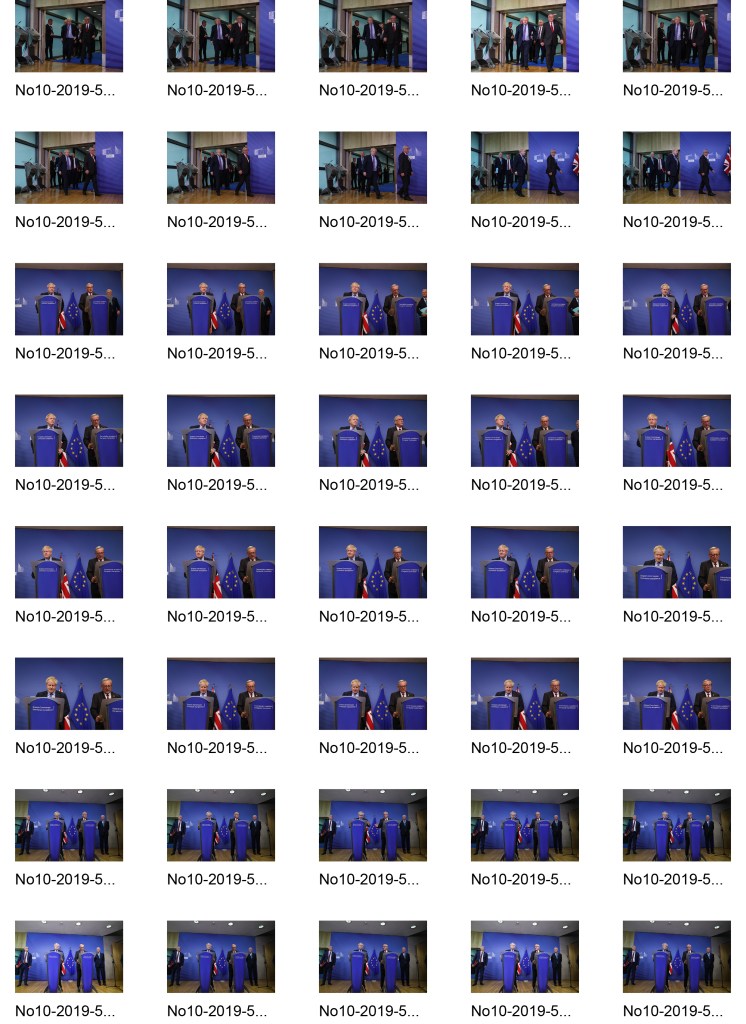
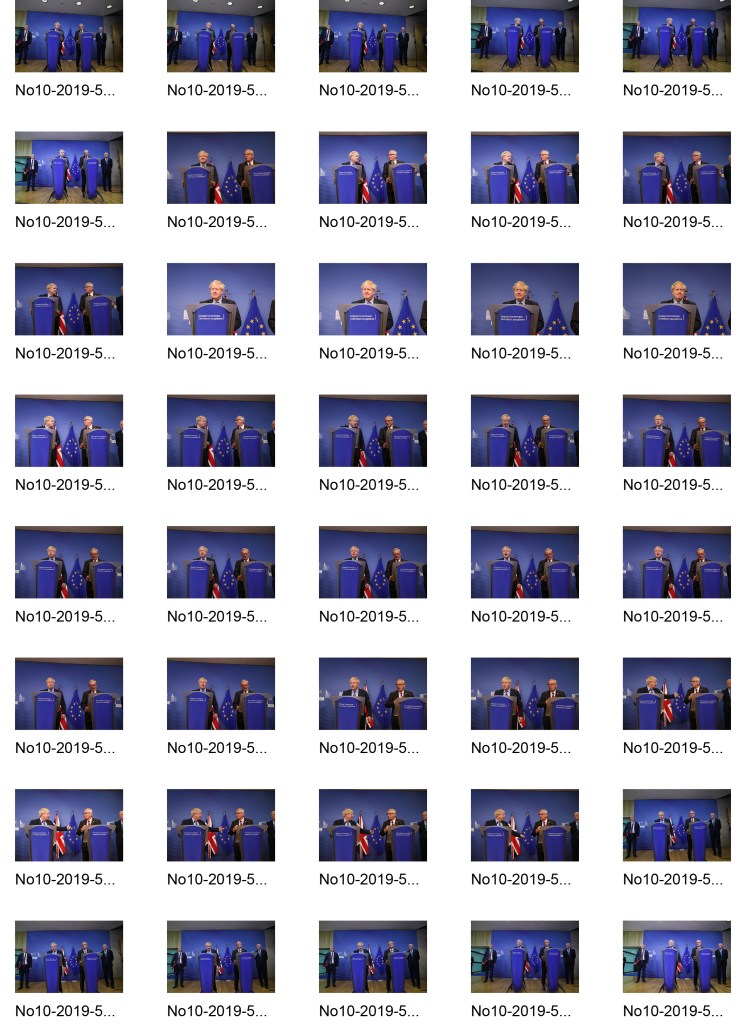
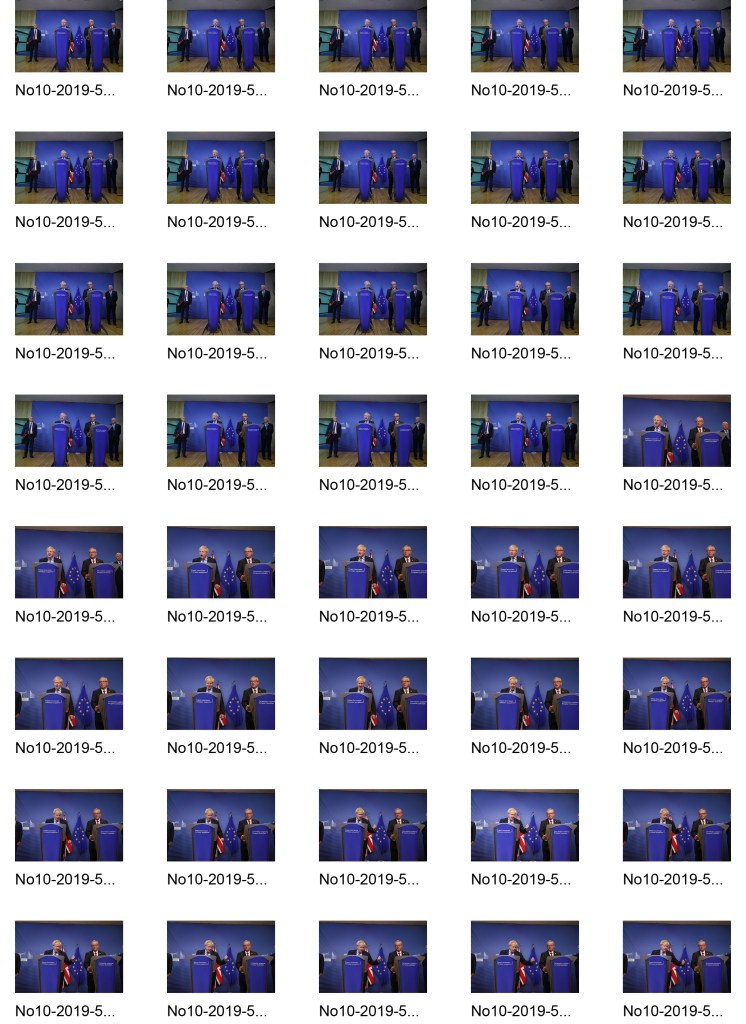
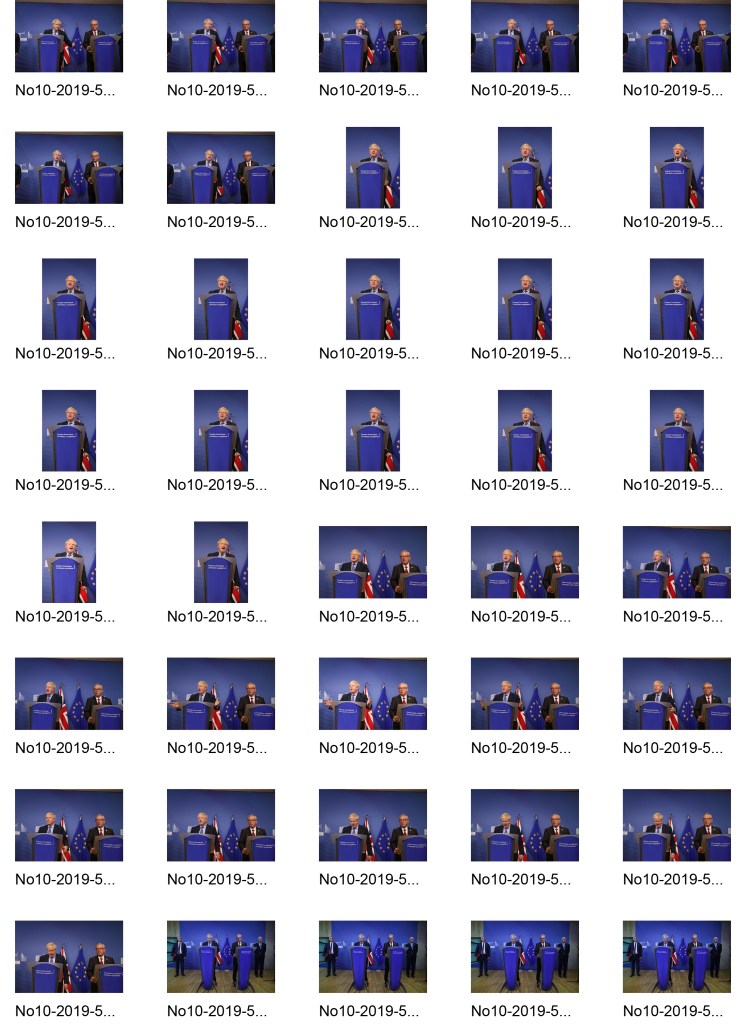
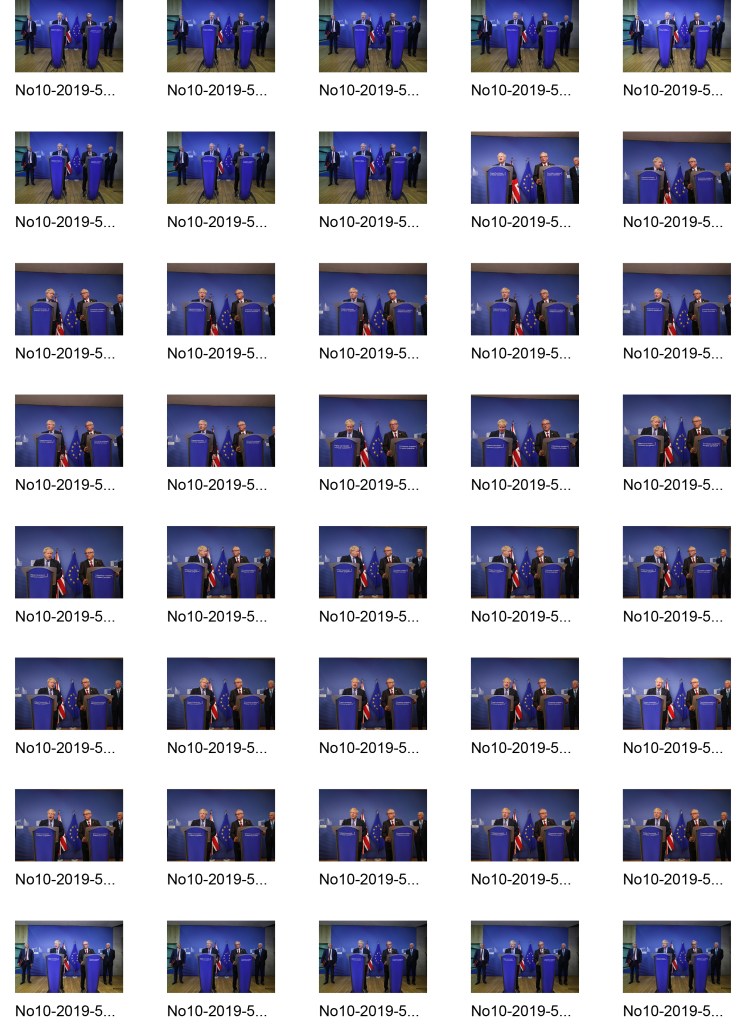
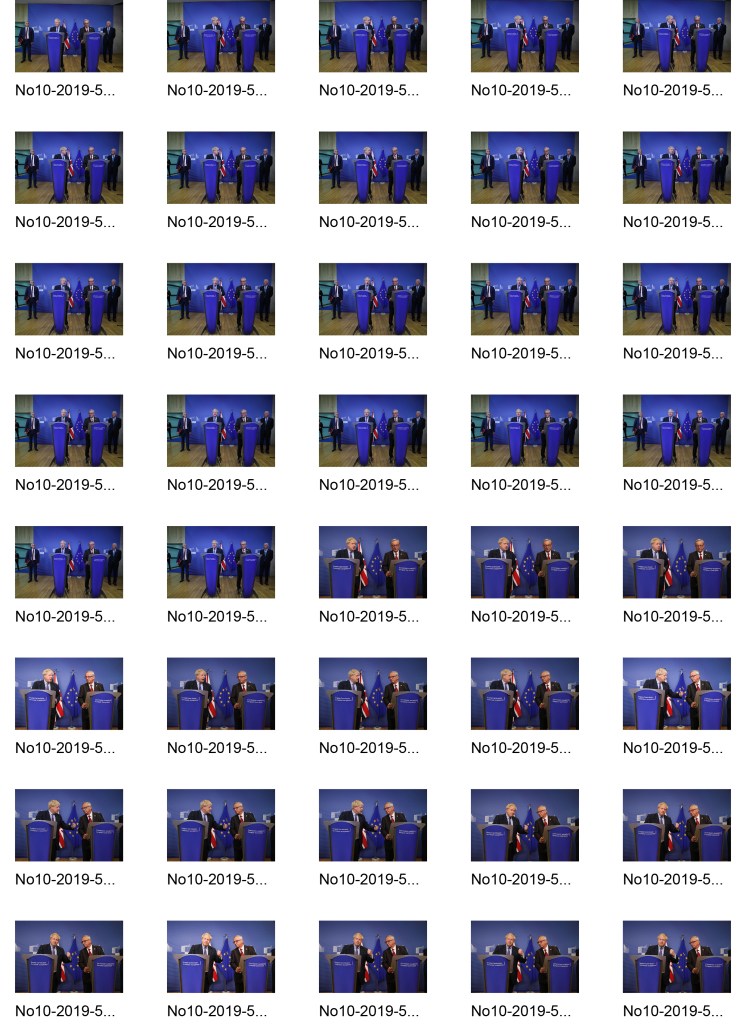
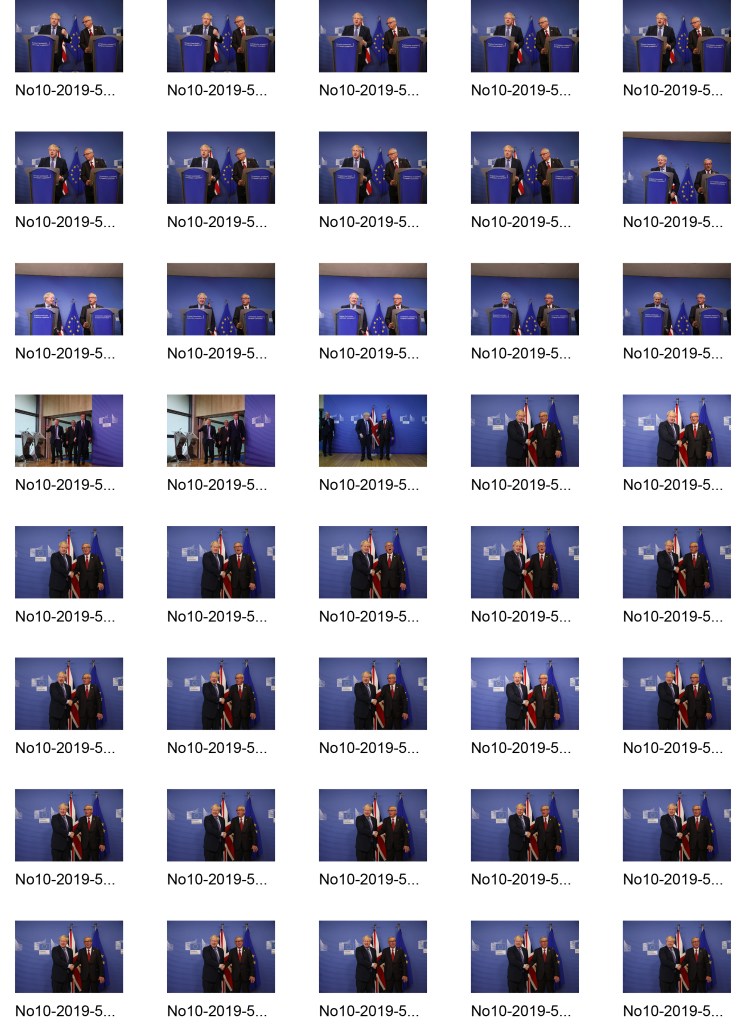
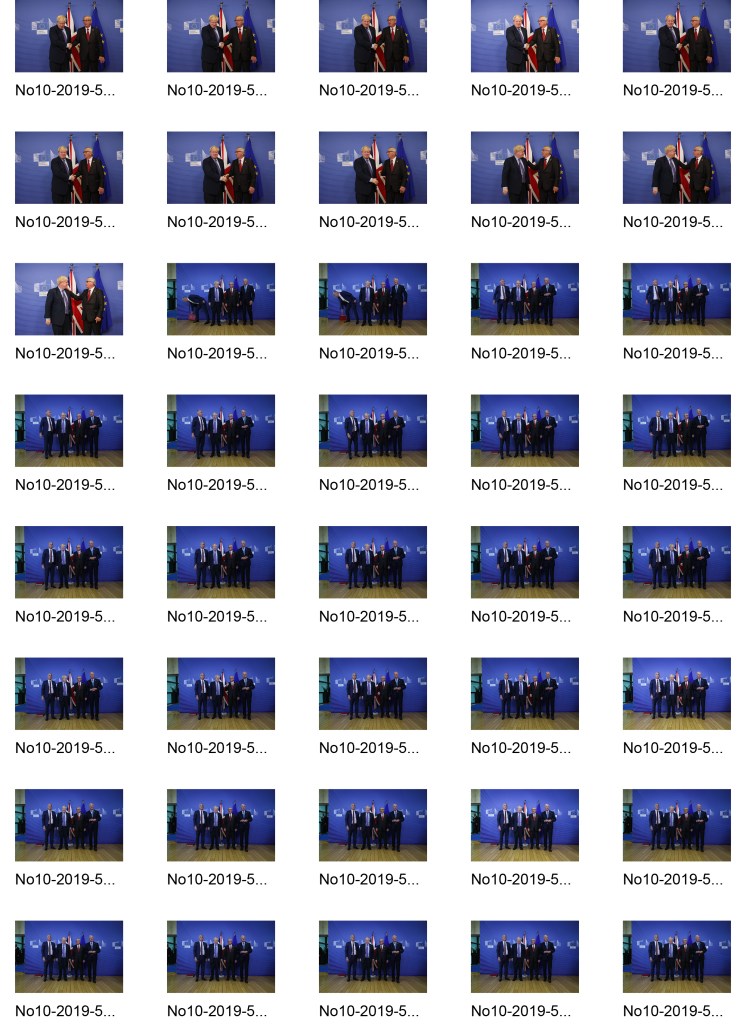
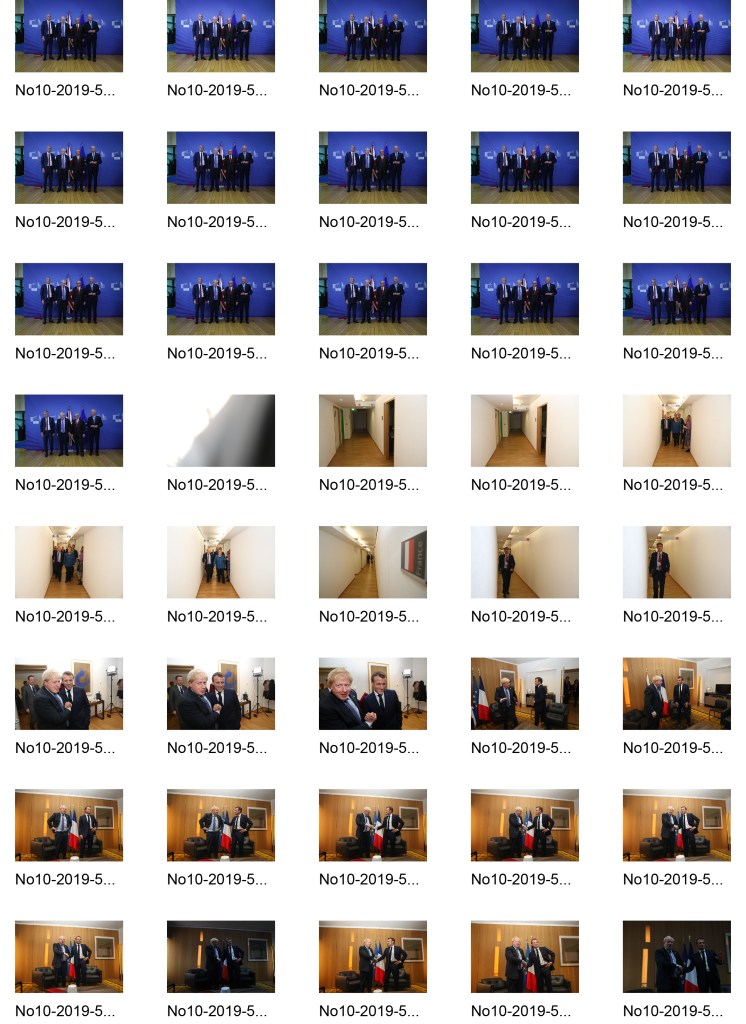
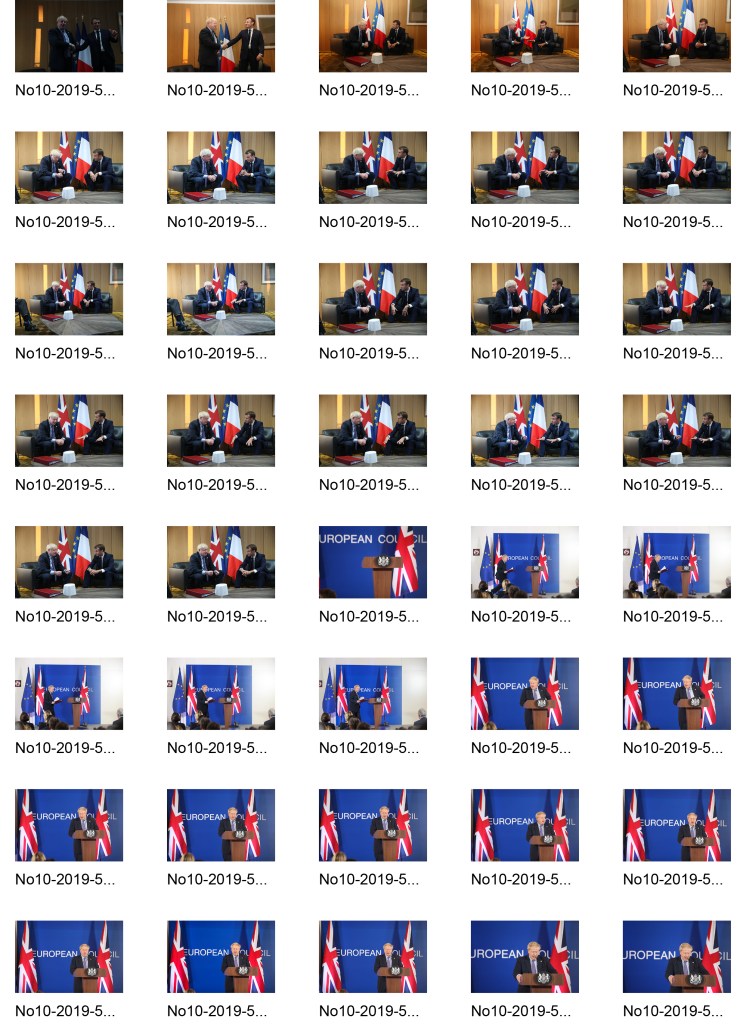
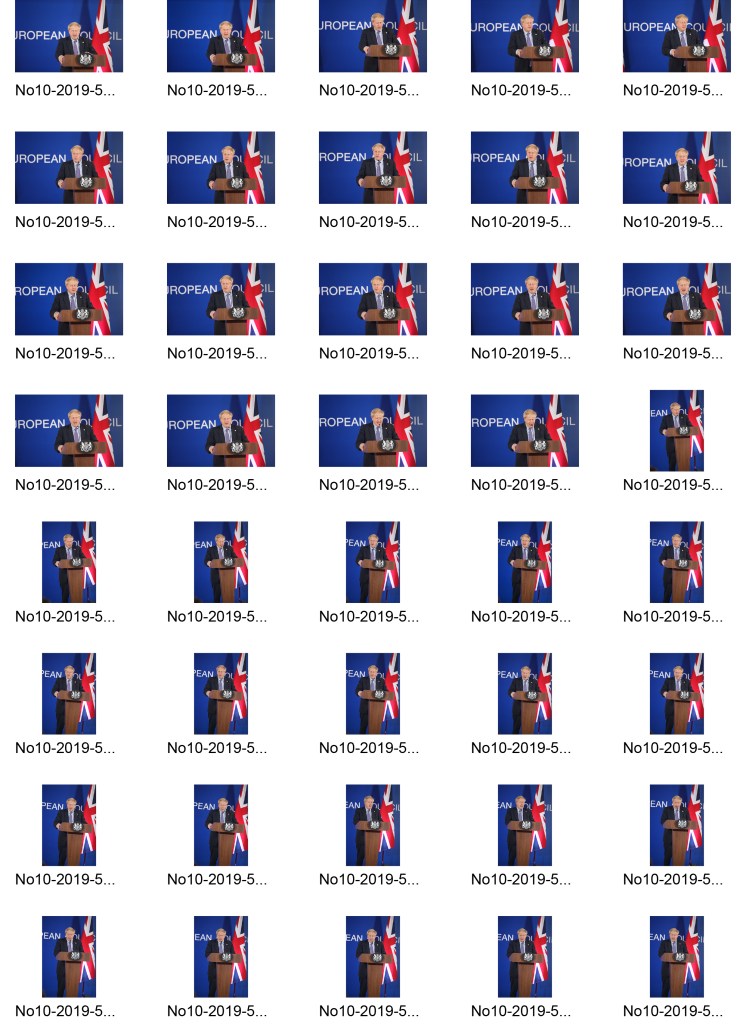
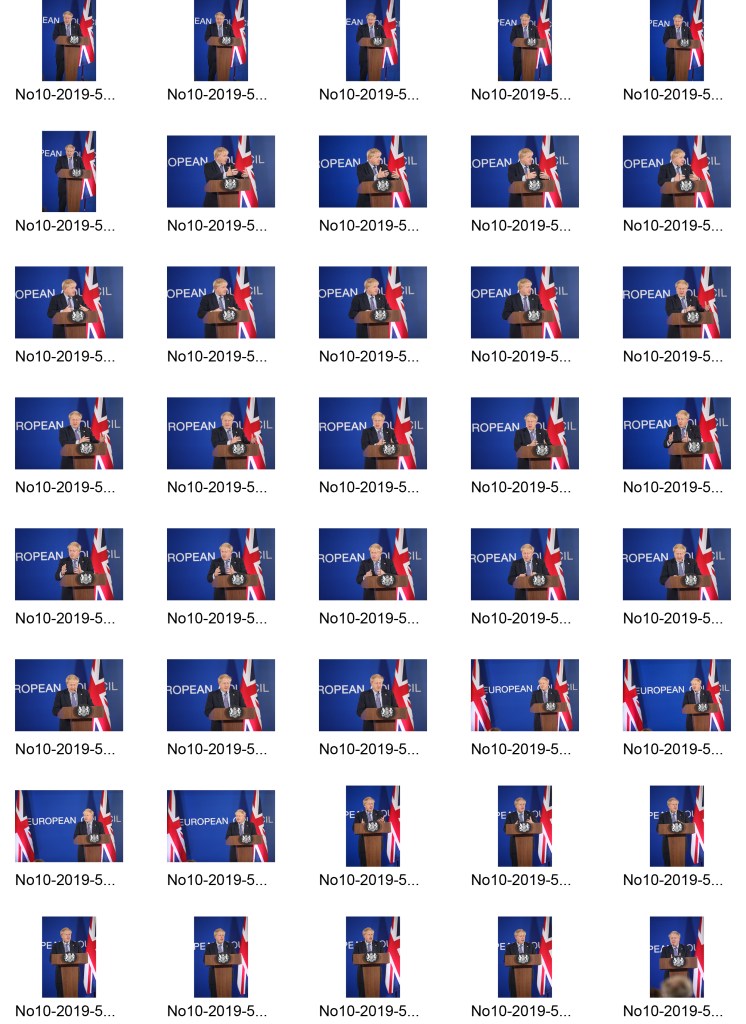
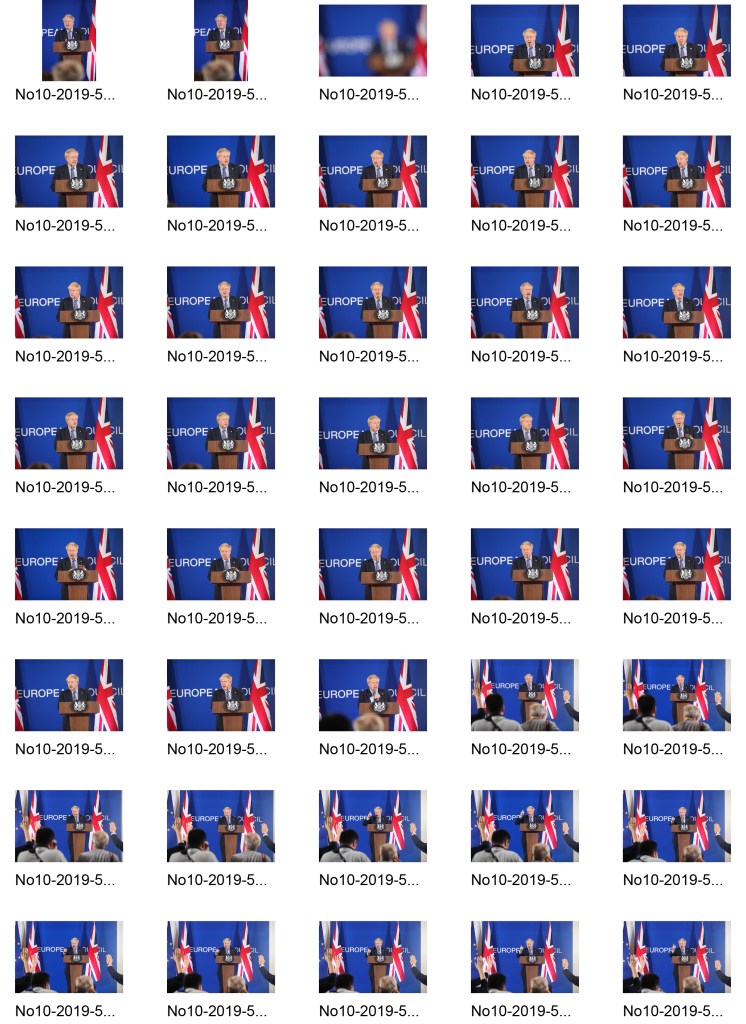
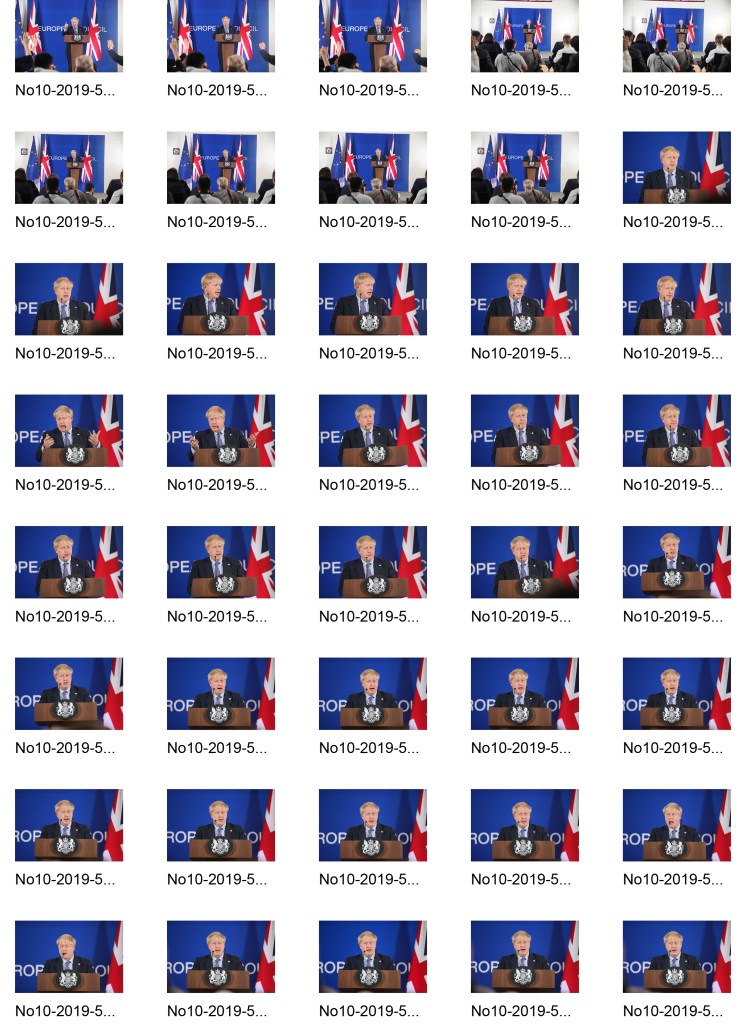
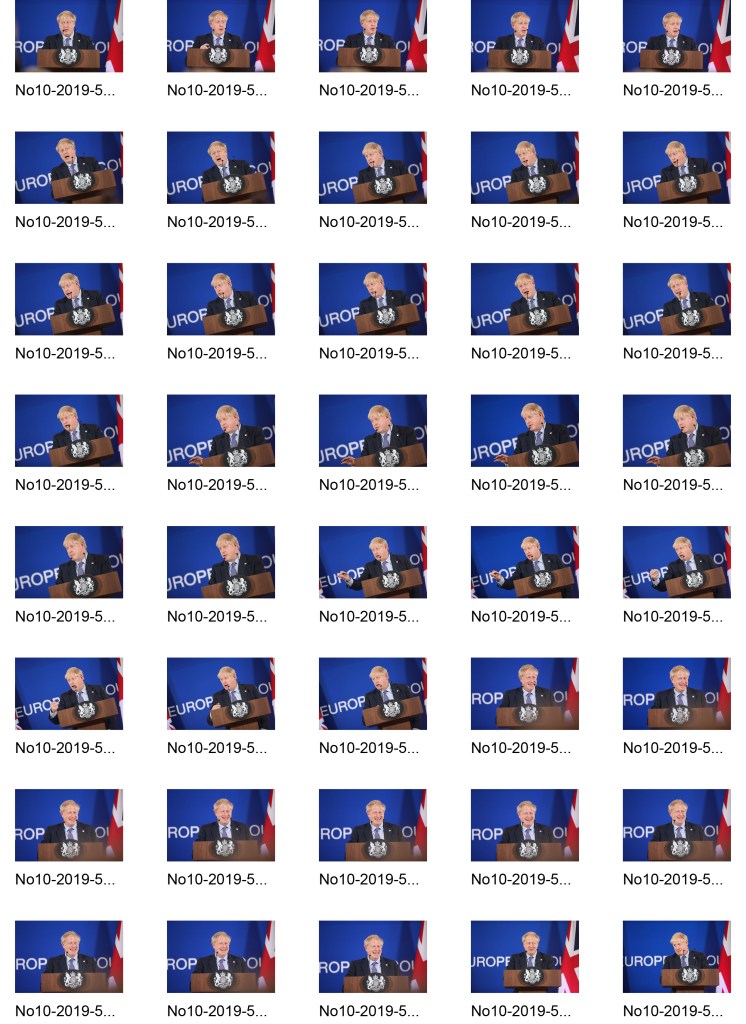
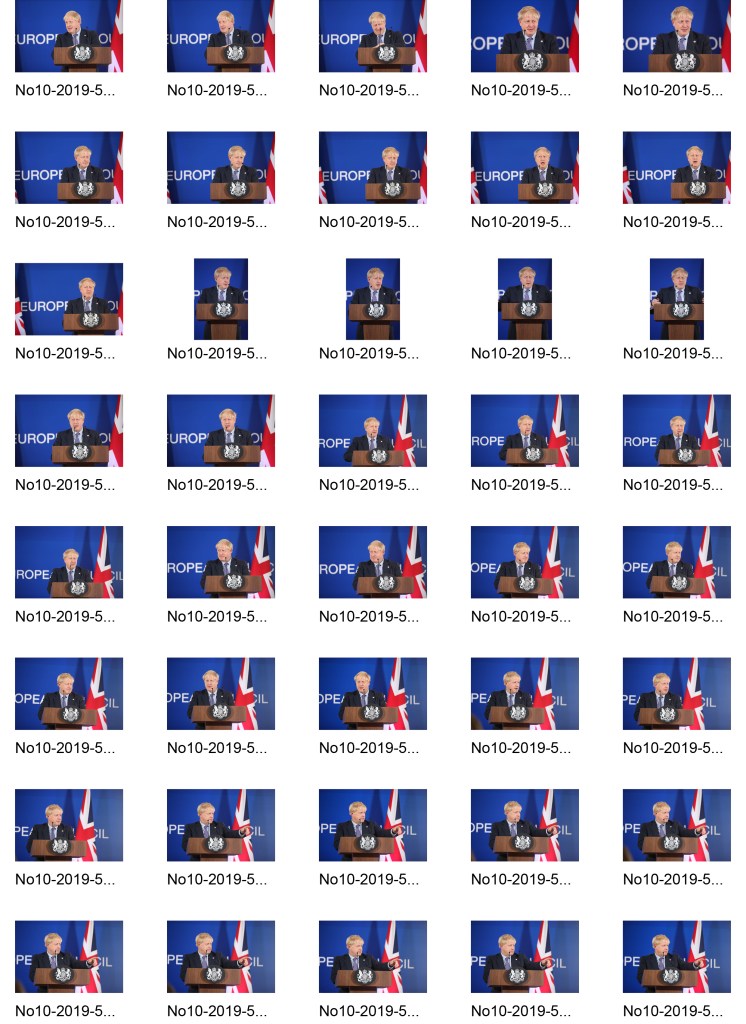
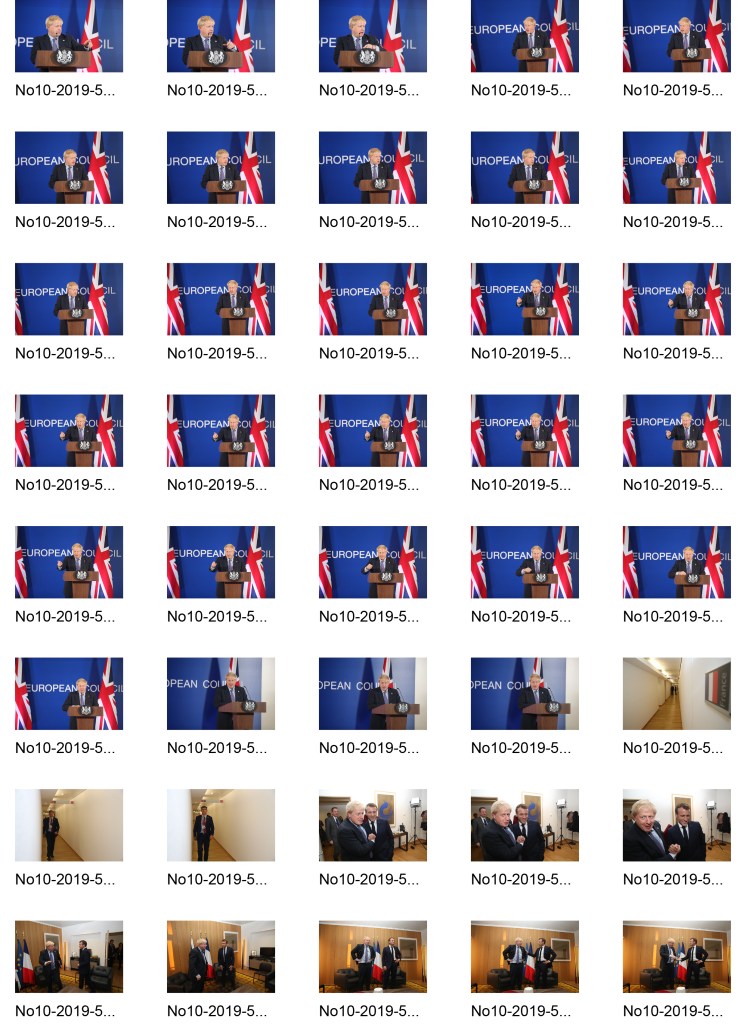
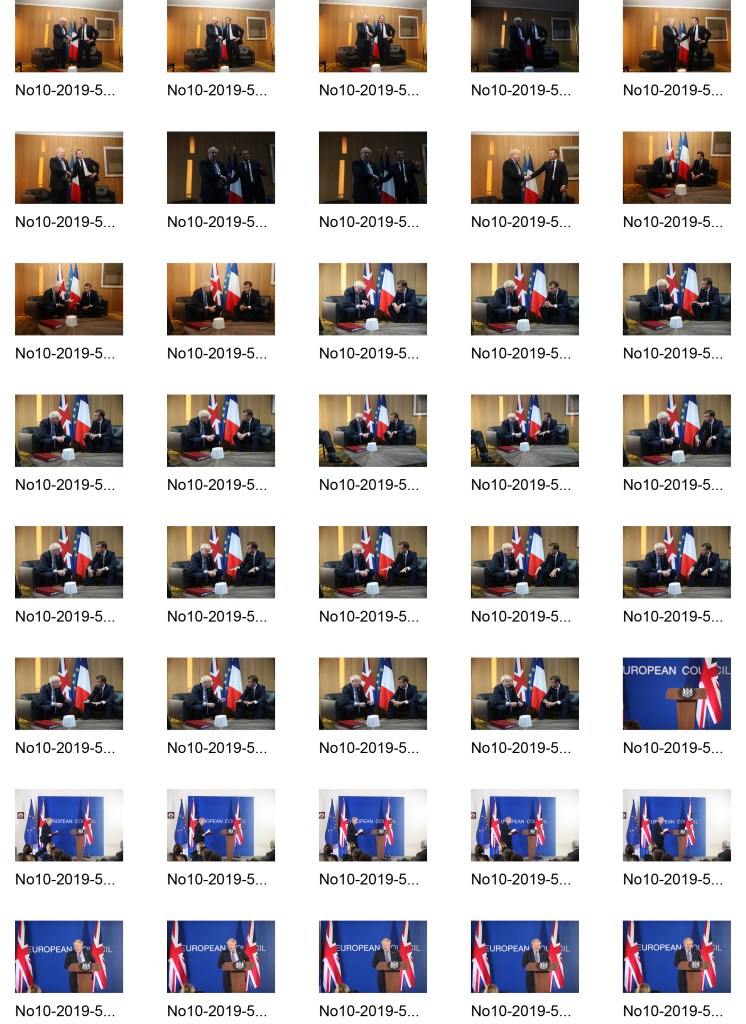
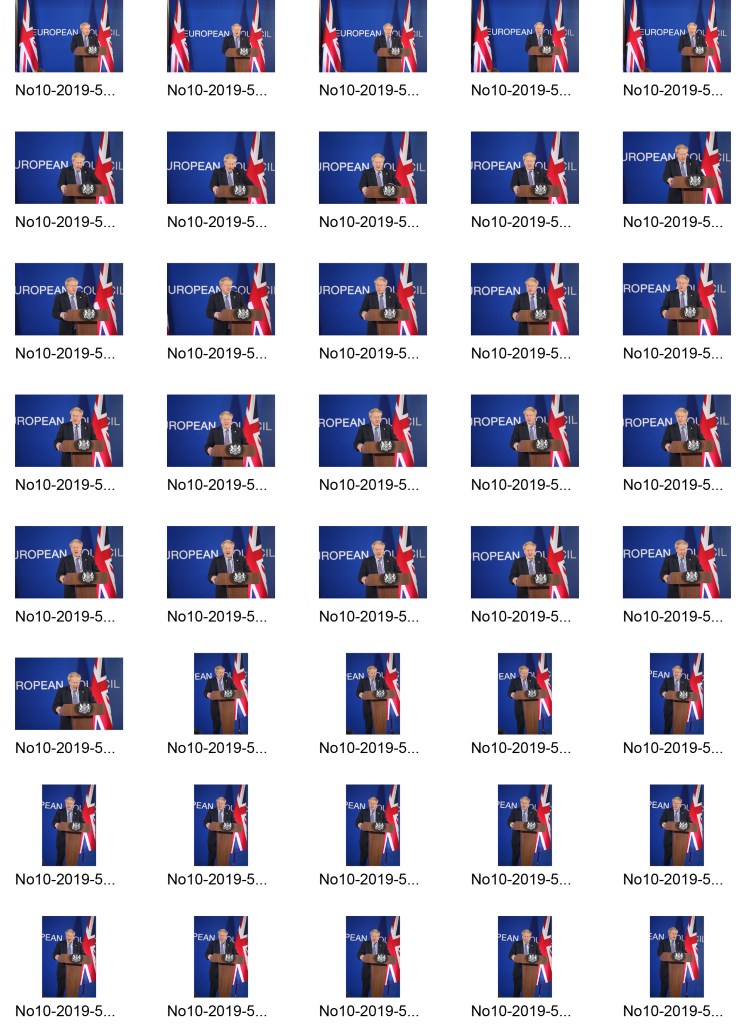


Assignment Three
For this assignment, we had to keep a diary of events for two weeks. This is not the easiest for me, I am not the most articulate of writers at the best of times and asking for two or three pages of diary entries each day seemed a lot. I downloaded a Diary app (Day One), once I was in the rhythm, it was not that bad.
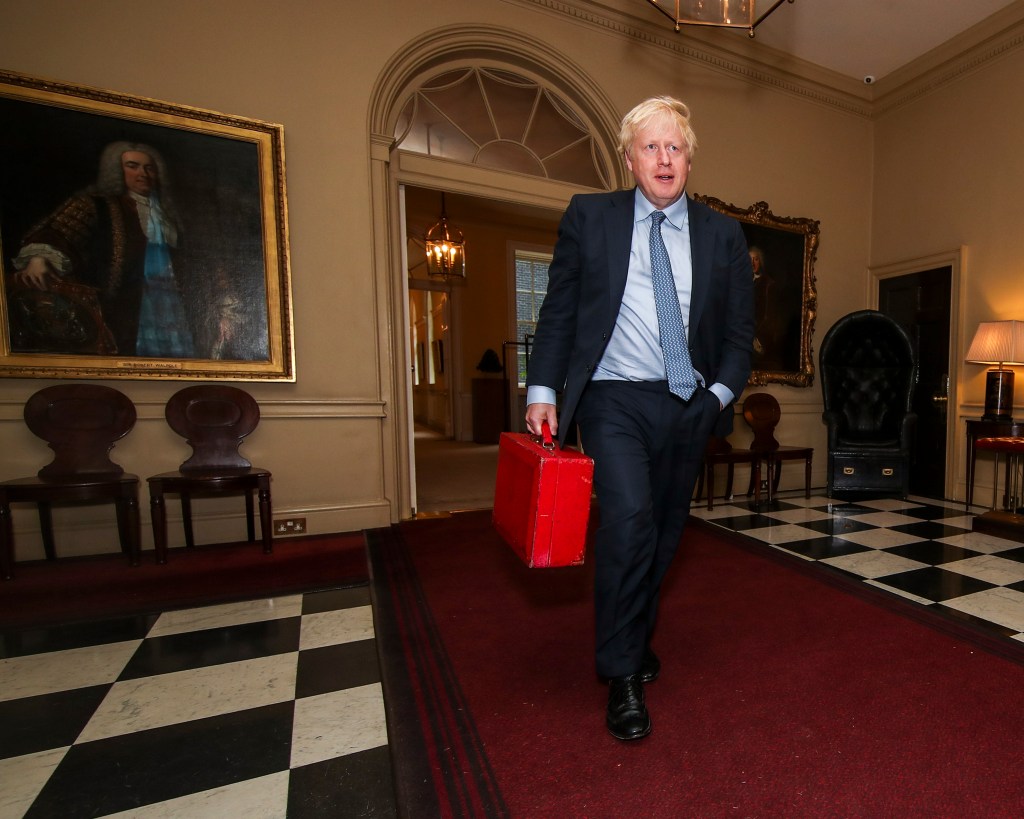
A little back story to my diary and my choice of entry. I am currently six months into a nine month secondment as the official photographer to the Prime Minister Boris Johnson and. If you have read previous posts on this blog or seen any of my work, that is probably already apparent. This posting to No 10 has been all encompassing, as I am aware that this module is on self portraiture, or at least a reflective look at oneself. Over the course of this diary, it has been extremely difficult to separate myself from this job, it has literally taken over my life. The BREXIT negotiations and now the general election, coupled with the fact, I am the only official photographer for the PM, 18 hour days seem to have become the norm. That said, this is one of the most fascinating times in political history to be doing this job and it is an honour to do so.
In my professional career, I have covered many high profile events and visits, covering Royal visits to the launching of Aircraft carriers. As a PR photographer, I am always looking to show what I’m photographing in the best possible light. In my day job, deciding what images show that person/organisation in the most favourable light. Even down to getting a lower angle to make people look more powerful or trying to not make them look isolated and flattering lighting. I’m constantly thinking of all of these things as well as the obvious shutter, aperture and ISO. I’m never looking for the gritty underbelly or embarrassing images, that’s a job for the Paparazzi.
This has been ingrained in me since my early photography training with the Royal Navy, It has always stuck with me, it is almost a subconscious process now, looking for the best angles, flattering poses, looking for powerful messages in my photographs. Working for the government has its own set of challenges, I am supposed to be completely neutral, is there such thing as complete neutrality? We all have our own views, opinions and traits, I believe all photographers personality come through in their photos, whether they realise it or not.
Work at No 10 has been very interesting over this period, there have been many events to photograph and blog about, from the Pride of Britain awards to the Wildlife Photographer of the Year competition. One day I took the passport pictures of 30 different members of staff, which, when all put together made an interesting montage of photos that I could have made into and interesting diary entry.
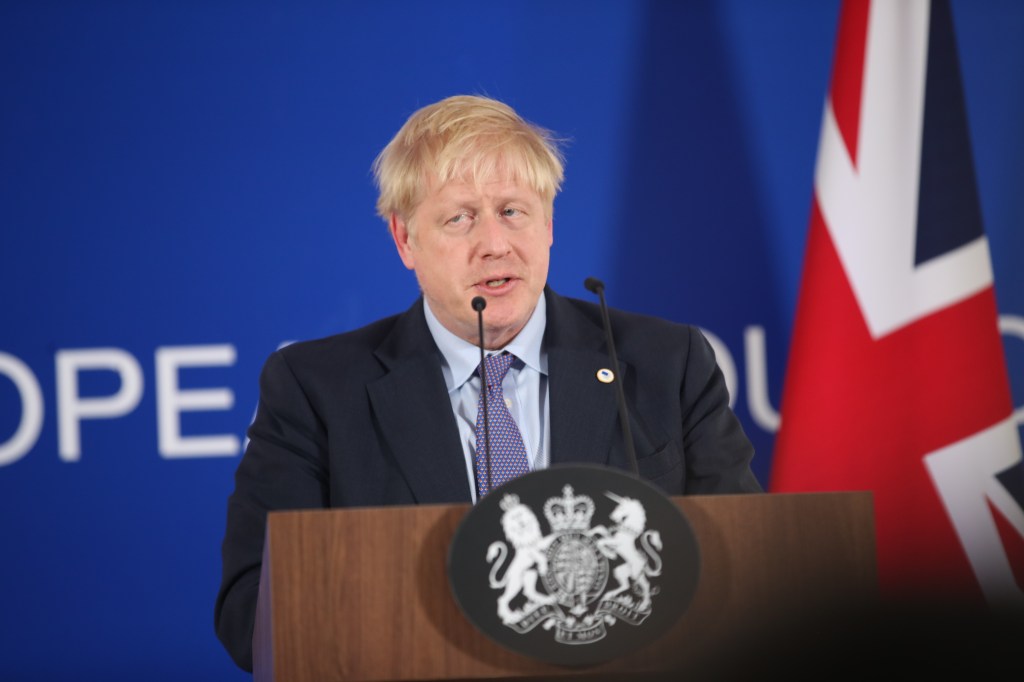
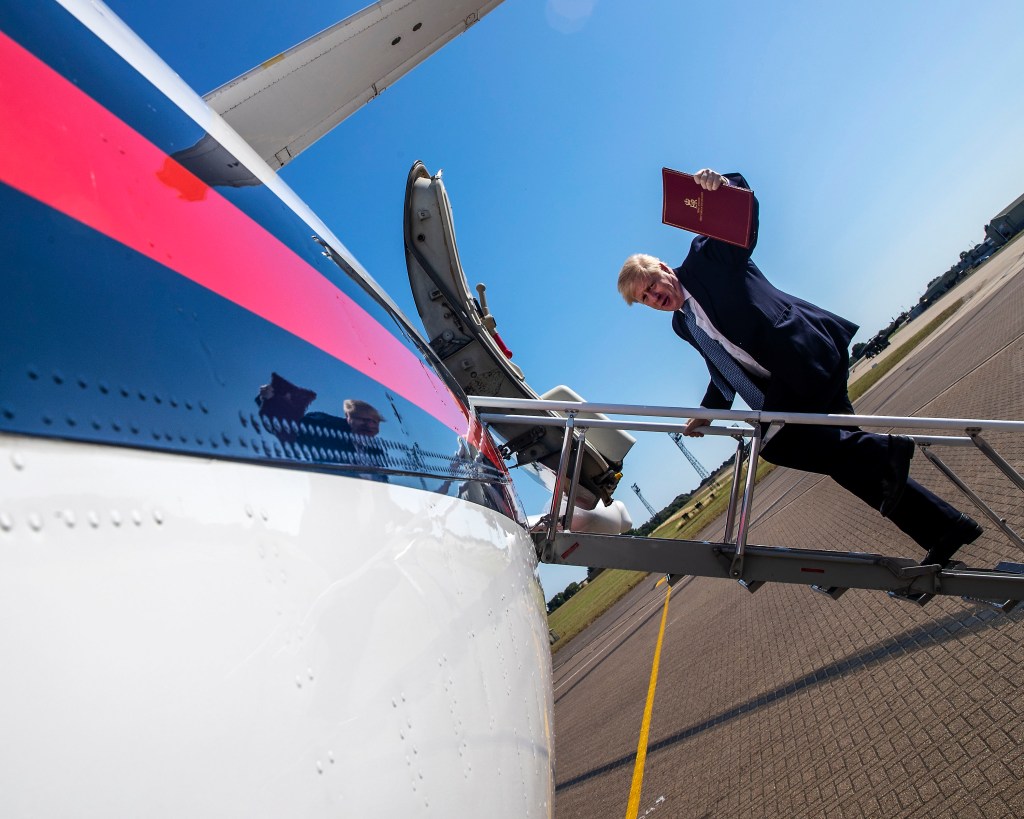
The event I choose from my diary, in my opinion, was the highest profile, but also the one that made the most sense chronologically and worked best as a set. This was the Prime Minister, travelling to Brussels, to get the Brexit deal passed through the European Union Parliament.
Here is my diary entry for that day:
“Today is the day of EU council, after a few false starts this morning we have finally boarded the RAF plane 146 and set off for Brussels. This EU council is a special one, as it is the one where PM Boris Johnson has finally come to an agreement with the Eu Parliament on BREXIT, I don’t think any of the opposition thought he could do it.
Once we landed, we made our way via police convoy, to the Europa Building in the heart of Brussels, safe in the knowledge that a deal had been accepted between both sides.
The official proceedings started with a press conference between Boris Johnson and Jean Claude Juncker, where, they announced that a deal had been reached and ratified by the 27 members of the EU. It was not like normal press conference, the EU don’t want us to leave, to quote Donald Tusk when asked what his message was to the 48 per cent of British voters who supported remain, European Council president Donald Tusk said: “I regret that it was only 48 not 52.”
The PM then held bilateral meetings with Chancellor Merkel and President Macron. We then moved to the roundtable for a series of talks, this was much back slapping and congratulations for getting the deal through.
We then held a press conference, where the traveling press pack had their say, I must admit, the press were a lot easier on the PM than I thought. The mood is high as the deal has been reached against the odds, crunch time will be in Parliament on Sat and I’m not holding my breath. The PM is now off to his official dinner and we get to enjoy a meal in Brussels city centre.
We were supposed to leave at 2300 but were delayed until 0230 meaning we didn’t return back to the UK until 0400, these are long days!”
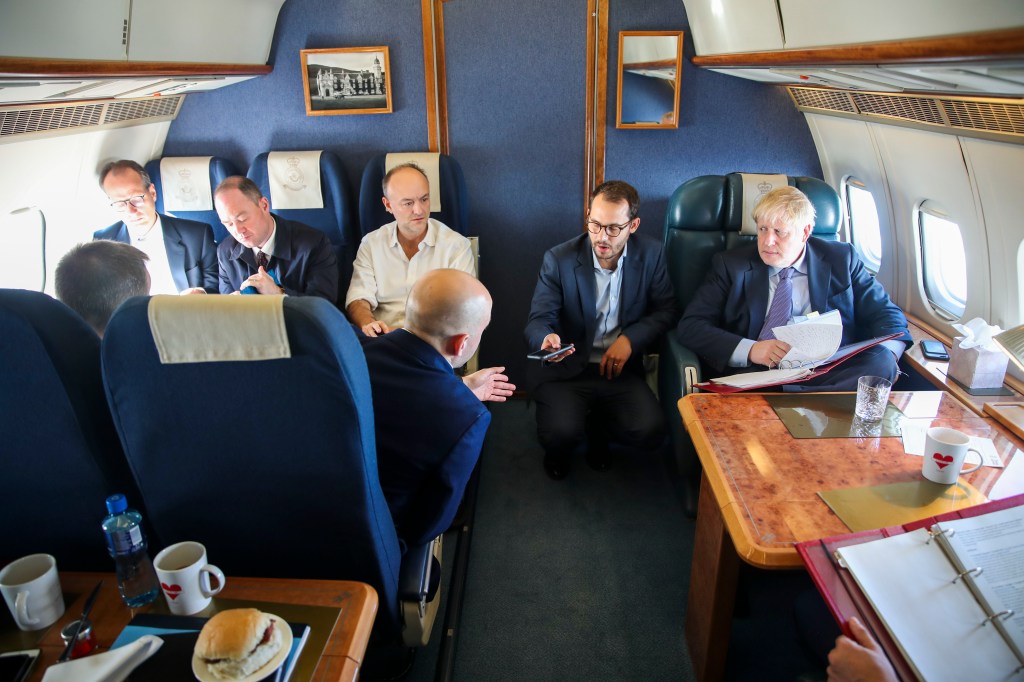
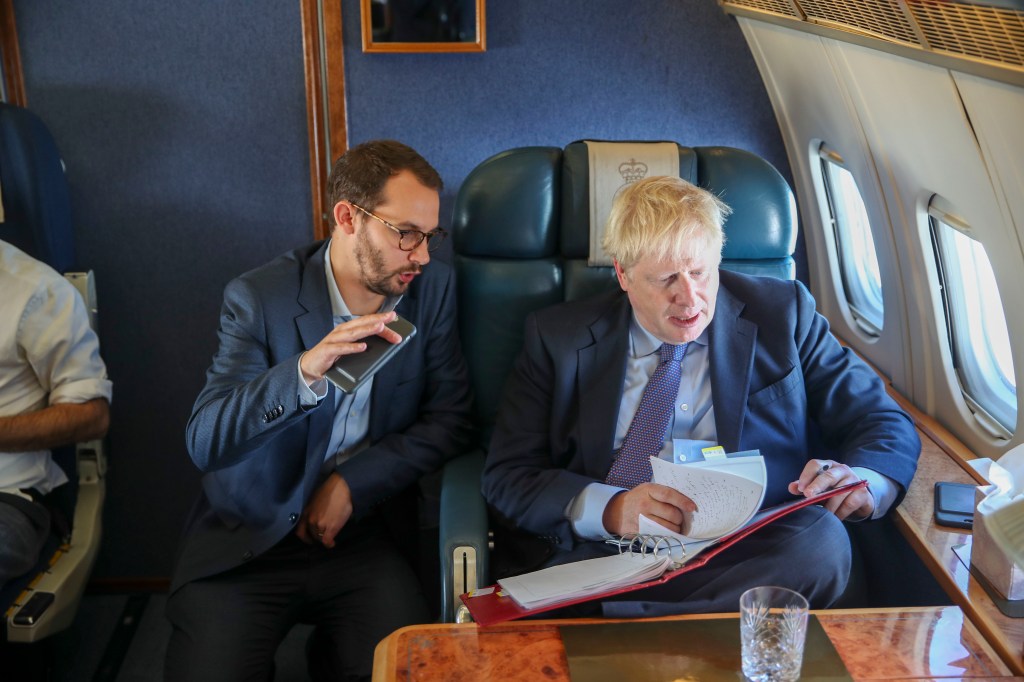
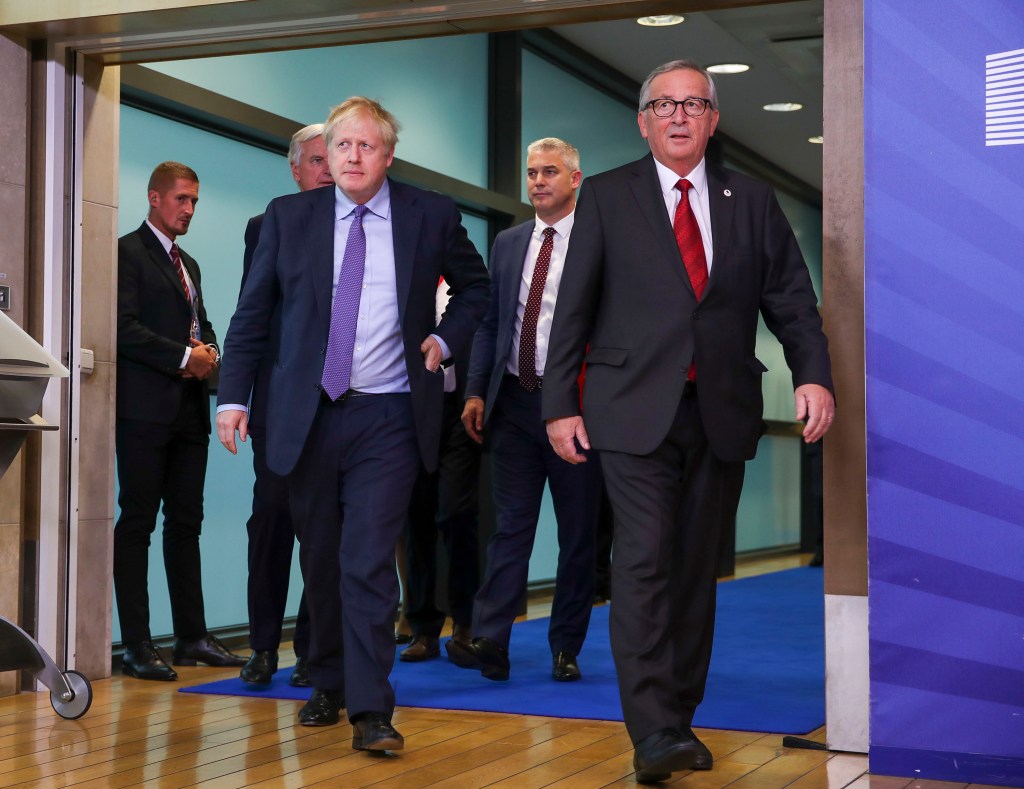
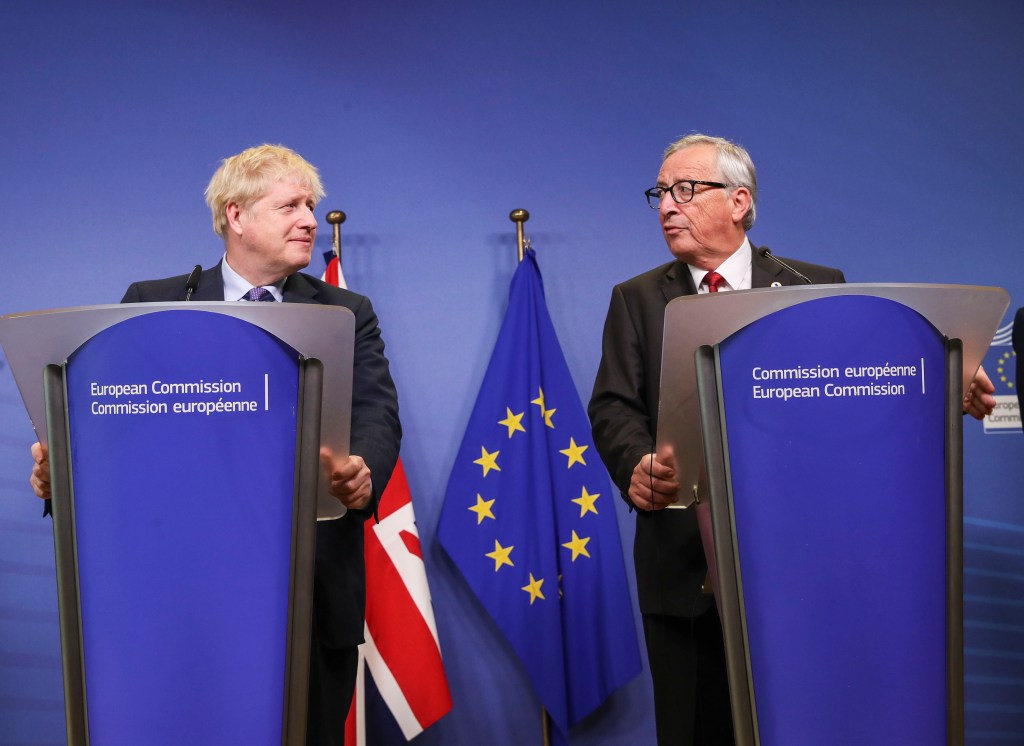
Prime Minister Boris Johnson attends the Euro Council to announce BREXIT deal with the EU 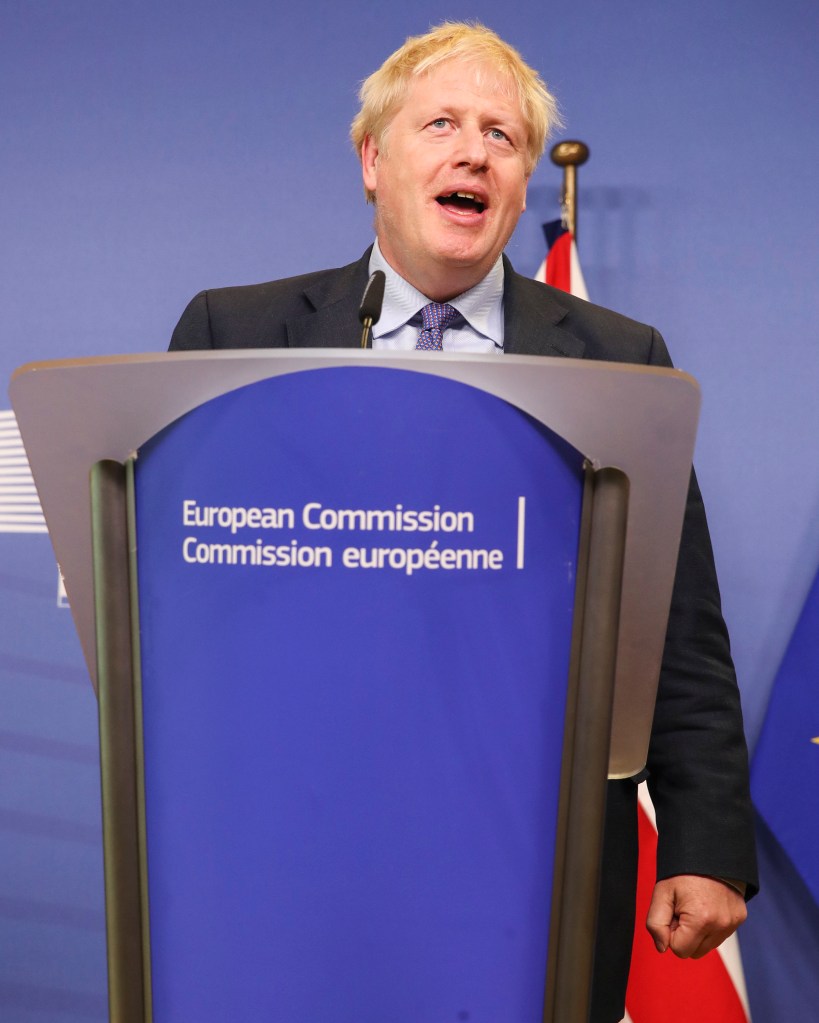
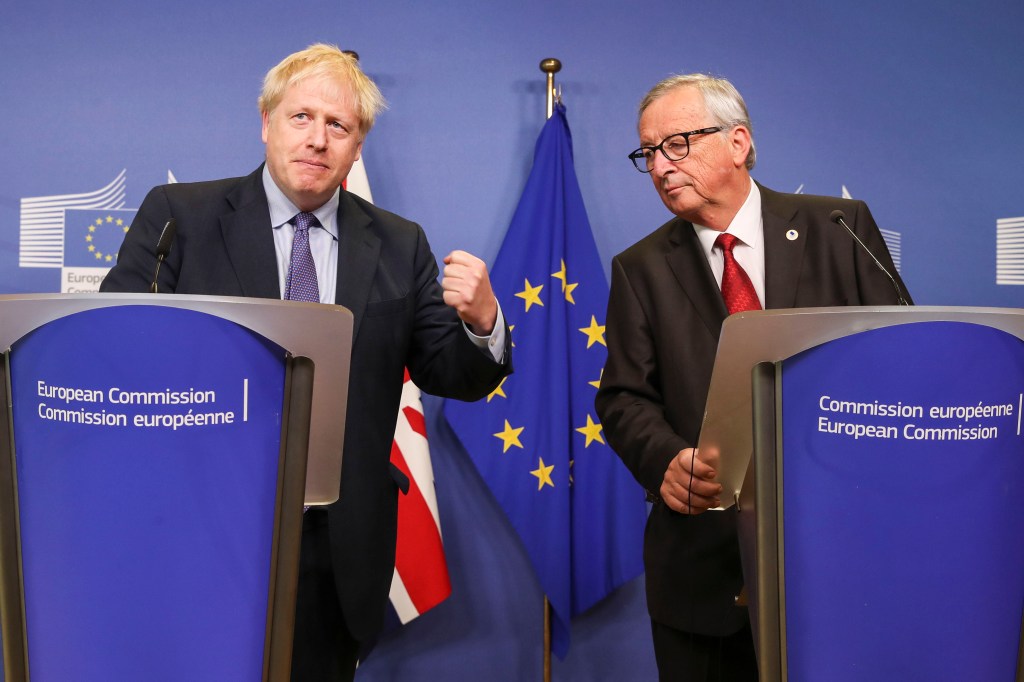
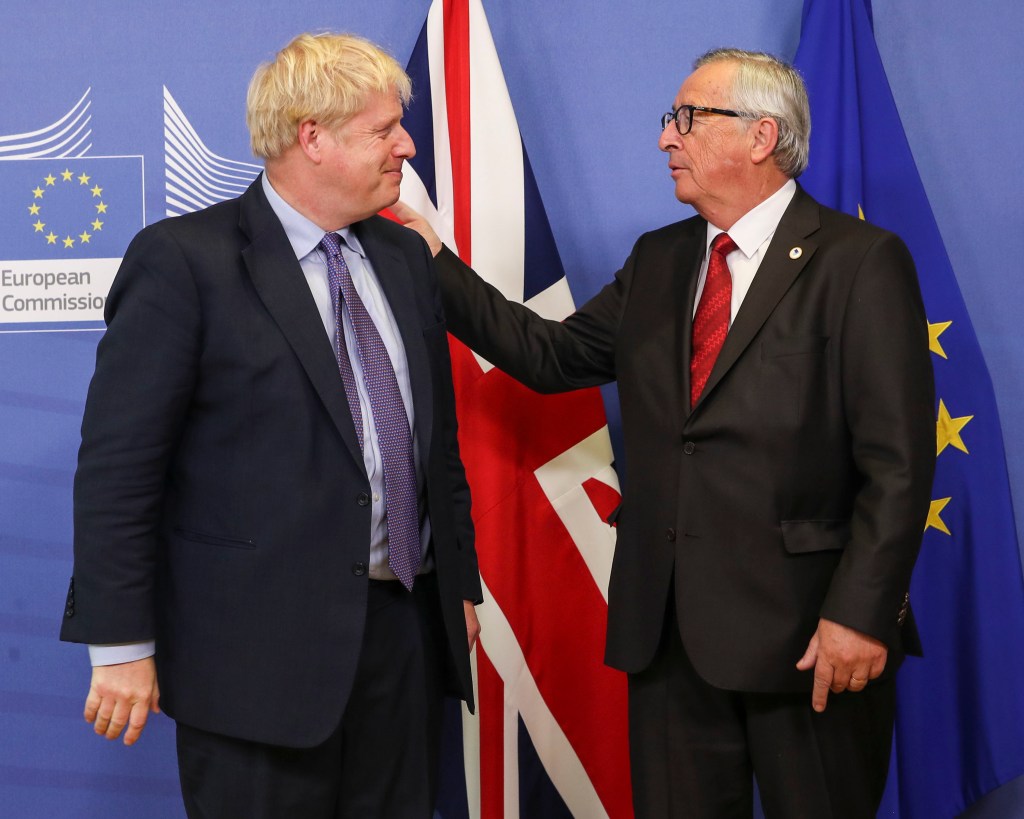
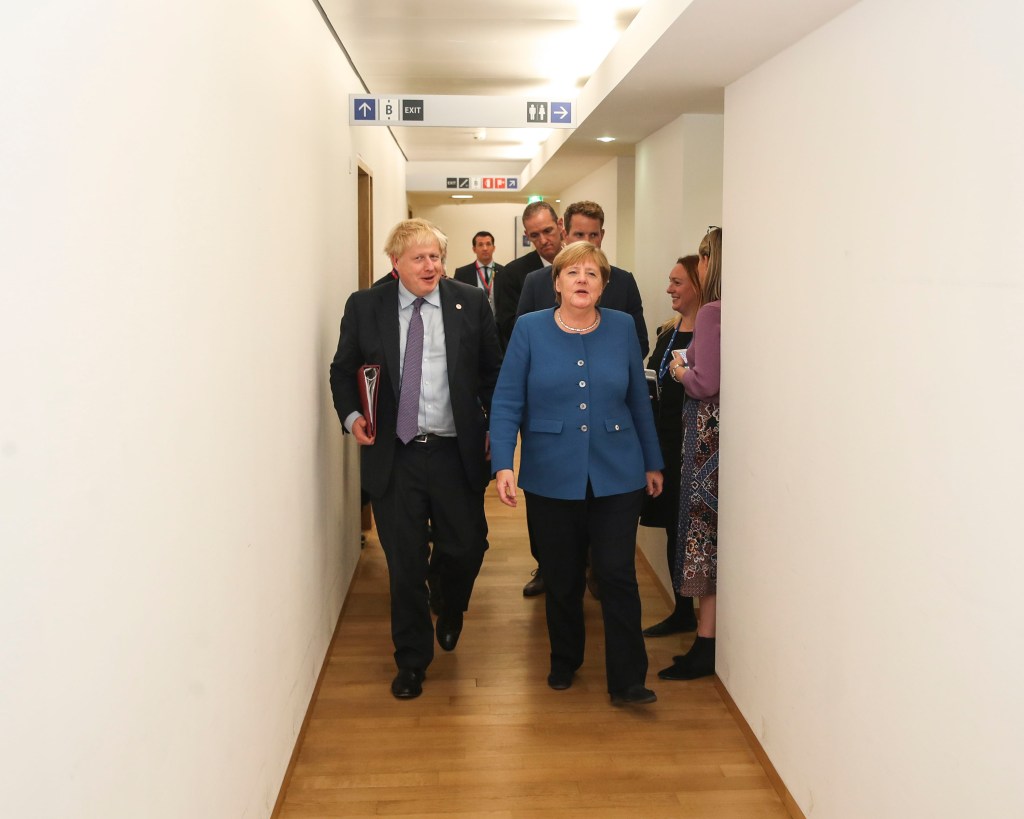
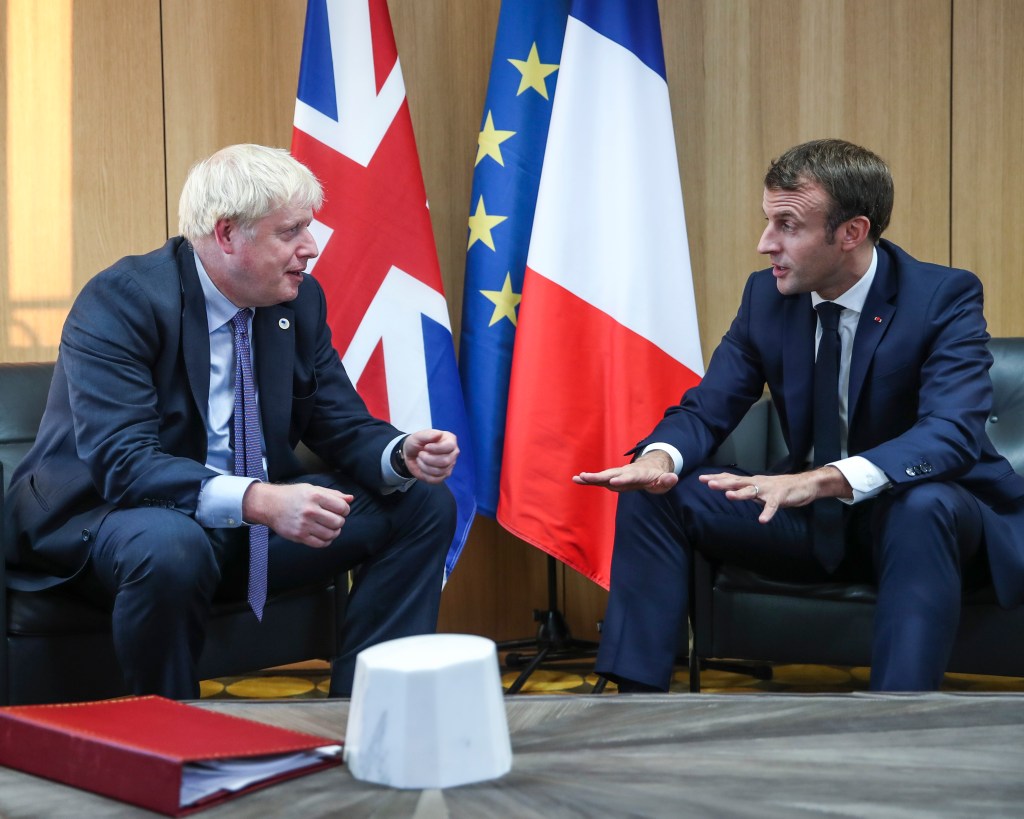
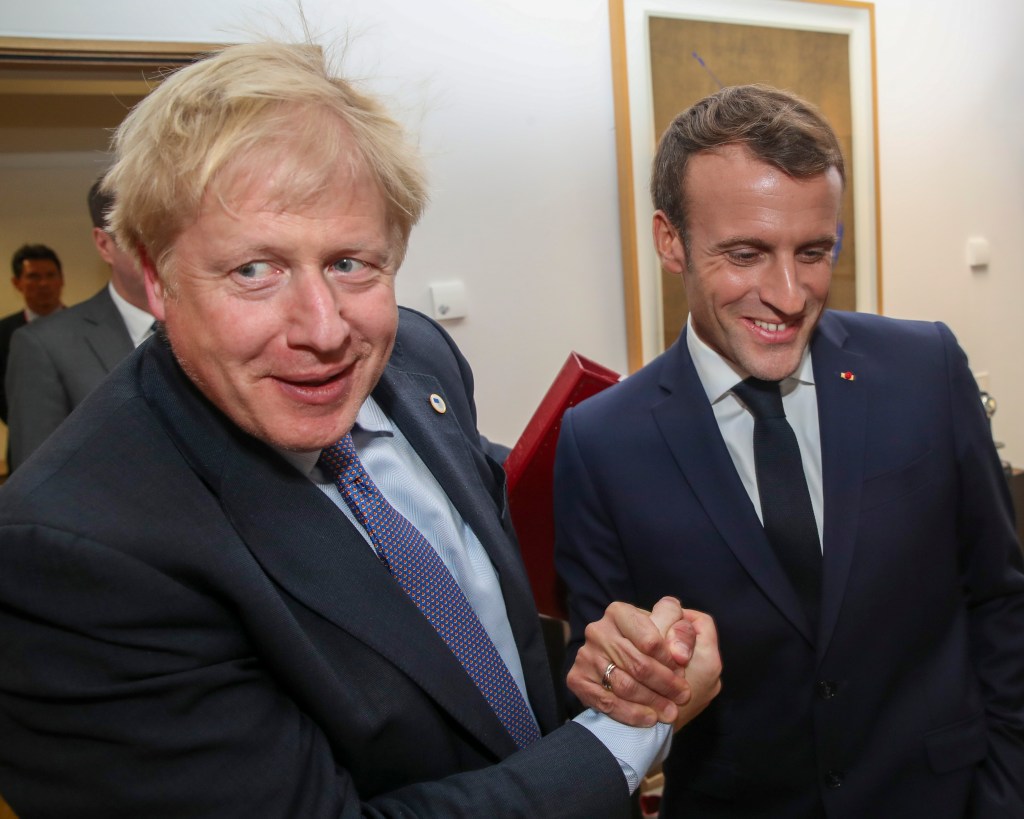
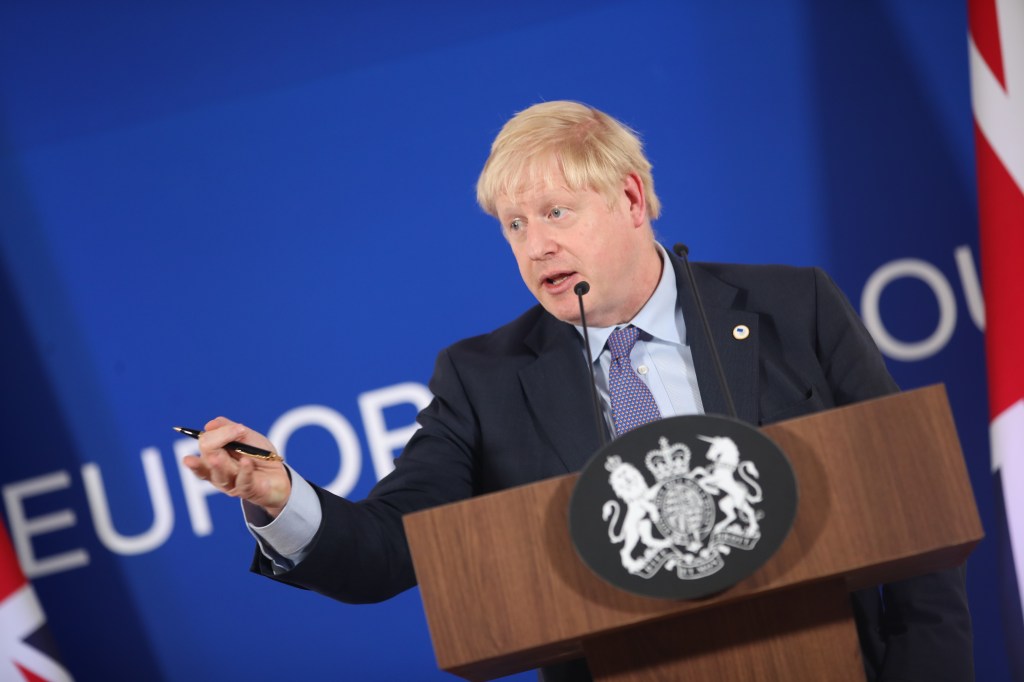
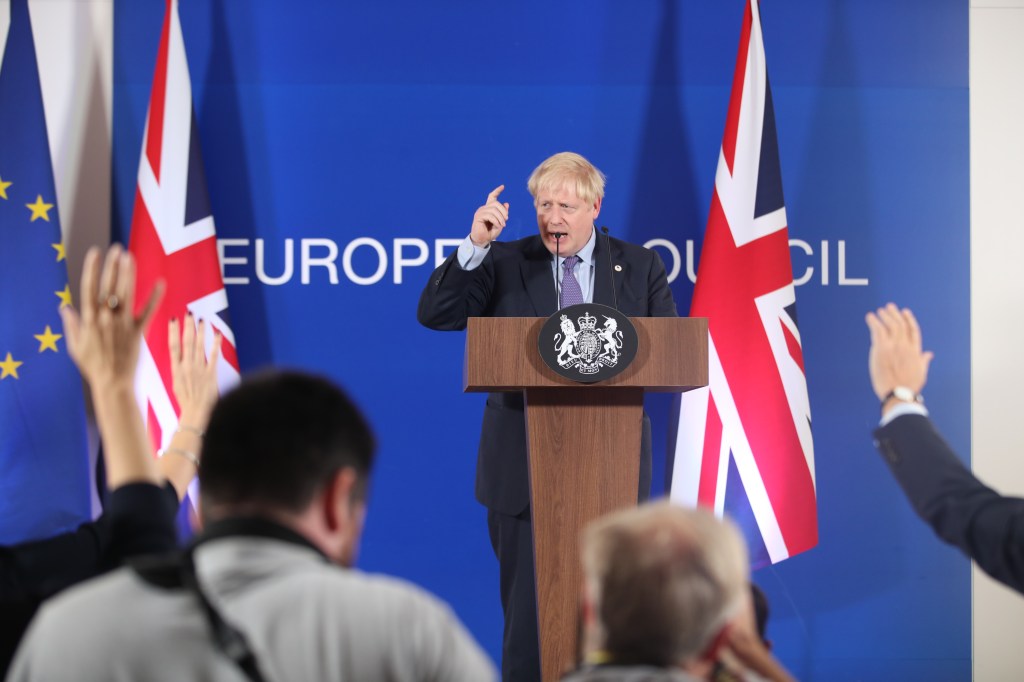
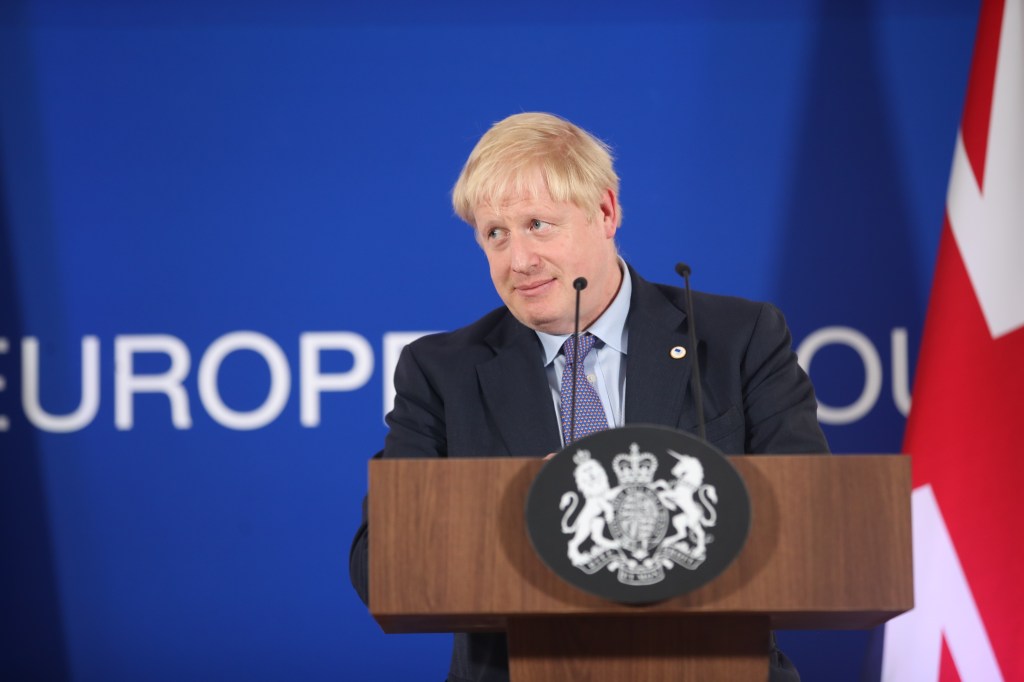
I chose this day as it was the most interesting of all the entries. What’s interesting to me, is seeing what others thought of the proceedings.
The Guardian’s Jenifer Rankin and Rowena Mason said ‘EU leaders have unanimously approved the new Brexit deal struck by Boris Johnson after discussing it at a summit in Brussels.
European Commission and UK negotiators struck the accord, which replaces the EU’s “backstop” with new arrangements for the Irish border, earlier in the day.
“The European Council endorses the Agreement on the withdrawal of the United Kingdom of Great Britain and Northern Ireland from the European Union and the European Atomic Energy Community,” the European Council conclusions read.
“On this basis, the European Council invites the Commission, the European Parliament and the Council to take the necessary steps to ensure that the agreement can enter into force on 1st November 2019, so as to provide for an orderly withdrawal.”
Speaking at a press conference after the meeting of leaders, EU chiefs expressed regret at Britain’s departure, but relief that the deal had been struck.”
It was also interesting to see what other photographers on the ground saw, this is a small collection of images released in the papers.
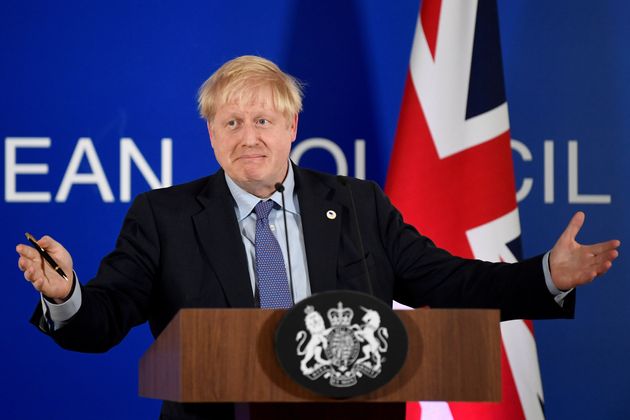
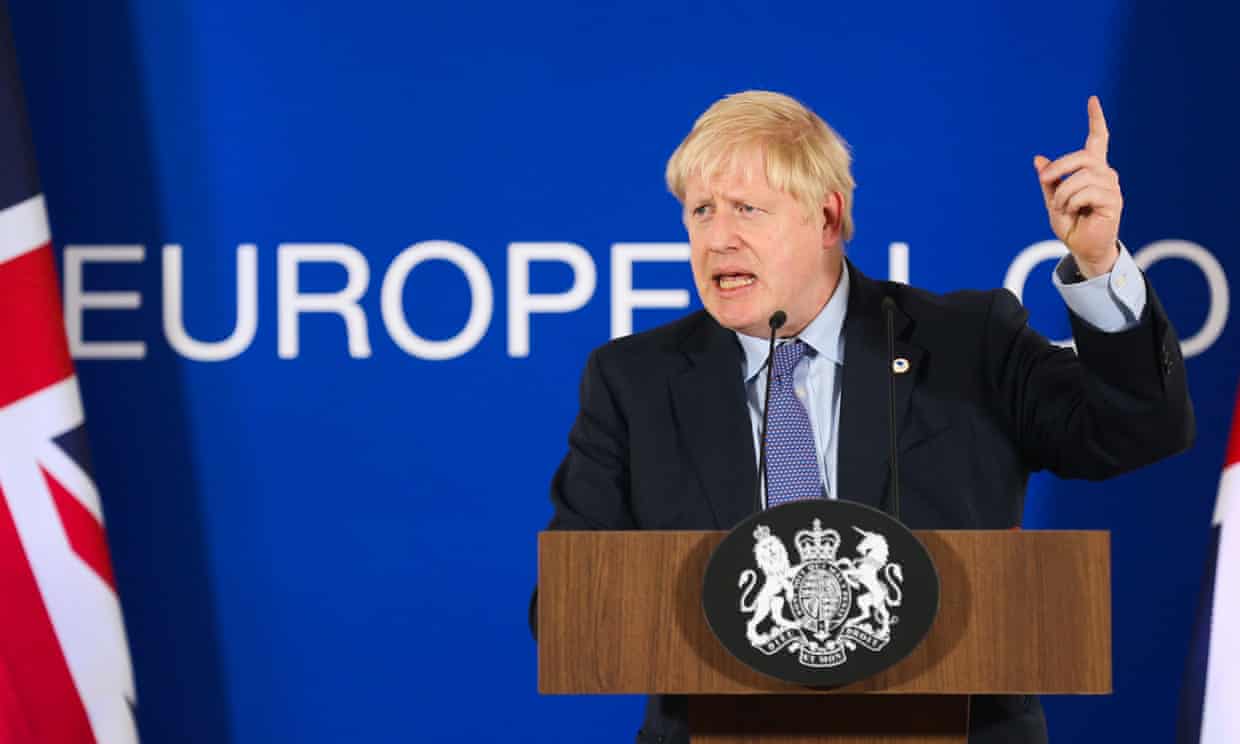
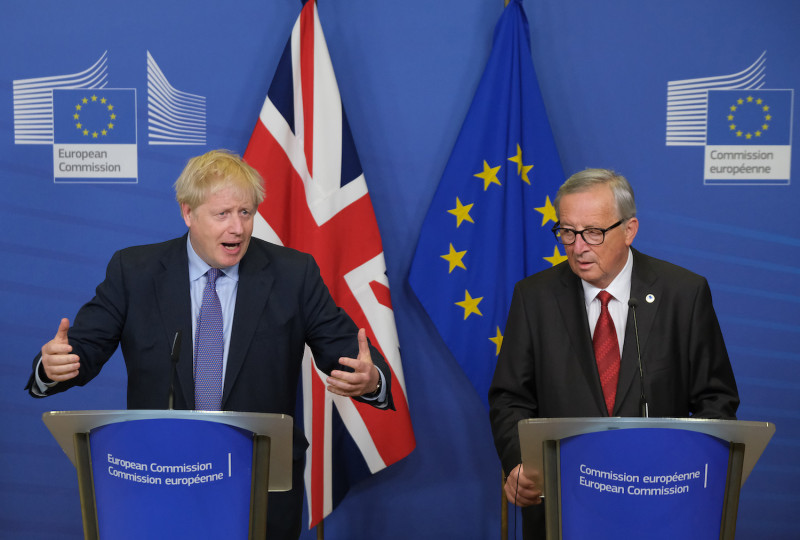
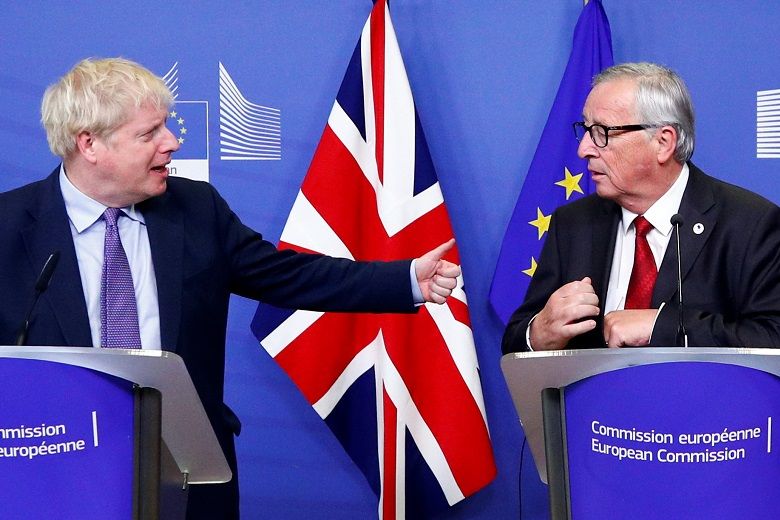
It’s also interesting seeing what other EU leaders said about the deal, as this affects them as much as it affects us.
“It’s a little bit like an old friend that’s going on a journey or adventure without us, and we really hope it works out for them, but I think there will always be a place at the table for them if they ever choose to come back,” Ireland’s Leo Varadkar said.
Chief negotiator Michel Barnier told reporters: “I too very much regret Brexit. I deeply regret it. However, we respect it, it was a sovereign choice of a majority in the UK. I have a sort of Gaullist tendency myself, but I have a great deal of admiration for the UK… We will never forget the solidarity shown by the British in our darkest hour.”
Mr. Barnier added: “I want to underline one point: while the subject matter in the negotiating room may very often have been technical, about customs, goods, borders, what has mattered above all has been for me and my team been people in Ireland and Northern Ireland. For me what really matters are the people of Ireland and Northern Ireland and peace on the island of Ireland.”
This was a much-needed lift to the administration, however fleeting this victory. What happens next depends on whether parliament agrees the deal, I Don’t believe they will and this will be the catalyst for a much needed general election and an end the stalemate in Parliament.
Exercise 3.3
For this jaunt down memory Lane, we had to take an image, recreating a childhood memory. After trying trialing self absented portraiture by getting a child to stand in for me, and just some images that spark some nostalgia, I decided to include myself in the image. As this section is all about self portraiture. I thought it best to include myself as an adult, standing in for the childhood me.
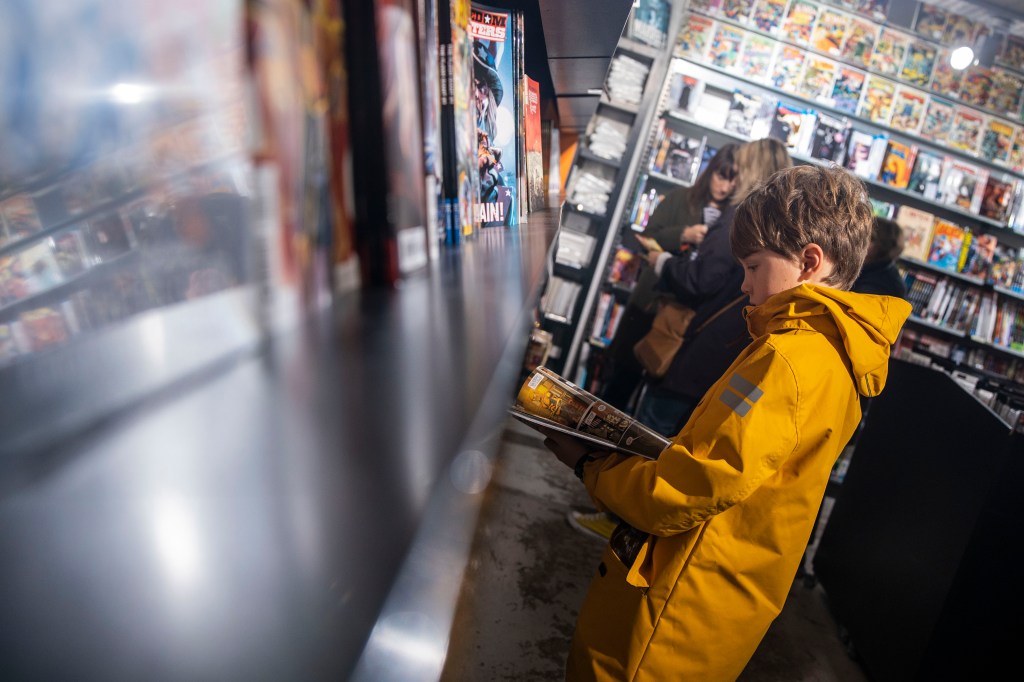
This was taken when I was trying to decide whether to take a self portrait or get someone to represent me as a child.
After creating a mind map of things that remind me of childhood nostalgia, I choose the subject of Comic books, I used to love comic books as a child, the perfect escapism for a young boy, before the age of and computer games. It used to be a rare treat to get the bus into town with my pocket money and peruse the comics at the comic book store. Even when I didn’t have any money, it was still great to look for the next edition or look at the Star Wars and other figures they had for sale.
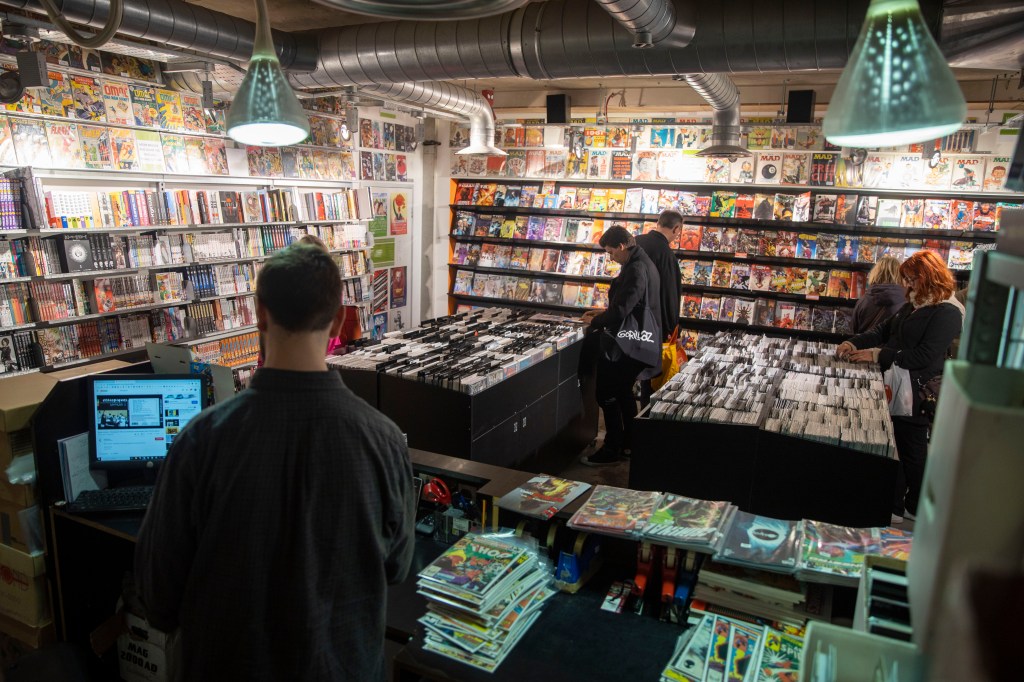
A treasure trove
My older brother had a big impact on what I liked when I was growing up. Him being six years older, his tastes always seemed more grown up than mine, so I was forever stealing his stuff or wanting to read the same things as him. This is where 2000AD comes into it, that comic always seemed like an adult comic compared to the Marvel comics I was reading. I would always want to read his hand me downs and so became a genuine fan.
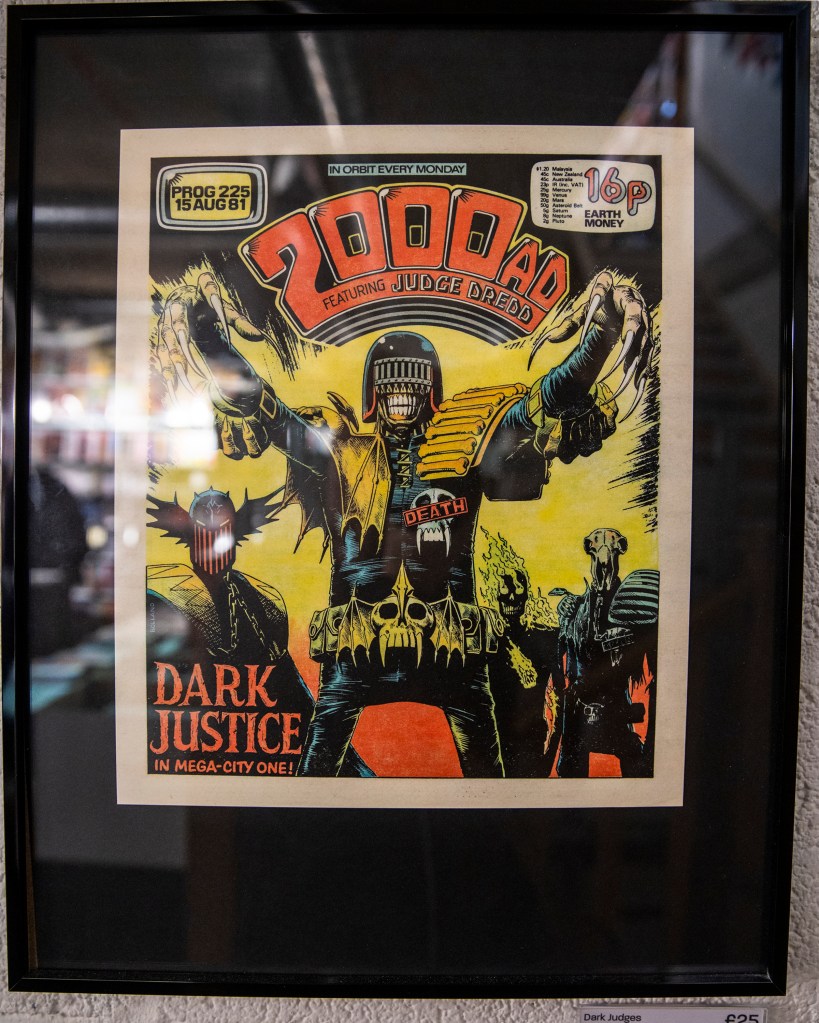
Best comic ever written
Our local comic book store was called Purple Haze and it boasted a modest collection of comics and memorabilia but is was all we knew. It was nothing like the great comic book store that I took this photo in for the recreation, which was amazing! It bought back all the memories of searching for the limited editions, back in the day. I showed the photos of the day to my brother, which included a framed front cover, of our favourite ever edition of 2000AD. This sparked some nostalgic conversation on who’s best to play The main protagonist of 2000AD Judge Dredd and why there was not a decent run at the movie franchise.
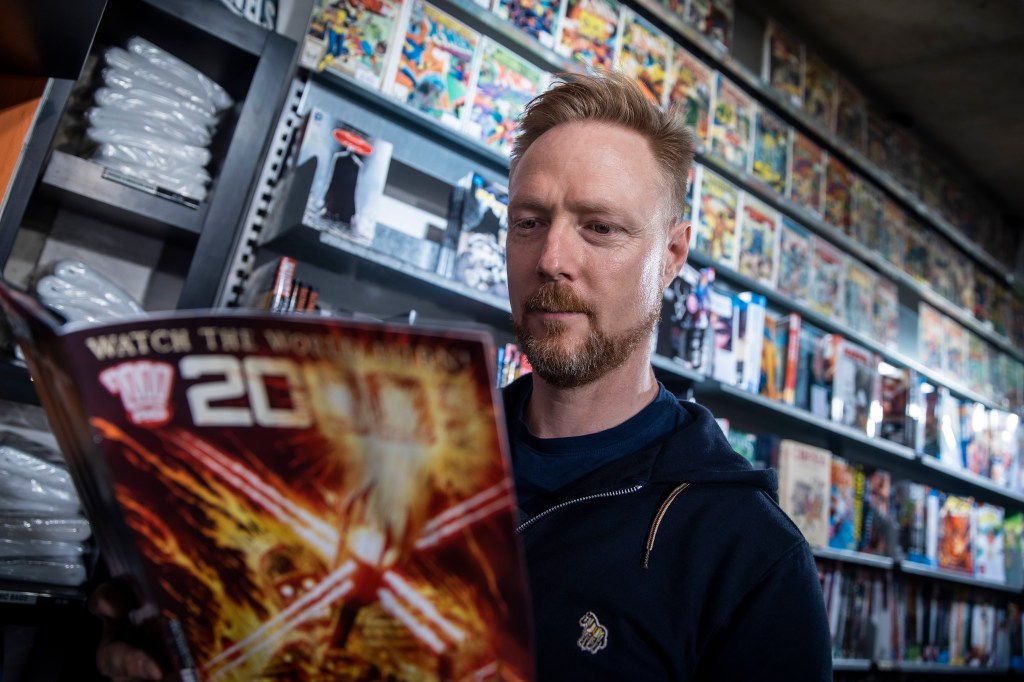
I think the final image recreates my memory well, it does a good job of recreating how the shelves of comics just seemed to go on and on.
Exercise 3.4
Shafran’s collection of Washing Up documented the everyday household chores of cleaning the dishes. This series of photographs were not originally from a set idea. They were in fact created because Shaffron wanted to start the New Year with a more positive approach. He wanted “Something with lots of shapes,where shapes would change and keep changing.”.
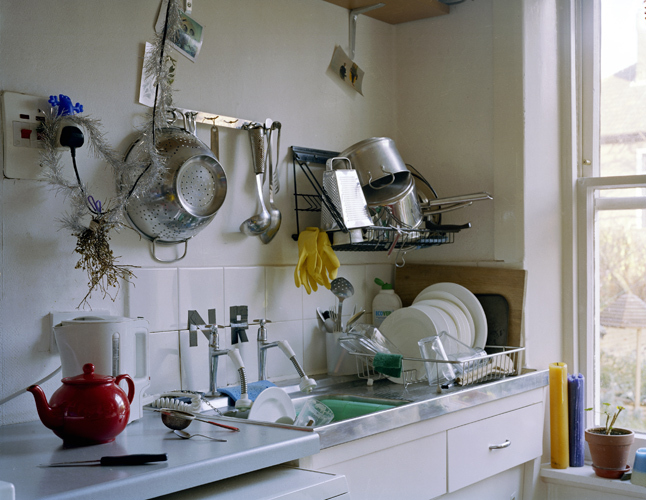
From January to June 2000, he captured different scenarios of the dishes he ate his meals on in to the washing up in his own and other people’s kitchen. Shafran wanted the audience to see this daily chore from his perspective.These photographers are interesting as we see different utensils and dishes used, which are placed in varied places in the drying rack in each photograph. Also every photograph has a description of what food he has prepared, eaten or drank that day, it gives us an idea of what his lifestyle was like.
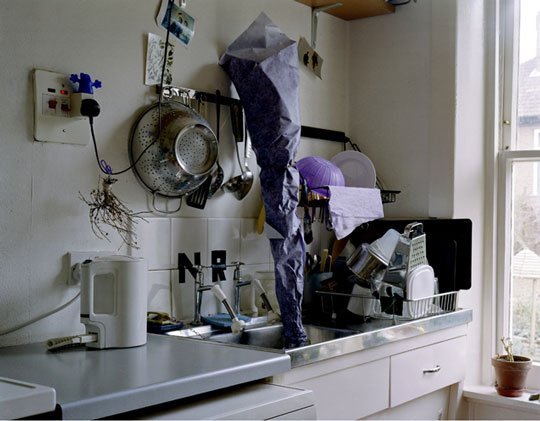
tea, left-over
squash, pepper soup, homemade pizza.
The fact this set of images was captured by a man is not surprising, but does gender contribute to the creation of an image? Absolutely, Some things are ingrained in us at such a young age they become hereditary. A subject studied by the artist Jeong Mee Yoon in her Pink and Blue project. “The Pink and Blue Projects were initiated by my five-year-old daughter, who loved the colour pink so much that she wanted to wear only pink clothes and play with only pink toys and objects,” writes JeongMee Yoon. “I discovered that my daughter’s case was not unusual.
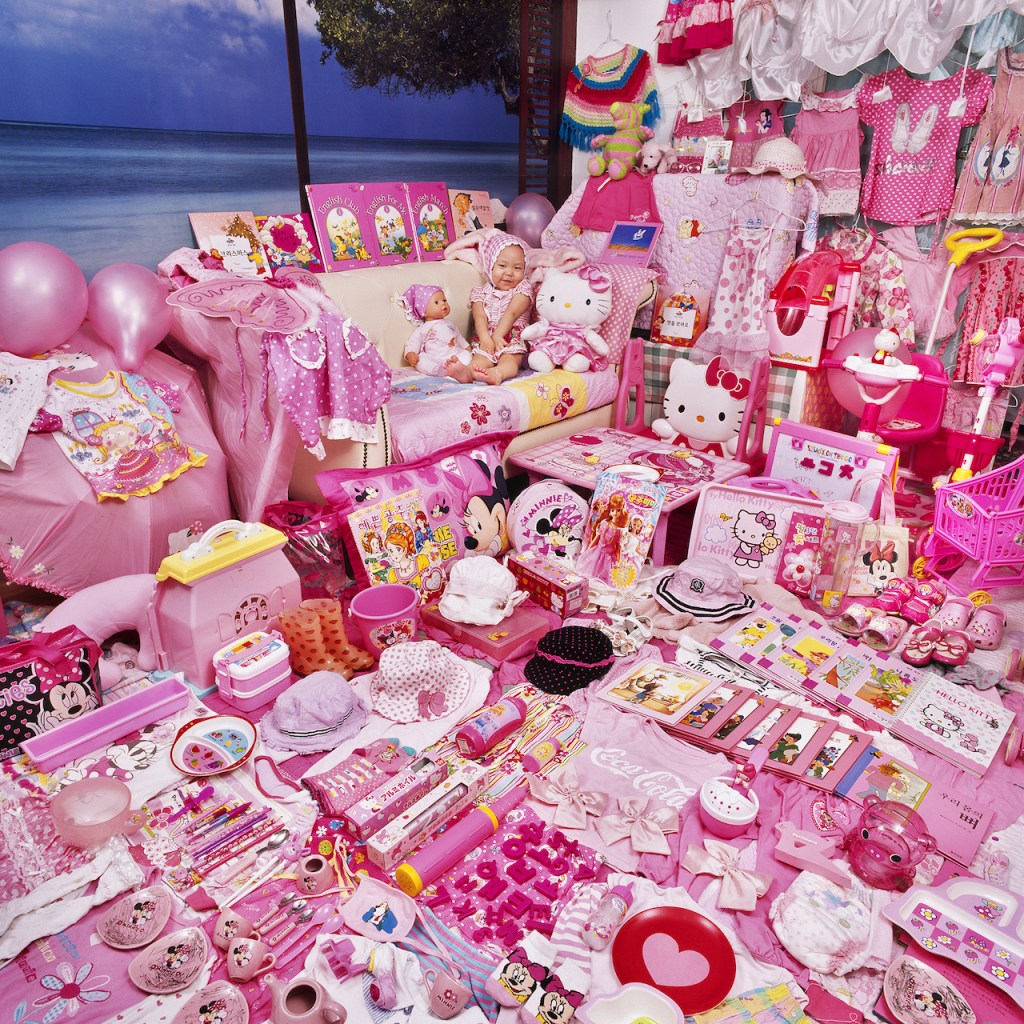
These predispositions to pink and blue are not limited to South Korea, it is true in the United States, France and the United Kingdom. This trend is widespread in children no matter their ethnic roots. I believe this down to the commercial advertising Parents and Children are subject to from an early age, couple this with global branding of Barbie, Hello Kitty, My Little Pony and many other trends.
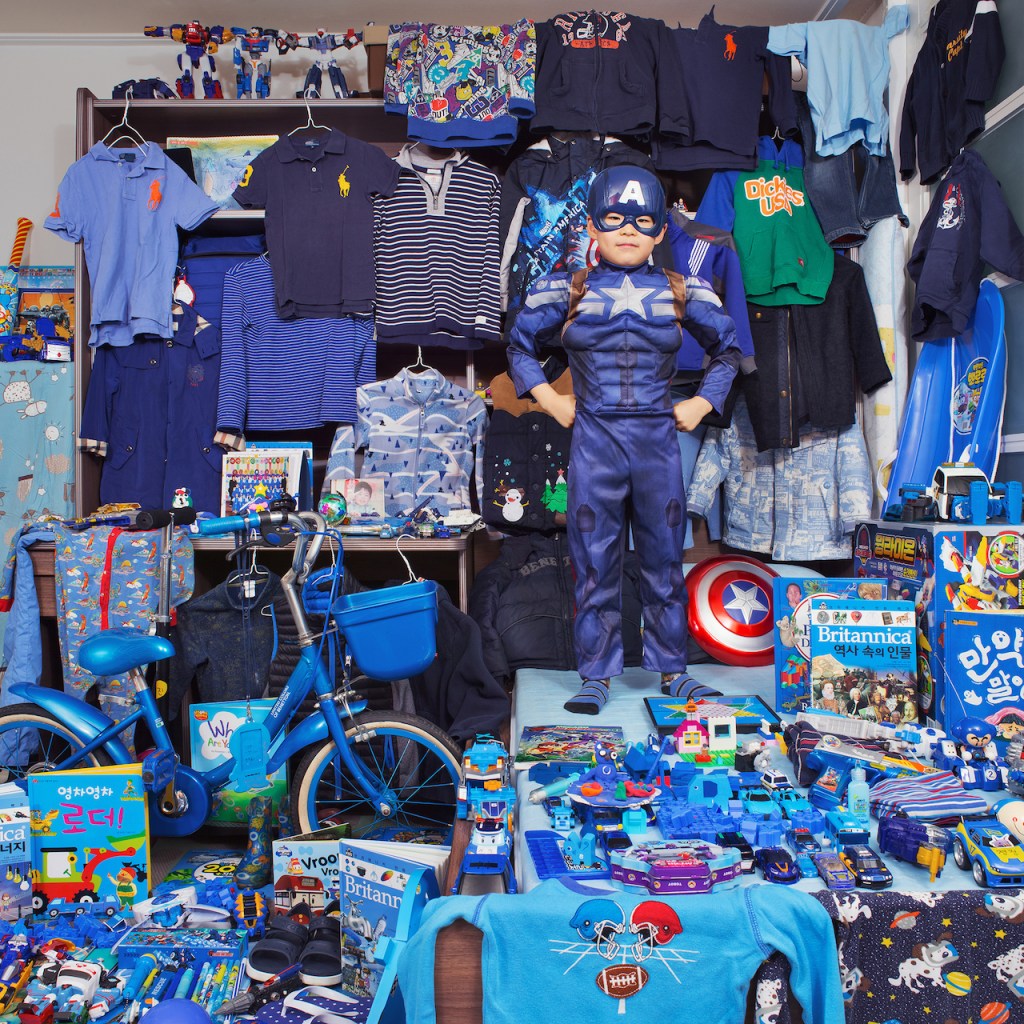
It’s difficult to escape this subconscious messaging, “This is a phenomenon as intense as the Barbie craze. Manufacturers produce anthropomorphic ponies that have the characteristics of young girls. They have barrettes, combs and accessories, and the girls adorn and make up the ponies.” So not only the colour of the toys separates the genders, but also the roles assigned to the toys, “These kinds of divided guidelines for the two genders deeply affect children’s gender group identification and social learning.” These traits do not disappear in adult hood and must surface when we create images not matter how subliminal it may be.
 Ben's Blog