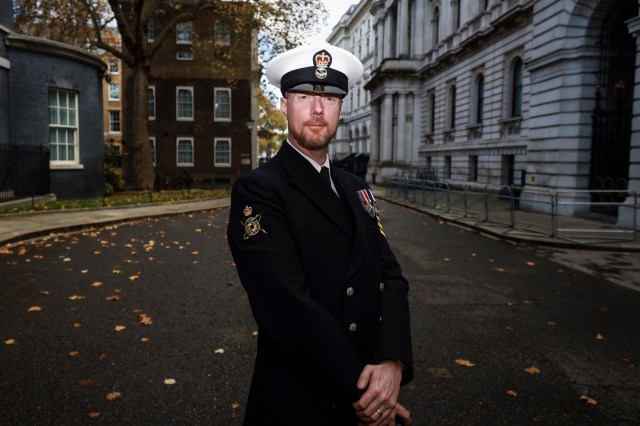
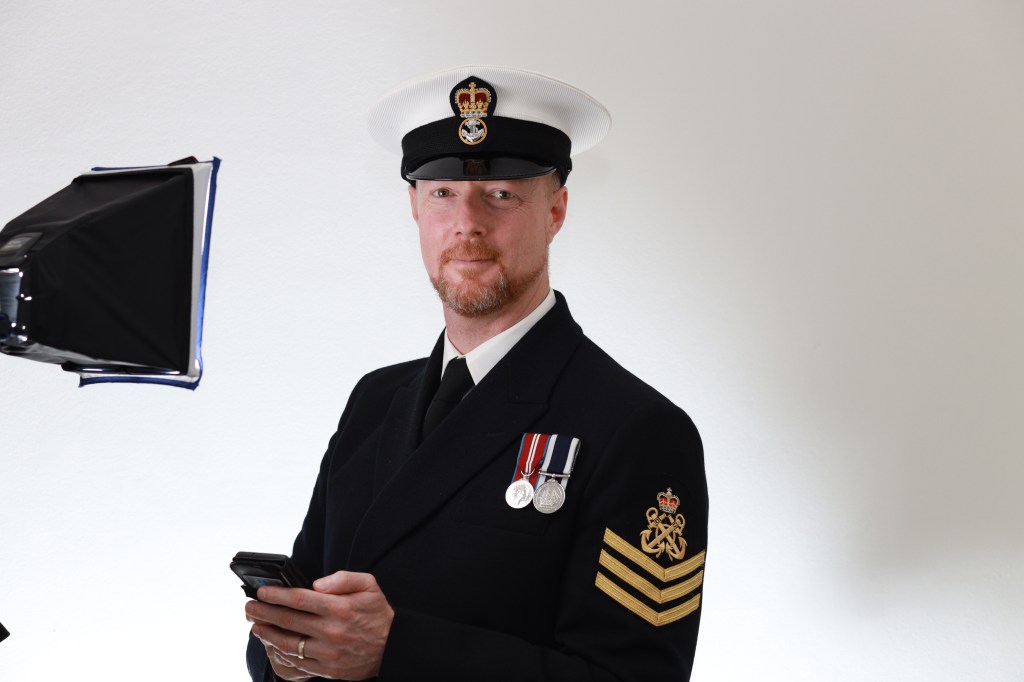
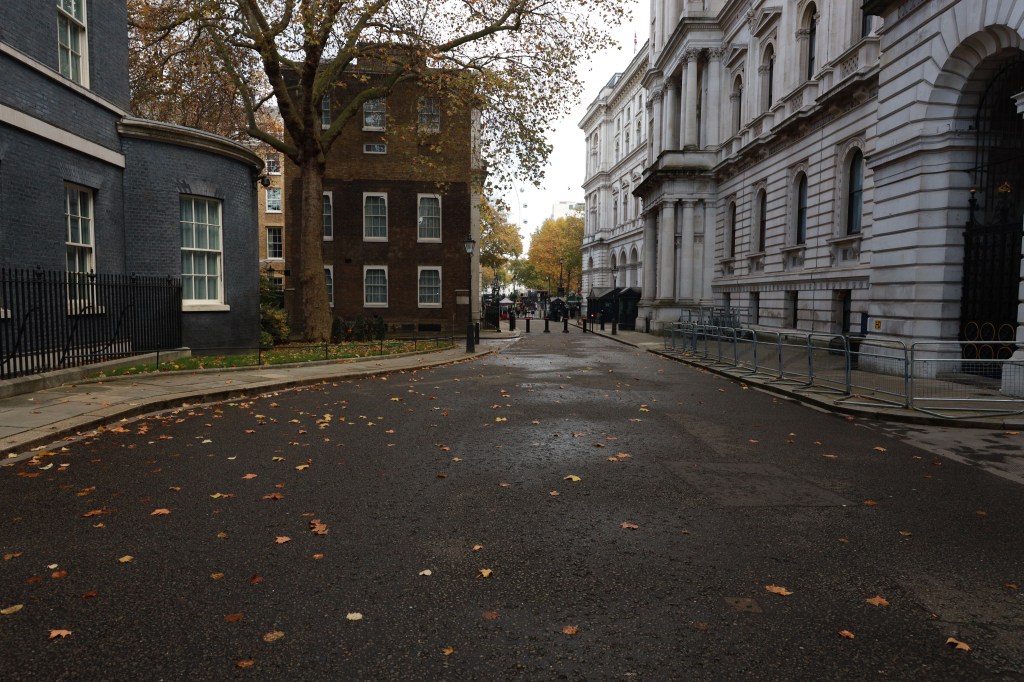
Exercise 3.1 Self Portrait
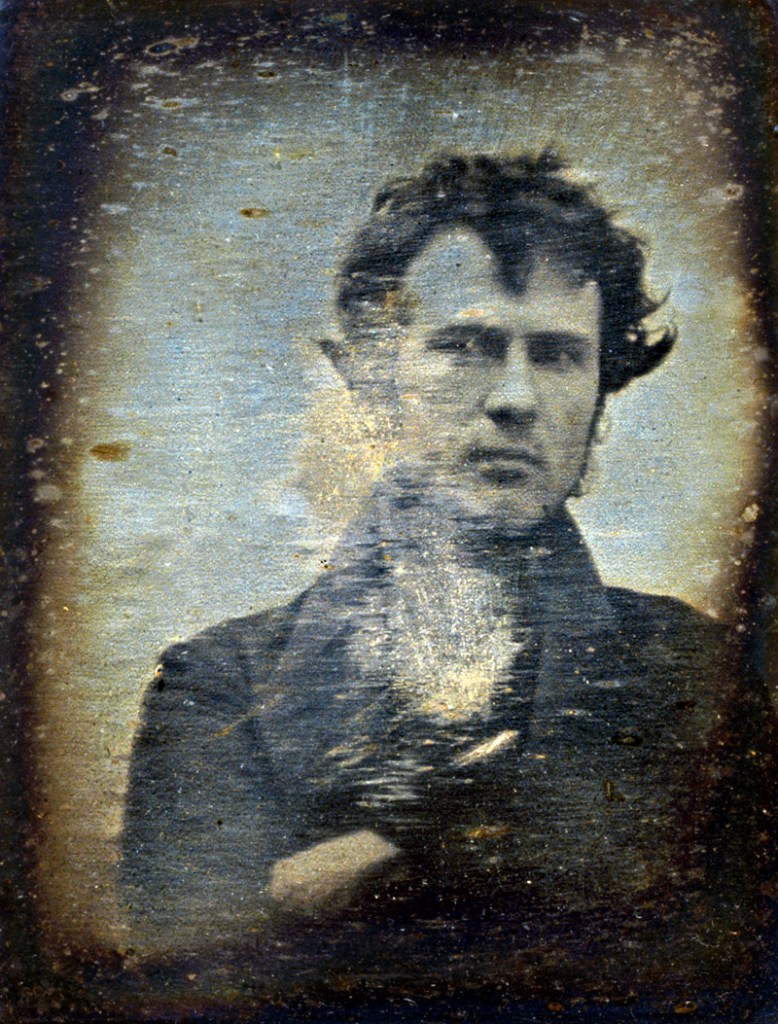
Not long after the invention of photography, came the inevitable self portrait, taken in 1839 by Robert Cornelius. As much as self-portraiture has been a hallmark of painters throughout art history, photographers have continued this tradition. As humans, our face and body have incredible storytelling capabilities, so it makes sense that many artists take advantage of what’s closest.
Self portraits have, historically, been a personal look at an artist. In a world where the self portrait has become diluted and devoid of meaning. Looking at the work of these artists, they are bringing back a sense of individuality and authenticity to the self portrait.
With Brotherus, the images are tightly composed with good lighting, some indoors and some on location. I admired the technical skills in the outside photos, the feeling of stillness of the body against the enhanced movement of the water made me feel the world moves around you at speed, even when you feel you are standing still.
A lot of the images were reflected in a mirror or reflective surface, not only does this frame the image within the frame, it adds to the sense of personal reflection in the self portraits. The face is often obscured by the artist or the reflection, a kind of showing and hiding at the same time. This extra level of distortion generates a feeling of detachment, of being just out of reach.
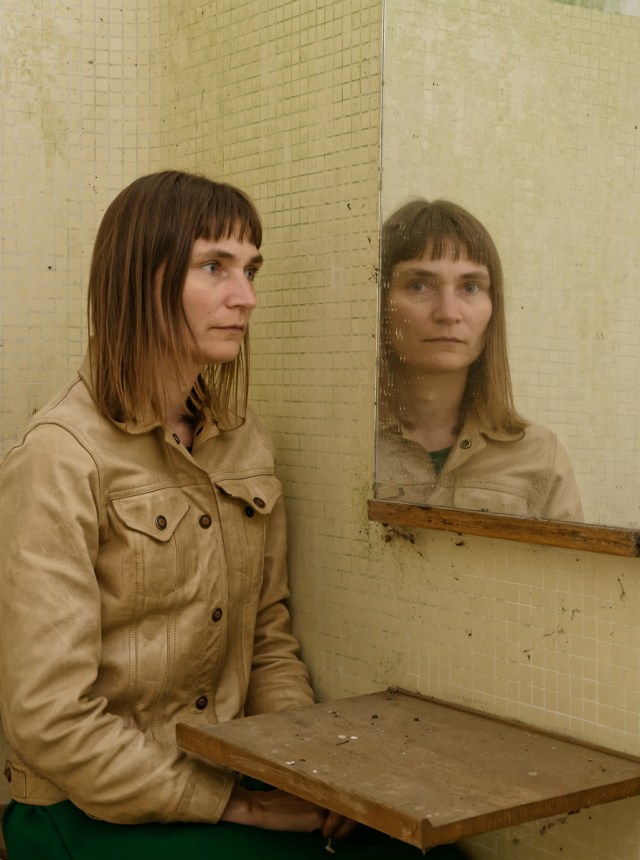
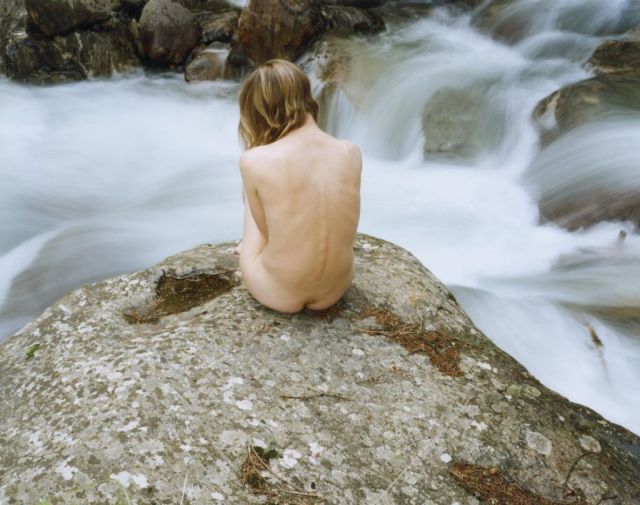
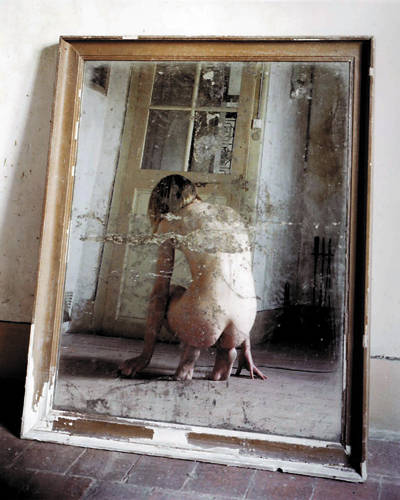
In her book Artist and model, Brotherus goes on to say, “I want to see”, explaining how her work is a kind of game of hide and seek, showing and not showing. She explains how she does not like smiles in photographs, and why she likes the repetition of certain themes, such as reflections and bathing. Brotherus also talks about how she stages herself as a model, creating images that are personal, yet deliberately open for the observer’s projections. How she is revealing and hiding at the same time, how the photos reflect stages in her life, but how at the same time she is “making things into objects”. What we see is, after all, not reality, but “just a photo”.
Although nude art work is nothing new, the nakedness adds to the whole stripped back atmosphere and minimises distractions. The sense of the exploration of self, is enhanced by the minimalism of the rooms. The fact that Brotherus called this set Model 1-2 etc. Leads us further into the performances rather than how the photographer is actually feeling. Brotherus tends to use herself almost as a material to be used in art, as a sculptor would use clay or stone.
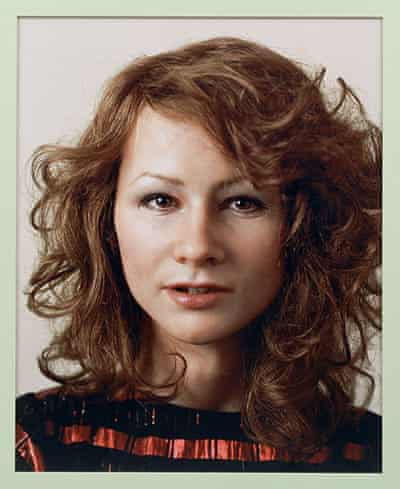
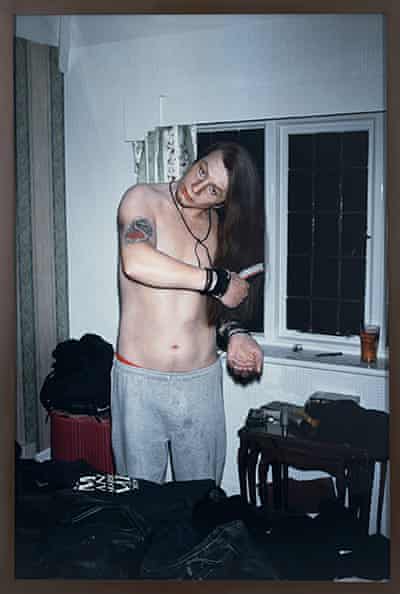
In contrast, in Gillian Wearings work “Masks” she has literally cast herself in clay to create the base of the mask’s she is making, using part of herself as a base for the artwork. This series “Masks” should be applauded, from its creativity, to its concept, aesthetic, execution and commitment. Every part of the project is art, from the sculptures of family faces, to the cast of her own face. Even the rebuilding of the environments where the original photos were taken.
Whilst researching female photographers self portraits, one cannot help but be lead to the Godmother of self portraits, Cindy Sherman. As an artist, Sherman fits almost perfectly in-between Wearing and Brotherus. For 30 years Sherman took hundreds of self portraits, yet in every picture she looked like someone else. The similarity between the artists is there for all to see, like the others, she was her own stylist, makeup artist and costume designer, Brotherus may be one step removed from this and Wearing one step further. Sherman was a master of disguise like Wearing, so convincing not only in the ability to disguise herself in plain view, but also to convince you that you have met these characters before.
Her seminal work, “Untitled Film Stills,” is 70 black-and-white photographs that evoke the stereotypical female roles in 1950s and 1960s films. They are fake publicity shots of imaginary films, with familiar images such as the bored housewife and the girl on the run.
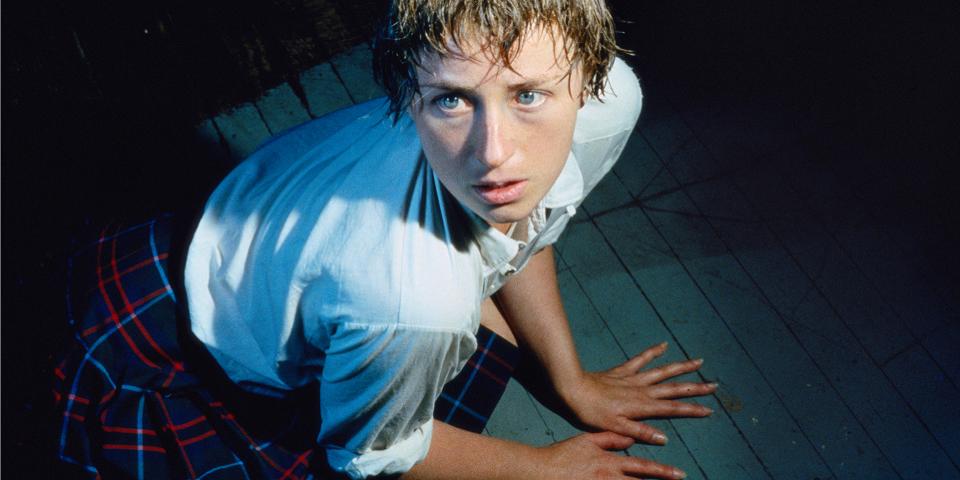
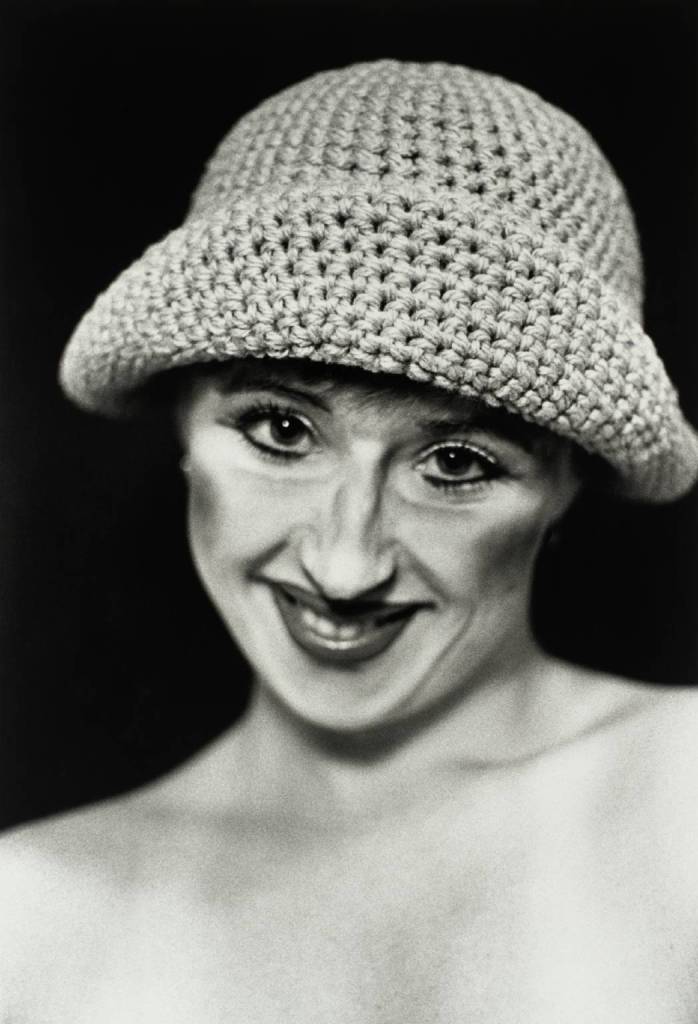
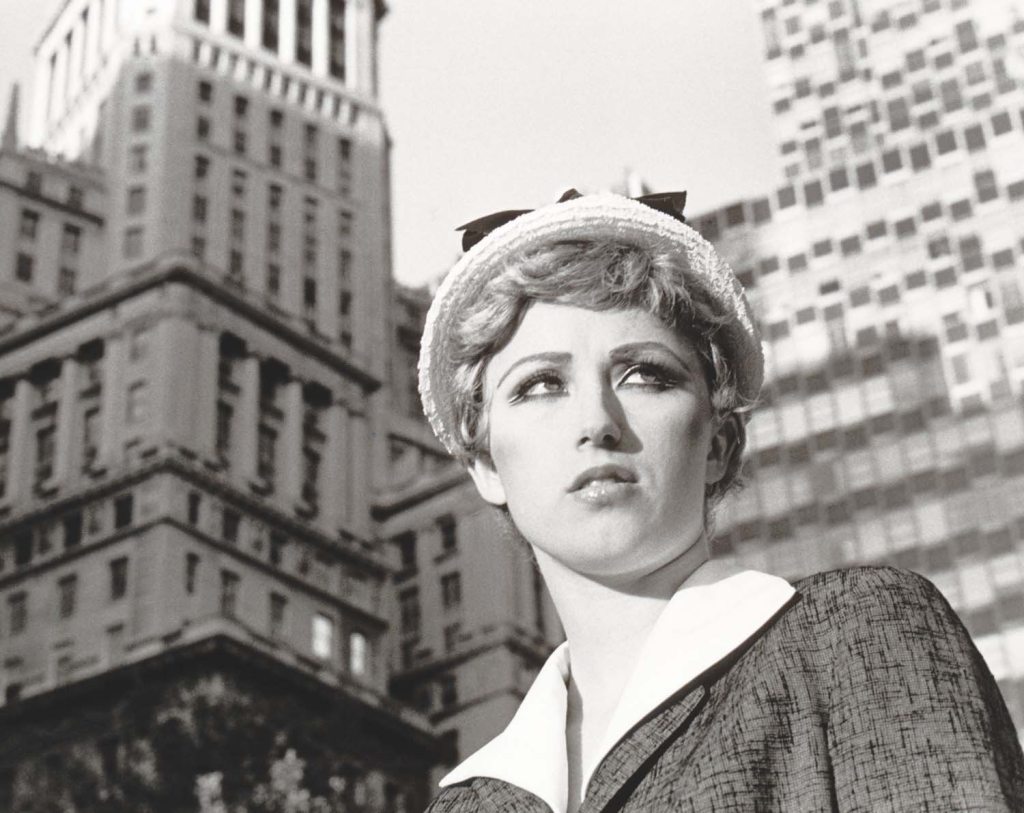
Some might say, self portrait’s come off as narcissistic. I really don’t get the feeling of narcissism from this set of images. There is a greater feeling of introspection from the photographers and could not be further from the vacuous flood of narcissistic “selfies” that we are now bombarded with every day. Gillian Wearing’s work deserves a special mention. This series “Masks” blew me away, from its innovation, concept and beautiful execution. Every part of the project is art, from the sculptures of family faces, to the cast of her own face. Even the rebuilding of the environments the original photos were taken. This set of images has the impressive quality of making you question what is reality, whilst maintaining a distinctive authenticity and at the same time being completely staged.
On the surface, these artists are very introspective. They’re using the medium of photography as a deep personal examination of themselves, one, they may not be able to put into words. This delve into personal problems may seem completely idiosyncratic. I believe, we are all aware, that, a lot of what affects us personally, are wider global issues. I feel that these issues cannot help but be expressed in the images that we create. The disconnection of society, the anxieties of modern living or the taboo of discussing infertility. These are wider issues, but also personal to the individuals and do not think the two can be effectively separated from the art that is produced.



















 Ben's Blog