Research Point Sectarian Murders
This looks into Paul Seawright’s 1988 body of work, which was originally released with no formal name. It has since commonly been referred to as Sectarian Murders. The work blurs the lines between documentary and art, is it still art? The work is ambiguous enough to intrigue the viewer into deeper thought, something that is required of art, not chained by the rules of documentary or having to tell the whole story in one image. The core of Seawright’s argument is trying to find the perfect balance between explicit and ambiguous, Seawright himself says “Too explicit, it becomes journalistic, too ambiguous it becomes meaningless.”
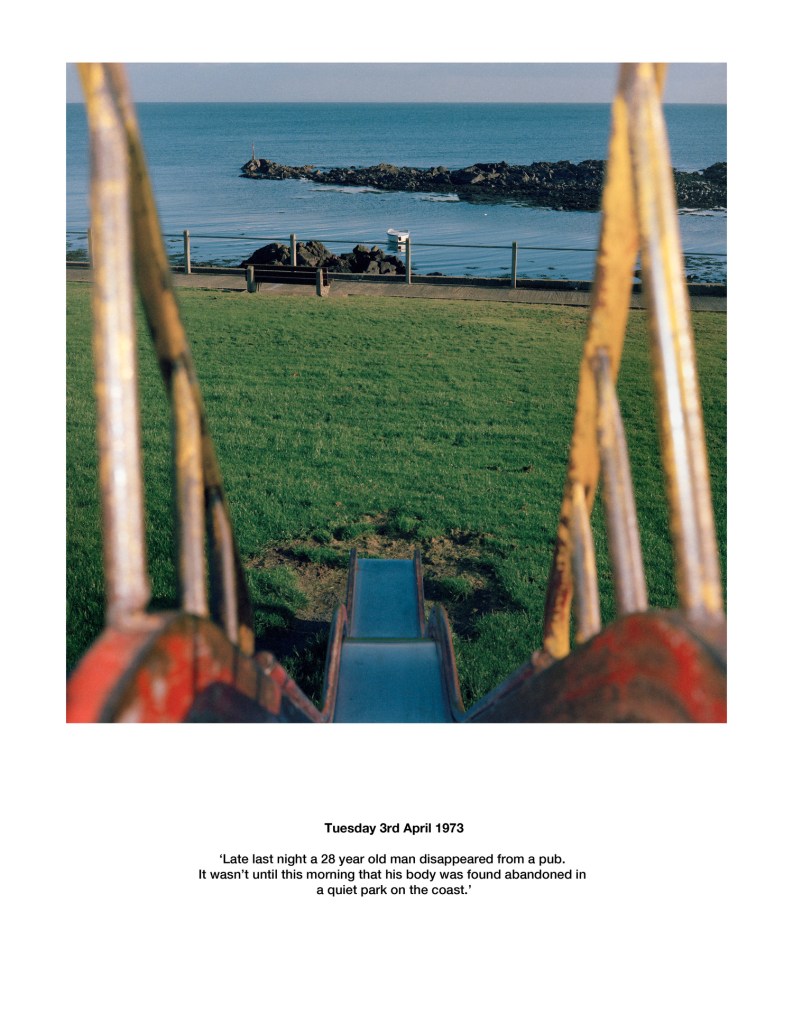
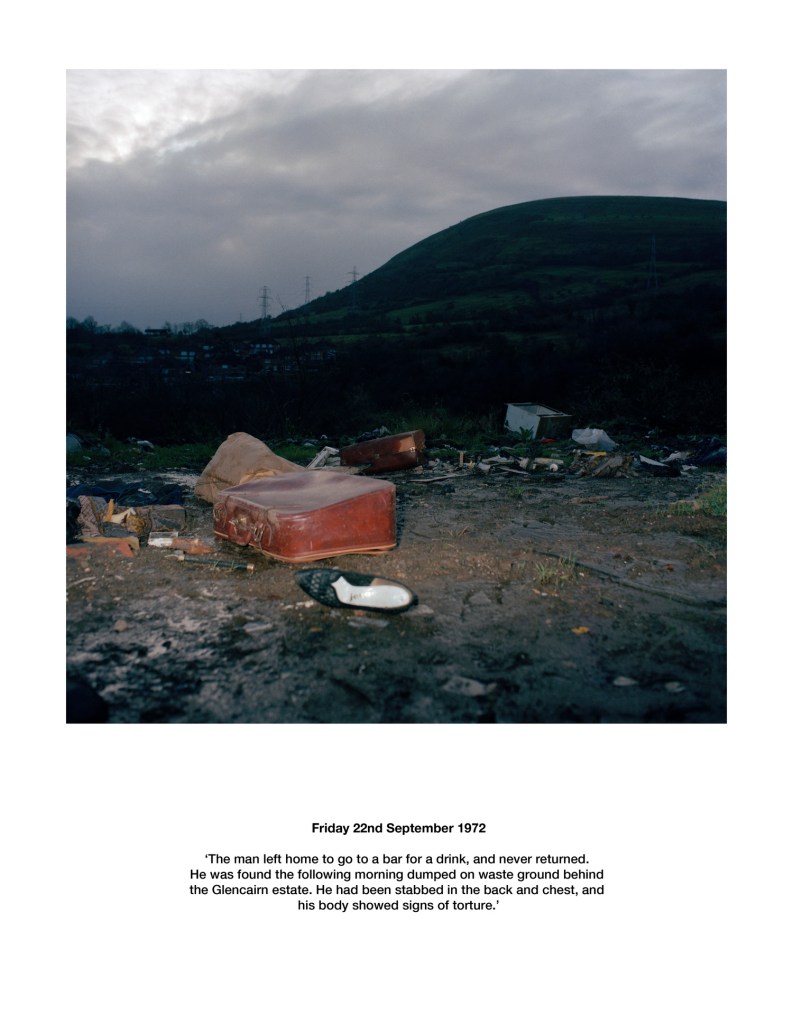
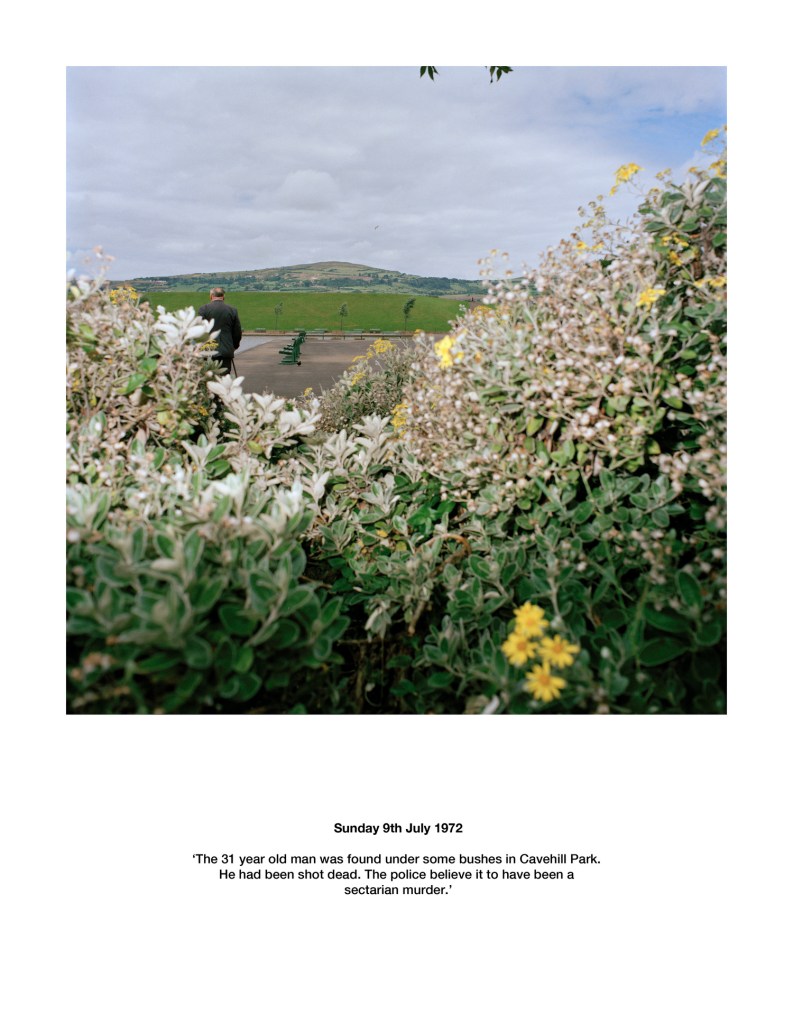
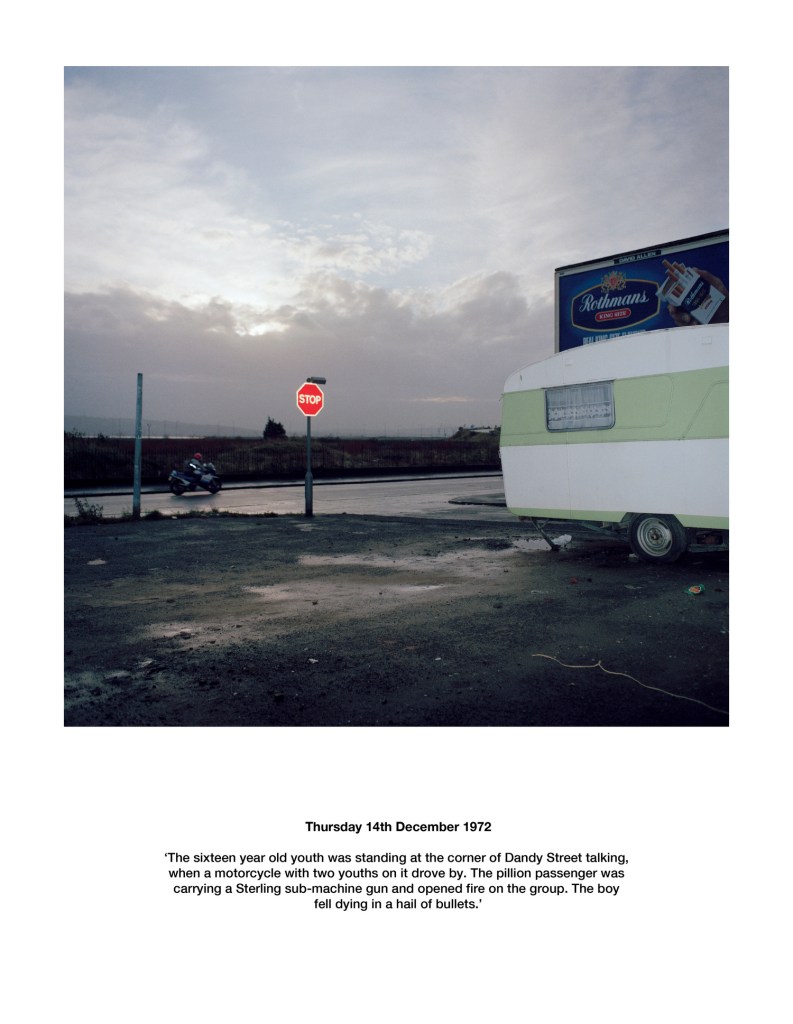
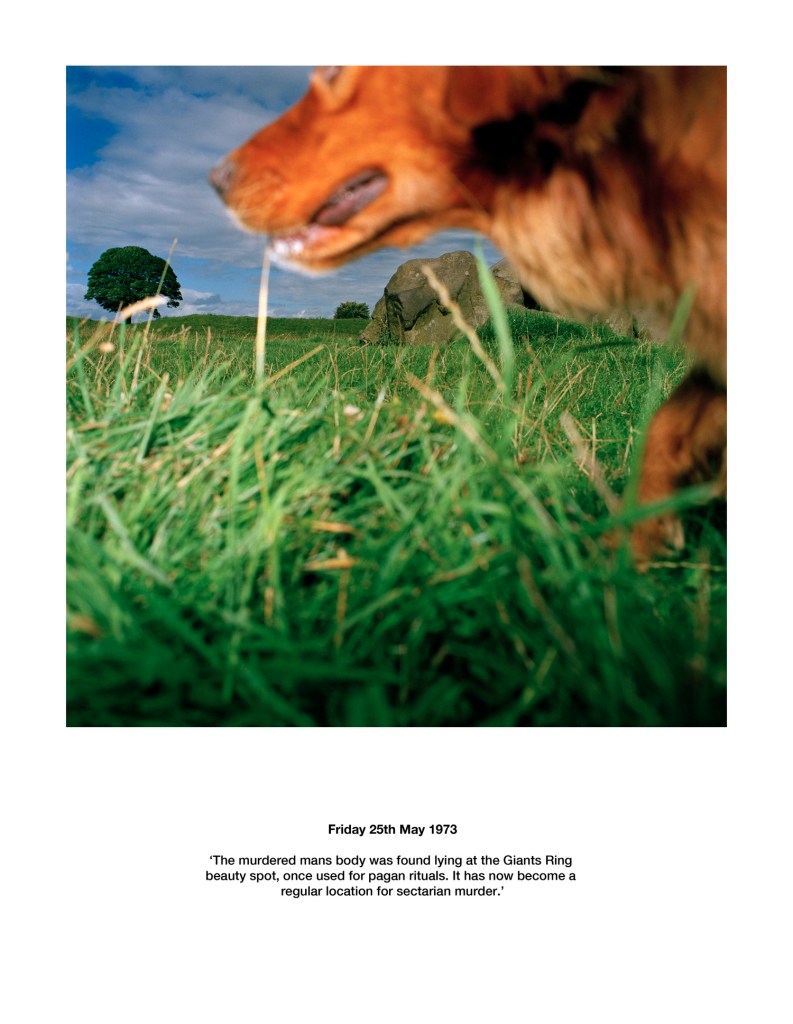
What adds to the artfulness of the set is the lack of bodies or police tape, or, in fact any evidence these tragic crimes were committed. The 15 years between act and art and the banality of the scenes, draws the set away from the documentary and closer to art.
I was lucky enough to be able to visit the Mike St Maur Shiel, 2018 exhibition, Fields of Battle Lands of Peace.The photographs themselves were inspired by the words of a veteran who wrote of all those who had died that:
The country would come back to life, the grass would grow again, the wild flowers return, and trees where now there were only splintered skeleton stumps.
They would lie still and at peace below the singing larks, beside the serenely flowing rivers. They could not feel lonely, they would have one another. And they would have us also, though we were going home and leaving them behind. We belonged to them, and they would be a part of us for ever.
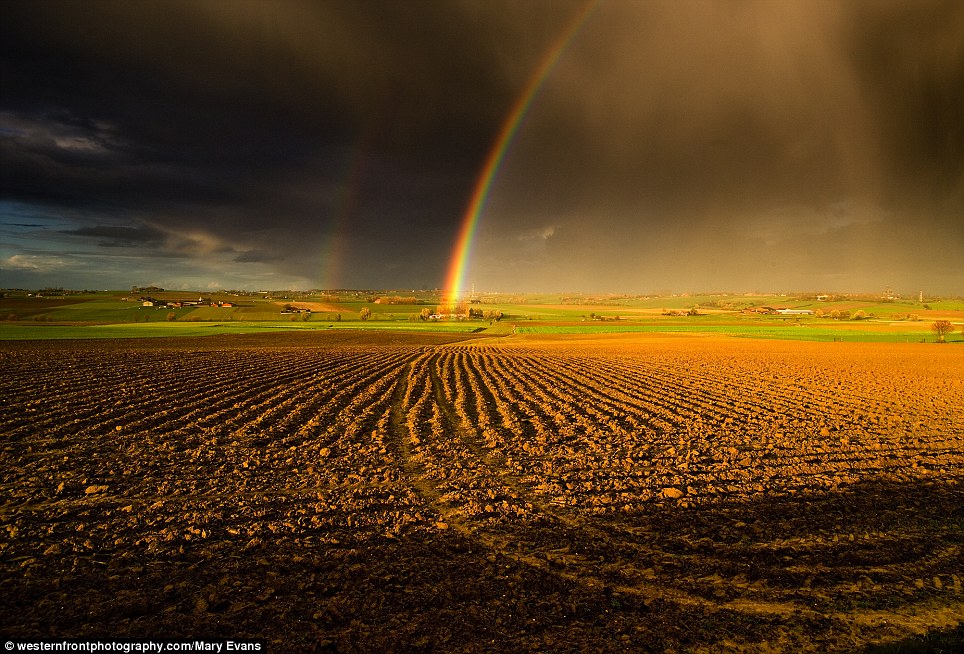
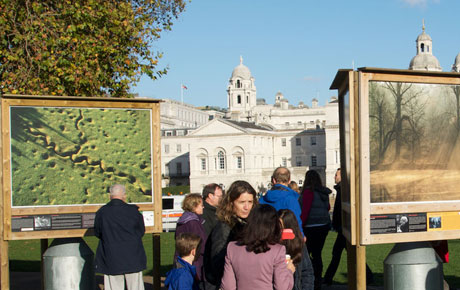
Sectarian Murders reminded me of this collection of images as the meaning of the images would remain lost in their ambiguity if not for the clever use of text. On the other hand, the battlefield images, I believe, fall more into the documentary style.
In Seawright’s work the religion of the victims is purposely removed from the text. As Liam Kelly has written in his online article for British Photography.org “Paul Seawright’s photographic works are another example of the transformative power of text on the image.” The text helps the viewer on their way to an explanation, it also leaves them enough space to form their own opinions as Seawright goes on to say the “holy grail is to make work that visually engages people, that draws them in. And then gives up its meaning slowly”. But essentially, “still gives it up”.
Liam Kelly explains “The cold sparsity of the text, together with the concentrated absences in the photograph, unite to sustain a resounding moral condemnation of political cause and effect on both victim and violator.” If we define a piece of documentary photography as art, does this change its meaning? For me, it enhances all meaning.
 Ben's Blog