This assignment is the accumulation of the Context and Narrative module, we have covered a varied workload in this module, it has been enjoyable and challenging. I have been lucky in the fact that the work on this module has, completely by fate, coincided with a very significant life experience. It only seems right that my final assignment comes full circle to my first assignment. It continues with the running theme of the images I have taken, as well as, incorporating some of the themes covered in this module. In the words of Sontag “Today everything exists to end in a photograph.” (Sontag, 1977) and so does this module and my time at No 10.
For this assignment, Making it up, we were given free range to construct a stand-alone image of our choice, alternatively, we could have chosen to make a series, elaborating on the same theme. For this I wanted to draw on the skills learnt in parts One to Four. I also wanted to draw on the experiences I have had in my time as the official photographer for the Prime Minister. I started this module with assignment one outside the door of No 10, so it is only fitting I end it in the same place with both the module and my time at No 10 coming to an end.
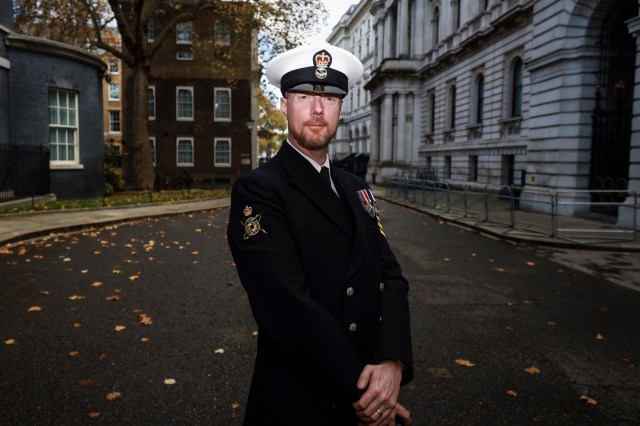
I choose to create an autobiographical self-portrait, similar to the ones we covered in part three. I wanted it to be a portrait of myself in full ceremonial uniform, in Downing Street. I wanted to portray a narrative of a strong sense of pride and achievement, this also ties in with the photographing the unseen which we also covered.
Once I had the idea I started some research, like most photographers, I am not used to or comfortable being in front of the camera. I started to wonder why this is, this self-consciousness, especially with self-portraits. This kind of psychoanalysis leads me to the writings of Barthes, which in turn lead me to the work of Lacan. It is no surprise that Barthes familiarity with psychoanalysis, that he would lean towards Lacan, they are both French theorists, heavily involved with semiotics, with Lacan being only slightly older than Barthes, they are often mentioned in the same breath.
In Bruce Fink’s, 2007, compilation and re-interpretation of Lacan’s original “The Mirror Stage as Formative of the I Function as Revealed in Psychoanalytic Experience” Ecrits, he translates Lacan to say “ the specular image seems to be the threshold of the visible world, if we take into account the mirrored disposition of the imago of one’s own body in hallucinations and dreams, whether it involves one’s individual features, or even one’s infirmities or object projections; or if we take note of the role of the mirror apparatus in the appearance of doubles, in which psychical realities manifest themselves that are, moreover, heterogeneous.” (Fink, 2007)
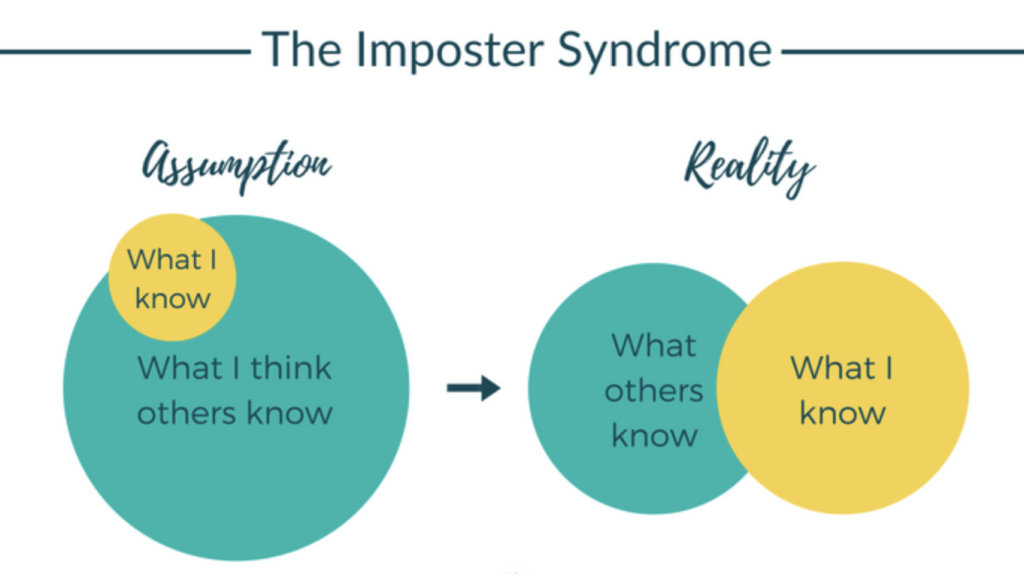
Possibly, the self-portraits we take, are a reminder that, the images of ourselves we have in our heads, do not match the ones we see reflected in the mirror, or the lens. How many times do we look at images and think “do I really look like that?” or hear a recording of our own voices and think “Is this how I sound to other people?” The only one dimensional thing about humanity is the mirror image. Although I wanted the image to show a sense of pride, reading this made me consider how I felt in my time there In the early days, I couldn’t help feeling a sense of imposter syndrome, over a short period of time I realised, everybody feels that way at some point. It is these unseen feelings that give life its depth, Luckily, these were fleeting feelings, my overall feeling were of a sense of achievement and a sense of pride.
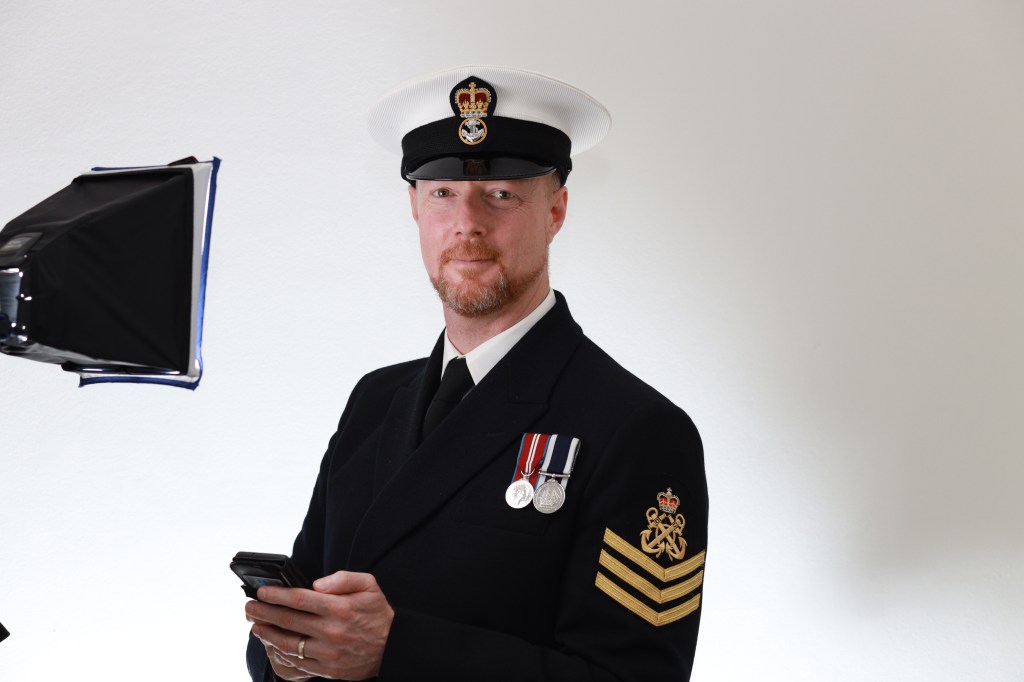
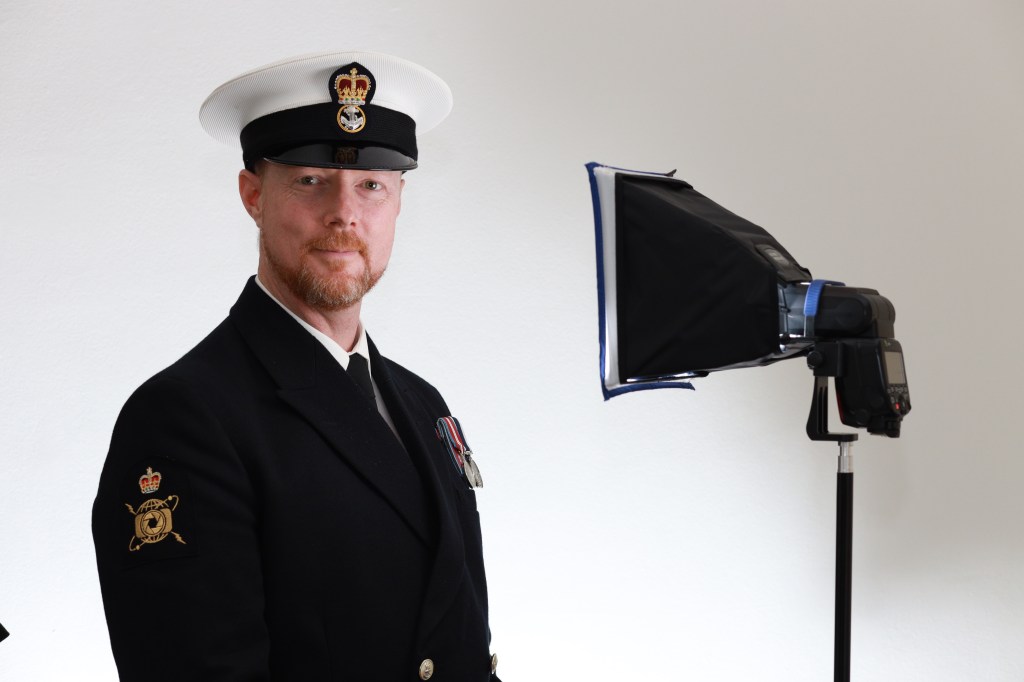
Once I had decided the direction to take there were many technical and logistical aspects to consider. I had to gain permissions from the estate managers, the custodians and the police. Once I had the preparations in place, I choose my kit and practiced the lighting setup. I had to practice with the camera setup and lighting system inside before I moved on to the street, there was little time to test and adjust in the small window of opportunity available.
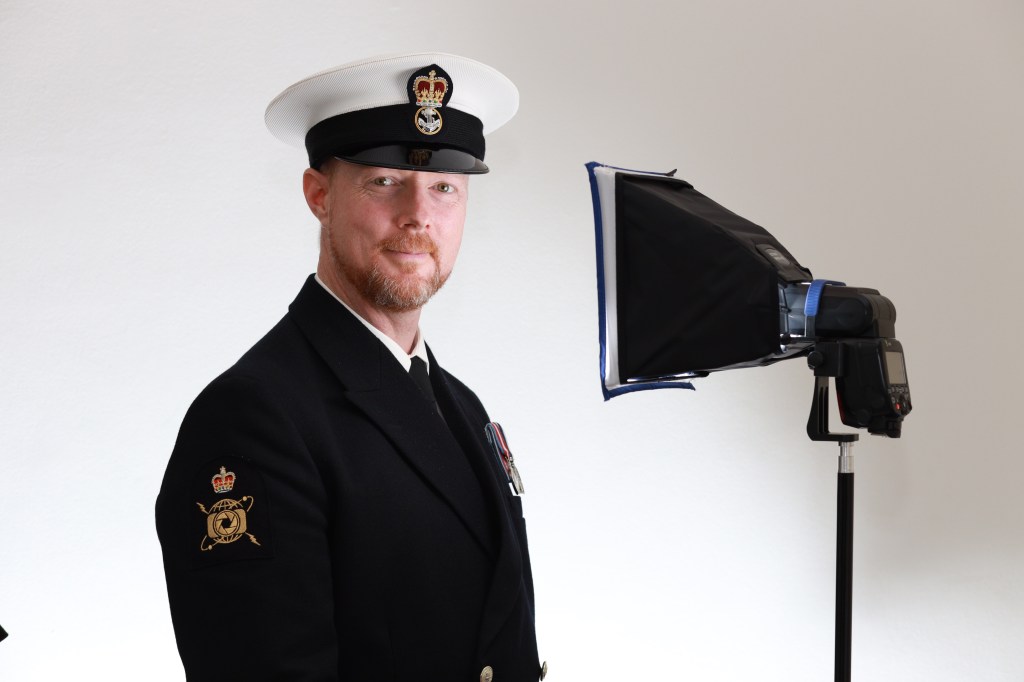
For the composition, I did not want to be right in front of No 10, I thought this would be too direct and literal. I wanted to be in the middle of the street with the Foreign commonwealth office and No 10 on either side, making me the central focus, this being accentuated by the empty street. I composed myself in the centre of the image and shot with a wide angle lens and a looser crop to add more context to the surroundings and to give the image more of a photojournalism feel as we covered in part one.
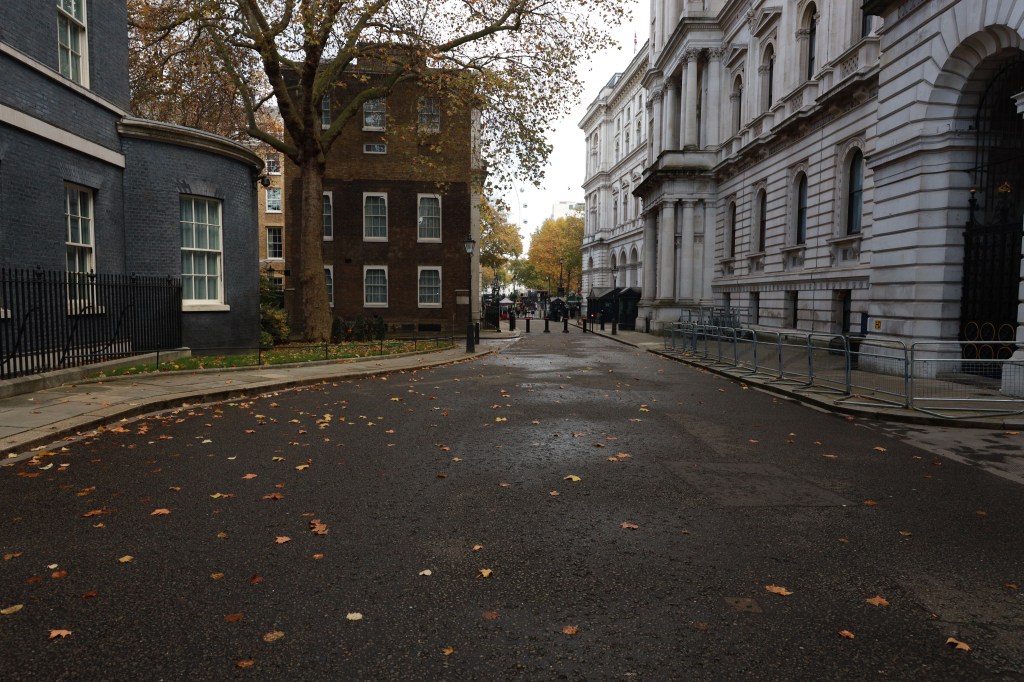
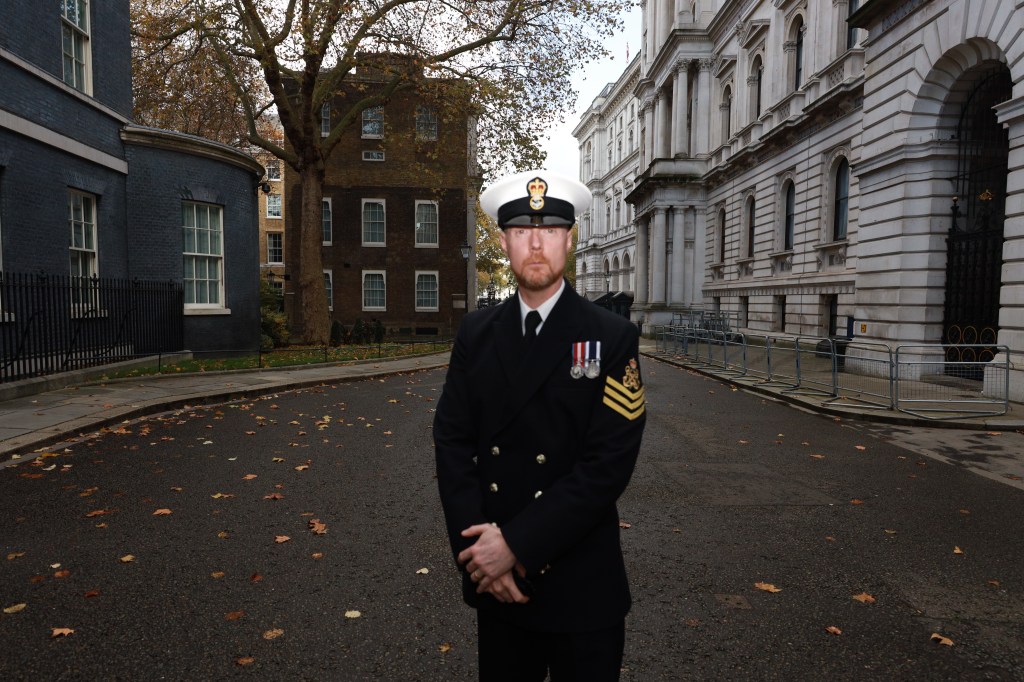
I choose a slightly lower angle on the tripod to give an increased sense of pride and power to the shot. I placed the speedlight to the right and lower than normal to illuminate under the peak of the cap. I took the creative choice of underexposing the background by using shutter speed and a shallower depth of field to further separate me from the background. This had the desired effect of keeping the main focus of the image on myself, I then edited in photoshop with basic darkroom techniques.
I found myself reading the image using the techniques we have learnt in this module, using the signifier and the signified highlighted in Barthes, Elements of Semiology (Barthes, 1967). The image is a self- portrait of myself wearing ceremonial uniform in the street (the signifier) But even with the more obvious signified points like the pride and power I was aiming for, there are other signified points, like the fallen leaves signifying the end of an era and the size of the old buildings adding to the power of the image and the leading lines leading out of Downing Street. The street, which is not instantly recognisable as Downing street, but still has a sense of familiarity as we have all seen it on television so many times.
Overall, I was happy with the image and the research, it was good to think about and put into practice some of the skills I have learnt over this module. Most of these things I have been doing in my work for years subconsciously, it is good to be taking a more measured approach to my process.
Works Cited
Barthes, R. (1967). Elements of Semiology. In R. Barthes, Elements of Semiology (p. 12). new york: hill and wang.
Fink, B. (2007). Ecrits The first complete edition in English. In J. &. Lacan, Ecrits (p. 93). New York: : W.W. Norton & Co.
Sontag, S. (1977). On Photography. New York, New York, usa: farrar, straus and Giroux.
 Ben's Blog